


by Rebecca Fox, volunteer at the Thessaloniki Solidarity Center
Hands-On Experience with Vulnerable Communities
As a postgraduate student in human rights and migration at the University of Macedonia, gaining hands-on experience with migrants, refugees, foreign nationals, and other vulnerable populations through volunteering at SolidarityNow and its Solidarity Center in Thessaloniki has allowed me to get valuable insight into the application of the migration policies and human rights frameworks I am studying. Primarily helping in children’s programs, I have witnessed the organization’s and UNICEF’s approach to children’s fundamental rights, especially regarding education and vulnerable situations such as international migration, refugee status, and displacement.
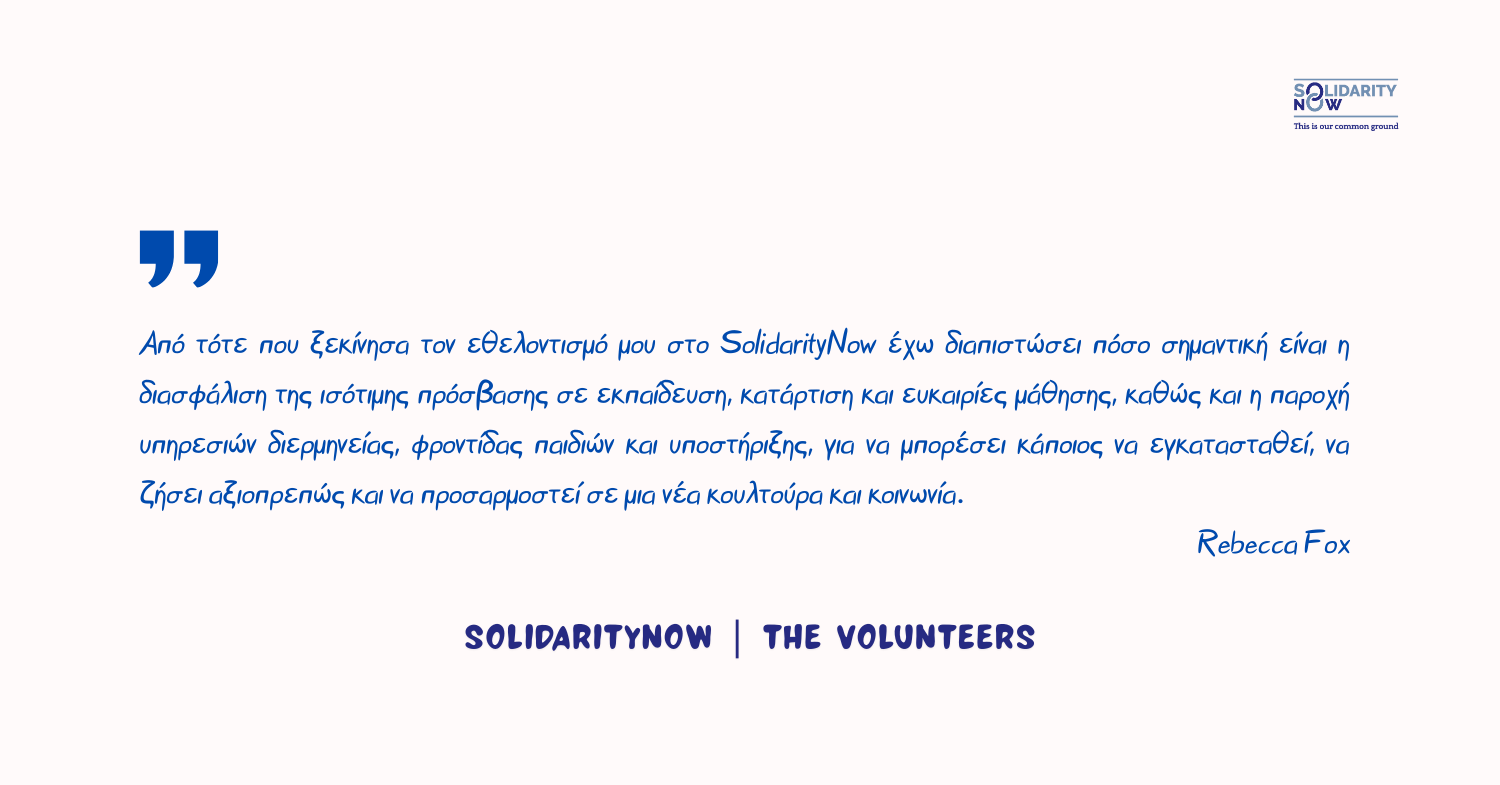
Since volunteering at SolidarityNow for the past year, I have seen how focusing on equitable access to education, training and learning opportunities, translation services, and childcare and support are to helping someone resettle, make a living, and adapt to a new culture and society.
From Houston to Thessaloniki: A Comparative Perspective
Coming from Houston, Texas, I was familiar with a very different migration policy landscape. The specific regulations, restrictions, timeframes, requirements, and trends of migration and allocation of refugee and asylum protection statuses shape decisions to migrate to Greece, the U.S., and other countries. Although primarily working with children, I have also witnessed the work of the social services, legal, and employability service offices at the Solidarity Center. These offices allow people in need to get the diapers, baby formula, food, clothing, toiletries, healthcare, legal status and documents, healthcare, employment, counseling, and other settlement and integration services. Relying on donations and low levels of international funding means the resources, labor, and capital of organizations like SolidarityNow are heavily strained and overburdened as migratory and refugee flows increase with rising global conflict, environmental degradation and natural disaster, and diminishing economic opportunities outside of industrial centers. While myself and other volunteers learn and play with children, parents can get help to navigate the bureaucracy and hurdles to legally moving, migrating, working, and residing somewhere.
Human Rights in Everyday Practice
This experience has reinforced how basic human rights underpin a humane and just migration system.
Rights to education, healthcare, housing, identity, and freedom of movement are constantly put into practice at the Center. Creating a safe space for children and other marginalized individuals to learn, socialize, and feel supported demonstrates the tangible impact of upholding international human rights standards.
By assisting with programming like English lessons and healthcare information sessions, I have seen how migration affects every aspect of people’s lives, including education, healthcare, childrearing, language, and financial situations. Ensuring rights to preventative health screenings, appropriate school enrollment for children, adequate translators throughout legal proceedings, and safe spaces to grow, learn, socialize, and get support are intrinsic to a fair and human rights-based migration framework.
Systemic Challenges and Lessons Learned
The issues or conflicts that often arise for vulnerable groups on the move like migrants, refugees, asylum seekers, trafficking victims, and displaced youth are the same logistical, administrative, and cultural issues that migrant communities often face worldwide. Language barriers, low literacy rates, lack of legitimate employment, long processing and waiting times in the legal arena, and separation from family and social support all complicate efforts to find permanent housing, employment, childcare, and other necessities.
The shortcomings or experiences of being failed, ignored, delayed, or lost are systemic failings of the migration framework in Greece, the EU, and worldwide, rather than a display of the consequences of recognizing human rights and encouraging free movement and diversity.
The inefficiency of the legal migration and asylum systems, lack of immediate infrastructure and systems to provide safety, care, and support to new arrivals and vulnerable populations, and under-resourced human rights efforts to empower and support marginalized groups cause people to be left in limbo and transient, unstable statuses as they wait for residency permits, employment approval, and other situational factors to change.