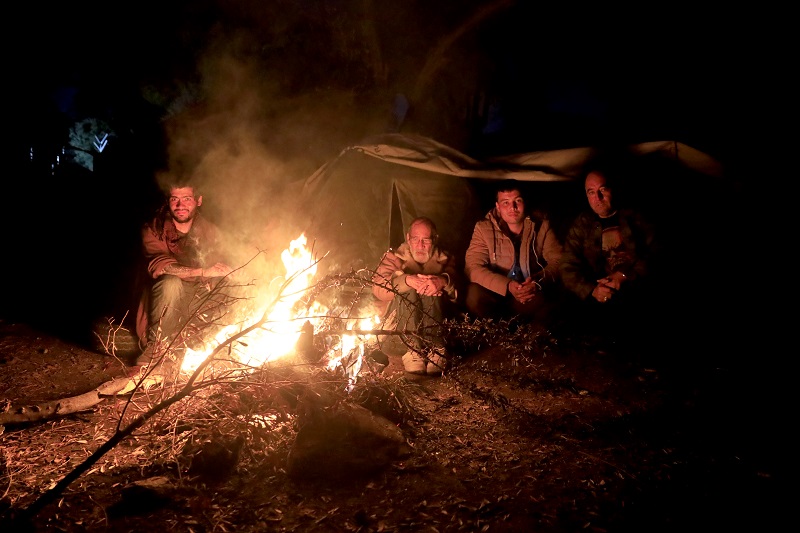
Greece: Urgent Need to Move Asylum Seekers from Islands

Giorgos Moutafis for SolidarityNow

As Winter Begins, Accelerate Transfers, End Containment Policy

Athens, December 21, 2017. More than 13,500 asylum seekers remain trapped on the Greek islands in most deplorable conditions as winter begins today, December 21st, SolidarityNow states. Greece, with support from its EU partners, should urgently transfer thousands of asylum seekers to the Greek mainland and provide them with adequate accommodation and access to fair and efficient asylum procedures.

The Greek government committed in early December that it would move 5,000 asylum seekers from the islands to the mainland as an emergency measure, before the onset of winter. Despite the transfer of almost 3,000 people since early December, the hotspots on Lesbos, Chios, Samos, Leros, and Kos still have 11,005 people in facilities with a total capacity of just 5,576. More than 1,000 people have arrived to the Greek islands during the same period.

“Αfter the recent incidents in Moria’s camp, resulting in pregnant women and children being injured, the transfer of the population to the mainland, becomes even more urgent. Under these circumstances, we welcome the Greek Government’s decision to promptly move thousands of people to better conditions on the mainland as an emergency measure, however much more needs to be done to improve the situation for refugees in the country. Greece, with the support of the EU and its member states, has to act immediately and protect the human rights of the people arriving at Europe’s borders”, stated SolidarityNow.

In a campaign that began on December 1st, 13 human rights and aid organizations called on Prime Minister Alexis Tsipras, to end Greece’s policy of containing asylum seekers on the islands. The groups said that Greek authorities should immediately transfer people to improved conditions on the mainland and take concrete measures before the official start of winter so that no asylum seekers are left out in the cold. The groups also said that other EU leaders should take a clear stand to end the containment policy that keeps asylum seekers trapped on the islands under an agreement with Turkey to send people refused asylum back there.

SolidarityNow and other groups participating in the campaign will continue campaigning throughout the winter, highlighting the deplorable conditions asylum seekers trapped on the islands face. The groups will press the Greek government and EU leaders for a more effective response that protects the rights and reduces the suffering of asylum seekers arriving in Greece.

The Greek government is expected to introduce a bill in Parliament in the coming days to accelerate the asylum process with the aim of expediting returns to Turkey, under the EU-Turkey deal. While the length of the asylum procedure is one factor contributing to people’s distress on the islands, reducing the length of asylum procedures at the expense of the quality of the process would put asylum seekers at risk of being denied the protection they need, SolidarityNow said.

Such an approach is the wrong way to alleviate overcrowding or address the systemic issues linked to the containment policy and EU-Turkey deal that have created this inhumane situation on the islands. Any reform should ensure that asylum seekers have access to fair and efficient asylum procedures that allow for all asylum claims to be fairly examined on their individual merit.

Organizations Participating in the Campaign:
Amnesty International
Caritas Hellas
Greek Council for Refugees

Greek Forum of Refugees
Help Refugees
Human Rights Watch
International Rescue Committee
Jesuit Refugee Service
Oxfam
Praksis
Spanish Commission for Refugees (CEAR)
SolidarityNow
Terre des Hommes

Greece: Move Asylum Seekers to Safety Before Winter Hits

Giorgos Moutafis for SolidarityNow

 12 Groups Open Campaign to End Containment Policy

(Athens, December 1, 2017) – The Greek government, with the support of European Union leaders, should act now before the onset of winter to end Greece’s “containment policy,” 12 human rights and humanitarian organizations said in a campaign that began today.

The groups began a countdown to the official start of winter, December 21, 2017. They said that Prime Minister Alexis Tsipras, with the support of EU leaders, should immediately transfer people to improved conditions on the mainland and take concrete measures by December 21 so that no asylum seekers are left out in the cold.

As of November 30, the hotspots on Lesbos, Chios, Samos, Leros, and Kos are almost 7,200 over capacity: 12,744 people in facilities with a capacity of just 5,576. Thousands, including single women, female heads of households, and very young children, live in summer tents, essentially sleeping on the ground, exposed to the cold, damp, and rain as the weather worsens. Some women are forced to share tents and containers with unrelated men, putting their privacy and safety at risk. There is lack of access to clean water, sanitation facilities and health services.

This will be the second winter asylum seekers have had to spend in unsuitable facilities on the islands since the EU-Turkey Deal went into effect in March 2016. Last winter, three men died on Lesbos in the six days between January 24 and 30. Although there is still no official statement on the cause of these deaths, they have been attributed to carbon monoxide poisoning from makeshift heating devices that refugees have been using to warm their freezing tents. In late 2016, a blast likely caused by a cooking gas container killed a Kurdish woman and her young grandchild, also sleeping in a tent in Lesbos.

EU and Greek officials have referred to the EU-Turkey deal as a justification for the containment policy. The policy, put in place as part of the deal, forces asylum seekers arriving on the Greek islands to remain there until their asylum claims are decided, regardless of if there is accommodation capacity or adequate access to services. However, forcing asylum seekers to remain in conditions that violate their rights and are harmful to their well-being, health, and dignity cannot be justified, the groups said. Some who arrived on the islands in the early days of the deal have remained stuck there for 20 months.

As part of the campaign, the groups are teaming up to highlight the deplorable conditions asylum seekers trapped on the islands face; to call on European citizens to get involved; and to monitor and update the public on the response of the Greek government and EU leaders.

For more information on the digital campaign, please visit:
www.solidaritynow.org


Organizations Participating in the Campaign:

  • Amnesty International
  • Caritas Hellas
  • Greek Council of Refugees
  • Help Refugees
  • Human Rights Watch
  • International Rescue Committee
  • Jesuit Refugee Service
  • Oxfam
  • Praksis
  • Spanish Commission for Refugees (CEAR)
  • Solidarity Now
  • Terre des Hommes

Joint Letter to the Greek Prime Minister, Mr. Alexis Tsipras

Giorgos Moutafis for SolidarityNow

19 human rights and humanitarian aid organizations release an open letter requesting the Greek Prime Minister Alexis Tsipras to end the Greek government’s “containment policy” of confining asylum seekers to the Aegean islands.


His Excellency Mr. Alexis Tsipras

Prime Minister of the Hellenic Republic

Prime Minister’s Diplomatic Cabinet

Vasilissis Sofias 5

106 71 Athens

Greece

dipl.of.pm@mfa.gr

Fax: +30 210 368 1717


Athens, October 23, 2017

Dear Prime Minister Tsipras,

We, undersigned human rights and humanitarian non-governmental organisations, are writing to express our deep concern at the deteriorating conditions for thousands of women, men and children, seeking asylum and trapped on the Aegean islands as winter sets in.

We urge you to put an end to the ongoing “containment policy” of trapping asylum seekers on the islands if they arrived after the entry into force of the EU-Turkey Statement of March 18, 2016, and to immediately transfer asylum seekers to the mainland and meet their protection needs, including by providing them with adequate and dignified protection, accommodation and access to services.

We acknowledge the efforts of the Greek Government and the solidarity of the Greek people towards asylum seekers and migrants in the past years. Many of our organisations have repeatedly called on the European Union and its member states to demonstrate genuine collective action and share fairly the responsibility towards asylum seekers and migrants arriving in Greece since 2015 in a way that is humane and respects their human rights. However, the disappointing lack of real solidarity and commitment to responsibility sharing by many EU member states is no justification for the current state of asylum seekers on the Greek islands.

Since the EU-Turkey Statement came into effect, the Greek islands of Lesbos, Chios, Samos, Kos and Leros have been transformed into places of indefinite confinement for asylum seekers. Thousands of women, men and children have been trapped on these islands in abysmal conditions and many lack access to adequate and timely asylum procedures and protection. Some who arrived on the islands in the early days of the EU-Turkey Statement have remained stuck there for 19 months.

The recent increase in arrivals, which are still comparatively quite low and should be manageable for Greece and the EU more broadly, include a considerable number of women and children, and have put further pressure on the already overcrowded hotspots. According

to recent government data, the situation is particularly critical in the hotspots on Samos and Lesbos, where a total of more than 8,300 people are living in facilities intended for just 3,000. We welcome the recent announcement that 2,000 asylum seekers will be moved from Samos and Lesbos to the mainland in the coming weeks as an emergency decongestion measure, and hope to see this commitment fulfilled as soon as possible; however, this is not sufficient to alleviate the current overcrowding of the facilities and does not sustainably address the systemic issues that have created this emergency situation. Only uplifting the geographical limitation imposed on the asylum seekers on the islands can provide a sustainable solution.

While the ongoing transition to full State management of the provision of services on the islands began in August, a harmonised, holistic response plan has yet to be released, reception conditions are deteriorating, and gaps in basic services, especially medical, are increasing.

On Lesbos, more than 5,400 people live in overcrowded tents and containers, with little access to proper shelter, food, water, sanitation, health care, or protection. Dozens of people, including very young children, are crammed into tents with only a canvas cloth separating one family from another. The living conditions are particularly harsh for pregnant women to endure, and place themselves and their babies’ health at risk. Summer camping tents, designed to accommodate not more than two people, are now holding families of up to seven. Accessing water, sanitation and food is particularly difficult for the many people with physical disabilities—for example, people using wheelchairs simply cannot reach these basic services. Single women in the hotspots report harassment by some of the men. And some asylum seekers have gone through their asylum interview without having had the requisite vulnerability assessment critical for determining both the asylum pathway available to them and the care they may require to prevent further deterioration of their health. These conditions have a devastating impact on the long-term well-being of people trapped there.

A number of human rights and humanitarian non-governmental organisations, including Médecins Sans Frontières (Doctors Without Borders) and Human Rights Watch, have documented the impact of these conditions on the mental health of asylum seekers and migrants – including incidents of self-injury, suicide attempts, anxiety, aggression, and depression. Professionals who have interacted with the asylum seekers note that in many cases, the psychological distress they experience has been factored and/or exacerbated by the policy of “containing” them on islands, which also impedes their access to adequate support and mental health care.

Implementation of the EU-Turkey Statement has been cited by EU and Greek officials as a justification for the containment policy. But forcing asylum seekers to remain in conditions that violate their rights and are harmful to their wellbeing, health and dignity cannot be justified. As we approach the third winter since large-scale arrivals on the islands began, and the second winter since the entry into force of the EU-Turkey Statement, it is evident that the Greek authorities cannot meet the basic needs and protect the rights of asylum seekers while they remain on the islands.

Greece has a responsibility to protect the human rights of women, men and children arriving on the islands. That can only be achieved by ending the current containment policy and transferring asylum seekers to the mainland, so that they can be provided with adequate accommodation, services to meet their needs, and access to fair and efficient asylum procedures.

We thank you for your attention, and remain available for any further discussion with your excellency or a relevant government official on this important matter.

Yours sincerely,

ActionAid

Advocates Abroad

Aitima

Amnesty International

Care

Danish Refugee Council

International Federation for Human Rights (FIDH)

Greek Council for Refugees (The Greek Council for Refugees endorses the text, within the framework of its actions and scope)

Greek Forum of Refugees

Greek Helsinki Monitor

Hellenic League for Human Rights

Human Rights Watch

International Rescue Committee

Jesuit Refugee Council

Lesbos Legal Center

Norwegian Refugee Council

Oxfam

Praksis

Solidarity Now


Read the letter here

SolidarityNow Refugee Team… Runs with Heart and Solidarity at the 6th International Thessaloniki Night Half-Marathon


#SolidarityNow_Refugee_Team participates in the *6th International Thessaloniki Night Marathon. Following the participation at last year’s Athens Classic Marathon, with the first group of refugees in the history of the Marathon, this year more than 20 refugees and immigrants –beneficiaries of the organization’s from the **Accommodation project and the ***Blue Refugee Center (BRC), along with SolidarityNow’s staff members, will run with heart and solidarity for a friend, a parent, a sibling; and for the Greek people they met and Greece that has welcomed them.

SolidarityNow Refugee Team is consisted by 13 Syrians, 8 Afghani, 1 Lebanese, and 6 members of SolidarityNow’s staff (4 Greeks, 1 Syrian and 1 Afghani). The most remarkable characteristic of this multinational team is that most of the runners are teenagers and women (22 women, 6 men). Furthermore, 3 mothers from Syria, will run along with their children.

Some of the participants are temporarily accommodated at the SolidarityNow housing structures in Thessaloniki; moreover, they are asylum seekers and in the forthcoming future they will be relocated to another European country to start their new life or to be reunited with their families.

Sending a Message | “I Run for…”

Shreen Hakan, 40 years old is a Kurdish Syrian mother of 2 children. Currently, she is living in Greece waiting for an identified period for family reunification. Shreen is a very dynamic and lively woman and she has a thirst for knowledge. She is taking English courses at the Blue Refugee Center of SolidarityNow in Thessaloniki. “While I will be running I will be thinking of my husband, who is in Germany. I haven’t seen him for two years now. I will run this Saturday because I want to send him a special message. My message is that ‘I am here but I am coming to meet you soon’”, says Shreen.

Bediya Seyid, 35, originally comes from Syria and she has 4 children. Bediya is learning English at the Blue Refugee Center. She knows some words in Greek but her daughter Slava, 13 years old, speaks almost fluently. Bediya is also waiting for family reunification. Her husband is in Austria. “I will not run, I will just walk, my daughter Slava will run. I am participating in this race because my children wanted to and I really wanted to do a fun activity with them. One more reason is that I have spent a nice time here in Greece and I want to have memories of the country and its people. I will carry these memories with me when I will be in Austria”, notes Bediya.

Slava, Bediya’s daughter, goes to 6th grade and she speaks three languages: Greek, English and Arabic. “I really like running but I participate in this race because I want to be with my friends. Besides that, I want to have memories of my life in Greece. When I will run I will think about my father. I want to tell him that ‘I will run to you papa’”, says Slava.

On Saturday, October 14nth, the 6th Half Marathon of Thessaloniki will send an additional message through the SolidarityNow Refugee Team: the message of coexistence, human rights, participation and equality.


* The 6th International Thessaloniki Night Marathon is an initiative of the Protergia enterprise and includes the Half-Marathon race and the 5.000m of the Health and Strength Dynamics Path.

** The SolidarityNow Hosting and Accommodation project is part of ESTIA, the Emergency Support to Integration and Accommodation program, implemented by UNHCR and funded by European Union Civil Protection and Humanitarian Aid (ECHO).

*** The BRC is supported by UNHCR and UNICEF and funded by European Commission – Civil Protection & Humanitarian Aid Operations (ECHO).

ANNOUNCEMENT


Mr. Epaminondas Farmakis has submitted his resignation from the position of General Manager of SOLIDARITYNOW as at this date, to pursue new professional challenges. The Association, through the President of the Board of Directors, Mr. Stylianos Zavvos, has accepted his decision, with effect from October 10th, 2017.

Mr. Farmakis occupied the position of General Manager since January 2015. He consistently delivered the organization goals, offering his valuable experience of several years to this end, working side-by-side with all our staff, external collaborators and volunteers, contributing with great success to the expansion of the reach of the services offered by the Association.

Mr. Farmakis thanked the Board for their trust and support, as well as the staff and collaborators of the Association for the constructive cooperation they had in promoting the aims of the Association, encouraging them to continue with the same disposition to assist those in need.

The Board of Directors thanked Mr. Farmakis for his important contribution and services to the Association and wished him the best of luck at his next endeavors.

Mrs. Antigone Lyberaki -member of the Board of Directors of SOLIDARITYNOW- will be taking over as Acting General Manager, being herself a distinguished Professor of Economics and an active member of civil society with meaningful experience in International Humanitarian Organizations.

On behalf of the Board of Directors,

Stelios Zavvos

Chairman

The letter in .pdf

Response by the Greek Ombudsman to a report on discrimination against foreign workers


The Greek Ombudsman’s response to a report submitted in February by SolidarityNow and the organization Generation 2.0 Red is being published, regarding the unacceptable discrimination against foreign workers, legally residing in Greece, who enjoy – undoubtedly – fewer benefits than Greek nationals, even though they pay the same social security fees.

The Ombudsman fully justifies both NGOs by considering that the provisions of existing insurance legislation conflict with the principle of equal treatment since they result in different treatment with mere criterion the nationality, without any justification for the deviation, and calls on the EFKA to submit their views ASAP because of the urgency of the matter.

Full text here (in GR)

Joint report of 25 organizations for cases of violation of asylum seekers’ rights

Giorgos Moutafis for SolidarityNow

25 organizations submitted a petition with which they wish to inform the responsible Greek authorities of the ongoing problems that arise regarding the granting of AMKA (Social Security number), AFM (Tax Registration number) and unemployment cards to applicants of international protection, requesting their intervention to harmonize administrative practices with the applicable legislation. They also want to reintroduce the issue of the obvious need to extend all rights to applicants who are at the stage of pre-registration.


25 organizations submitted a joint letter-report with which they wish to inform the responsible Greek authorities of the ongoing problems that arise regarding the granting of AMKA (Social Security number), AFM (Tax Registration number) and unemployment cards to applicants of international protection, requesting their intervention to harmonize administrative practices with the applicable legislation. They also want to reintroduce the issue of the obvious need to extend all rights to applicants who are at the stage of pre-registration.

Regarding AMKA (Social Security number):

According to Greek legislation, asylum seekers have the right of access to the Greek labour market and to hospital and health care. A prerequisite for the full realization of these rights is the possession of AMKA which many times employees from the Citizens’ Service Centre (KEP) do not provide even though the applicants meet the legal requirements.

This refusal is accompanied by several excuses – most of the times unfortunately preemptive – which ultimately constitute a denial by the administration to apply existing legislation. Given that these are people who are in extremely difficult circumstances, the inability to satisfy their fundamental rights and the complete lack of access to health structures or work, does not only further exacerbates their physical, psychological and economic situation but also constitutes a straightforward Violation of existing legislation.

Regarding AFM (Tax Registration number):

According to Greek legislation an AFM number is provided to all natural, legal entities and associations of persons who have their residence or professional establishment or carry out transactions of tax interest within the Greek territory. According to a relevant ministerial decision on AFM provision, what is required is simply a relevant special form upon presentation of an identity card or passport, and, for foreigners, it is also required the provision of evidence that they are legally residing in Greece. As far as asylum-seekers are concerned, the ‘asylum applicant’s alien’ card issued by the Asylum Service constitutes proof that they reside legally in the country.

Unfortunately, asylum seekers often face problems with tax office officials who do not issue AFMs, despite the fact that applicants meet the legal requirements. This refusal is accompanied by several excuses – most of the times unfortunately preemptive – which ultimately constitute a denial by the administration to apply existing legislation.

In the context of good administration practices, there must finally be harmonization of administrative procedure and unimpeded application of the legal framework so as not to interfere with the enjoyment of the rights of those individuals.

Regarding the registration at OAED’s (Manpower Employment Organisation) unemployment register

Employees from the signatory organizations have repeatedly stated that the above mentioned administrative problems in the provision of AMKA and AFM increase the difficulties for asylum seekers to register at OAED’s unemployment register.

Therefore, we appeal to all Greek authorities and ask for their intervention in whatever manner you deem most appropriate in order for the administration to comply with and adhere to the principle of legality and ensure the unhindered provision of AMKA, AFM and unemployment card to all people who meet the legal requirements throughout the Greek territory.

Regarding the lack of access to rights for applicants who are pre-registered

Lastly, the signatory organizations would like to point out that the right to work, as already mentioned above, is guaranteed by Greek legislation for applicants of international protection, only after completing “full registration” of their asylum application according to the existing provisions.

However, de facto delays in the completion of the process of filing an application for international protection, results in the deprivation of those who are at that stage of their fundamental rights, making it necessary that the protective provisions extend their scope to include applicants who are also in the process of “pre-registration”.

Finally, the signatory organizations emphasize that the integration of asylum seekers and refugees in our society, beyond legal obligations of the State, should also constitute a political priority, which apart from the formal requirements, provides the substantial conditions for the inclusion of the population in the social fabric of the country. Therefore, the need for a national action plan for integration, covering both formal (legislation and implementation) and the material conditions of integration (awareness and training of public officials, intercultural mediation and interpreting, access to information etc.) remains a fundamental demand of our organizations.

The co-signed organisations

SolidarityNow
Wind of Renewal
ANTIGONE – Information and Documentation Center on Racism, Ecology, Peace and Non Violence
ARSIS
Medecins Sans Frontieres
Nostos
Hellenic League for Human Rights (HLHR)
Greek Forum of Refugees
Greek Forum of Migrants
Greek Council for Refugees (GCR)
Ιliaktida
Marangopoulos Foundation For Human Rights
Caritas Hellas
BABEL
Melissa Network
Kentro Zois
City of Athens Migrant Integration Council
Ecumenical Refugee Program/ERP
ASANTE
CARE
Generation 2.0 for Rights, Equality & Diversity
HIAS Greece
JRS Greece
PRAKSIS
Save the Children

SolidarityNow: Annual Activity Report 2016


Τhe organisation’s actions and its commitment to support the vulnerable populations reflected in a detailed report 

150.000 provided services at the Solidarity Centers – over 3.700 refugees/migrants have found shelter

“Confronted with reality, SolidarityNow developed programmatically and operationally to simultaneously undertake directly implemented social service provision and humanitarian relief activities for those in need -refugees, migrants, Greeks- as a body oriented to promote the open and tolerant societies”.

In these words, the organisation’s Chairman, Stelios Zavvos, introduces us the SolidarityNow Annual Activity Report for 2016, which aims to provide in-depth information on the multi-faceted humanitarian action and work of the organisation.

The organisation’s multidimensional action is apparent through the various actions and programs implemented during 2016. All these actions present a year of demanding efforts, teamwork, achievements and challenges. The results of our action have contributed to the improvement of thousands of people’s lives; these actions are captured in numbers:

  • 150,000 services were provided to vulnerable populations in the framework of the organisation’s two Solidarity Centers’ operation in Athens and Thessaloniki
  • 3,717 beneficiaries have found shelter through the wide range of different housing models implemented by the organisation

The annual Action Activity Report invites you to travel with us by making a stop at the Greek people’ homes who hosted refugees and have turned solidarity into practice. Furthermore, the Activity Report includes the SolidarityNow cornerstone events, refugees’ and migrants’ human stories, as well as the coordinated efforts to advocate and defend human rights. The 2016 accomplishments establish the foundations, but also create the expectations, for even more effective work in 2017 – “A lot of work remains to be done to meet the critical needs of our many fellow Greeks, refugees, migrants. Our vision, a society where every person not only fits but also can be distinguished“, says Epaminondas Farmakis, General Director of SolidarityNow.

Find the annual Activity Report for 2016, on the organisation’s website, https://www.solidaritynow.org/en/ekdoseis/, in Greek and English.

Lack of handover plans for the response in Greece puts asylum seekers at risk, NGOs warn


Humanitarian organisations welcome the transition to Greek Government management of all aspects of service provision for asylum seekers on the Greek islands and for unaccompanied children throughout Greece. However, as this transition begins, and the European Commission scales down support for humanitarian assistance currently provided by nongovernmental organisations (NGOs), there are growing concerns over the potential for deteriorating living conditions and diminishing access to essential services, as few details have been released about the plans for how this handover will be implemented.

In just over two weeks, on 31st July, the majority of European funding provided directly for NGOs responding on the Greek islands will come to an end. These NGOs have been providing aid for the nearly 14,000 people who are seeking international protection on the islands, but unable to move due to policies underpinned by the European Union – Turkey Statement. Under the new system, the Commission will support the Government to manage all aspects of the response through asylum, migration and integration funds (AMIF) and internal security funds (ISF) through DG HOME. The transition is a change from the current system in which NGOs provide services funded by the European Commission (directly through DG ECHO). In addition to the response on the islands, funding and responsibility for meeting the needs of the 2,250 unaccompanied children across Greece will largely also transition from DG ECHO to DG HOME funding under Government management.

This handover has the potential to be a positive step if implemented transparently, promptly and in close collaboration with the organisations currently providing services. However, to date, no national response plan has been released, and information about how the transition will be implemented is severely lacking. Without a clear transition plan, gaps in services will likely occur, and men, women and children may be put at greater risk, without the health, legal and other services and safety they need and have the right to.

We are already seeing the impact of similar service provider transitions. In Lesvos, for example, the contract for the organisation providing primary health care and conducting vulnerability assessments as part of the asylum procedure in the Moria Reception and Identification Centre ended on 30th May. Its 10 doctors, who had provided care for the more than 2,000 people living in the facility, as well as supported the Greek Asylum Service with vulnerability assessments, were replaced by just three doctors meant to fulfil the same responsibilities. Information from the ground indicates there is now a backlog in vulnerability assessments in both Chios and Lesvos, and a dire lack of primary health care.

Additionally, there has been a persistent shortage of safe accommodation and alternative care options for the children arriving to Greece alone throughout the response. There are currently 2,250 such unaccompanied children across Greece in need of safe shelter, but just 1,270 shelter spaces available. Roughly 1,000 unaccompanied children are therefore on a waiting list for shelter, with some living in squats, on the streets, or placed in “police protective custody” (detention) while they wait. As a result of this transition, at least five shelters are set to close, resulting in fewer shelter spaces available, and the number of children in detention, as a form of accommodation, is on the rise. Other forms of appropriate care, such as foster care and semi-independent living, which are more cost-efficient and in line with the needs and best interests of the children, have received little coordinated support or approval from the Government, and there has been no information released about if and when even existing, small scale alternative care initiatives will be continued, let alone expanded upon.

Any gaps in services caused by an uncoordinated transition would impact the health and well-being of thousands of already vulnerable people. It is therefore critical to learn from the lessons of the past years of this response and avoid a foreseeable humanitarian emergency.

We call on:

  • The Greek Government to consult with UN agencies, donors, NGOs and civil society to urgently develop and release a national response plan for the transition period and beyond. This plan should include clear steps for close collaboration and a smooth handover between current and new service providers to ensure no disruption or deterioration of services and living conditions on the islands or for unaccompanied children throughout Greece.
  • The Greek Government to invest in and facilitate the development of more effective and sustainable forms of alternative care for unaccompanied children, particularly supervised semi-independent living and foster care.
  • The European Commission to provide technical and coordination support to ensure that its funds are available, accessible, and used effectively and efficiently to prevent against disruption of essential services. This should include facilitating regular coordination meetings between relevant organisations and the competent authorities as necessary, to ensure a smooth handover between service providers.
  • The EU and other donors to encourage the Government to ensure continuation of health, mental health and psychosocial support, education and legal services on the islands and a variety of appropriate alternative care options and protection services for unaccompanied children throughout Greece.

Safe Refugee and Proud!

Valia Savvidou & Stefania Athanasiou

On Saturday, June 10th and during the three-day period, June 14th to 17th, SolidarityNow participated in Athens and Thessaloniki Pride, respectively, on the side of the LGBTI population.

The aim of the organization’s presence at the Festival was to stand by the LGBTI community and to present its own work on the protection and rights’ defense of the very sensitive population of the LGBTI refugees.

Operating under the principles of equality, respect, freedom of expression and solidarity, the organization implements, since November 2016, the “Safe Refugee” program, the specialized program for LGBTI refugees and asylum seekers who face double stigma; being both LGBTI and a refugee.  

This Festival provided the opportunity to join the voice of the Greek LGBTI community with that of the LGBTI refugee community through actions and things that unite people, all people, regardless of their origin, color, sexual orientation, social status. Music, colorful balloons, interactive awareness games, colorful informational material, and the cheerful general climate, were the means to highlight the joint requests of all for equality and respect.

Thousands of people visited the SolidarityNow kiosk, in both Athens and Thessaloniki, and had the opportunity to be informed about the “Safe Refugee” program, while their interaction with the organization’s people is a small step towards sensitization, against discrimination and in favor of acceptance and respect of human rights.

In SolidarityNow we believe that initiatives like these encourage societies to move ahead, to gradually become the open societies for which we work for, and in which we all have a position as equal members who deserve equal opportunities.


*In the framework of the specialized housing and support program, entitled “Safe Refugee”, SolidarityNow provides accommodation to LGBTI refugees in independent apartments in Athens and Thessaloniki. The program’s participants receive psychosocial support, legal aid, while they take part in educational and recreational activities; they are also part of a wider network that aims to improve their living conditions and support them while staying in Greece.

The Hosting and Accommodation Programs are developed by the UN Refugee Agency (UNHCR) and funded by the European Union Civil Protection and Humanitarian Aid (ECHO).