Completion of the program: “Migrant & Youth Social Inclusion Through Entrepreneurship – #MySite”

Alexandros Avramidis

23 young individuals -Greeks & refugees/migrants- were supported in order to become the Entrepreneurs of Tomorrow

SolidarityNow celebrated the completion of the “Migrant & Youth Social Inclusion Through Entrepreneurship”  (MYSITE) program in a closing event that was held in order to celebrate entrepreneurship, employment and social inclusion, at the Blue Refugee Center in Thessaloniki.

MYSITE lasted 18 months and was the result of a partnership among five organizations from five different European countries with the common goal to promote entrepreneurship as a means of livelihood and financial independence for young people, to promote the social integration of migrants and/or refugees as well as to reintegrate  young people into the labor market in the five participating countries (Greece, Cyprus, Malta, Italy, Spain).

The event for the completion of MYSITE took place on September 26th, as a side event of the 1st SolidarityNow’s Job Fair. T

Also, they had the opportunity to follow presentations on a variety of topics related to entrepreneurship and labor market, such as:

  • SolidarityNow’s employability programs, strategy and priorities
  • Presentation of the lessons learned from the program and best practices for implementing similar entrepreneurship programs
  • Presentation of the program’s results while the students, trainer and mentors shared their personal experiences of the program.

MYSITE had three objectives that were achieved during its 18-month implementation, including the training of 23 young people in Athens and Thessaloniki (Greek and refugees/migrants) on key entrepreneurship issues and job advice from experienced entrepreneurs (mentors), the development of 20 business plans with the support of trainers and mentors, and  a research on the landscape and policies for youth and migrant entrepreneurship, as well as the resources made available to young entrepreneurs in each participating country.

For the research aspect, SolidarityNow examined the conditions of entrepreneurship in Greece for young people and migrants, by conducting interviews with experts, young Greek and young migrant entrepreneurs. The resulting report includes information on the Greek national context, the legal, political and institutional framework, opportunities and measures for entrepreneurship, challenges and barriers for entrepreneurs, and recommendations for creating a better more environmentally friendly entrepreneurship environment for migrants and young people in Greece.

Find out more about the results of the research here: https://www.solidaritynow.org/wp-content/uploads/2019/05/Greece-National-Report.pdf.


*MYSITE was implemented with funding by the ERASMUS+ program of the European Commission in 5 EU countries (Spain, Italy, Malta, Cyprus, and Greece) by the following partners: SolidarityNow (Greece), Asociacion Socio Educativa Llere (Spain), S.F.Or. Centro Studi Formazione Orientamento (Italy), Aequitas (Cyprus) and The People for Change Foundation (Malta), as the project leader.

**The Blue Refugee Center, founded in 2016, is supported by the UNHCR and funded by the European Union.

Τhe 1st Job Fair for refugees and migrants is quite a sensation!

Alexandros Avramidis

On the 26th and 27nth September, 2019, we are organizing the 1st Job Fair by SolidarityNow Job Fair in Thessaloniki. The Job Fair is a new initiative of the organization, which aims to connect refugees, migrants and asylum seekers with new work contexts and to inform and support Greek employers in order for them to reach refugees and migrants.

People from all over the world,  agencies and businesses in Thessaloniki have the opportunity to meet and talk about labor issues. The festival was organized due to the interest and needs of our beneficiaries. In Solidarity Centers in Athens and Thessaloniki, as well as in the Blue Refugee Center in Thessaloniki, people from various countries are seeking support at the Employability Service, which operates free of charge.

At SolidarityNow we believe that everyone has equal access to the workplace. The Job Festival was the first step this message to be heard and shared. The next goal is this Job Fair to become an institution in the city of Thessaloniki and to be organized in other Greek cities.

See the photos below:

The Initiative “Resilient Roots” was completed with a photography and podcast exhibit by the Primary Constituents (beneficiaries) of SolidarityNow who took part in the project

Wisam Sami

60 participants, 4 instructors, a number of colleagues, all took part in an innovative program with the aim of inclusion through interaction

The medium of radio, creative podcasts and photography, some of the most powerful mediums of modern expression. Taking advantage of these tools SolidarityNow chose to give its Primary Constituents of the organization the opportunity to express themselves, create and critique the organization itself, with the sole aim of improving its services and programs through the increased interaction and feedback acquisition between all its constituents.
And they did it.

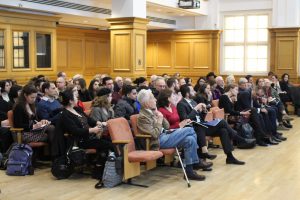
Through their photographs and podcasts 60 Primary Constituents either share their own story or they share a story that caught their attention. These photographs and podcasts which visitors of the exhibit had the chance to see and hear was held yesterday, 17 September, at Serafeio of the Municipality of Athens (Piraios & Petrou Ralli street, Athens). Abdo, Omar, Karim and other Primary Constituents greeted their instructors and all visitors and were happy to share their experience as part of the program.

“Primary Constituents themselves are most equipped to provide us feedback about their needs. We just provided them with the opportunity and some tools in order to be creative and improve their skills of expression” says Danae Kapralou, the program’s coordinator. She adds that the concept of accountability which was also a primary aim of the program is something that lacks in Greece in general. “It is important for those who try to have a better life, to learn that they are the most equipped to advocate for themselves” they just need to be encouraged in that direction.”

The participant’s experience in numbers

  • 8% of program participants were male and 16.2% were female, from 6 different countries around the world
  • 76% of participants found the photography and radio trainings to be very interesting and,
  • 82% of those found that the knowledge they acquired through the workshops is a useful tool they will utilize in the future.

In regard to the accountability aspect that was tested through the program, 80% of participants claimed that through their participation in the program they gained more knowledge and understanding of SolidarityNow’s scope of work.

The photography workshops in Athens and Thessaloniki were conducted by George Moutafis and Alexandros Avramidis and respectively the radio workshop (podcast creation) were conducted by Katerina Kafentzi (Kafka) and Christos Kiousis.

*SolidarityNow implemented the pilot accountability program named “The Resilient Roots Initiative,” since July 2018. The program was coordinated by the Civicus network in partnership with the organizations Keystone Accountability & Accountable Now.

Business for YOUth, the professional educational program for refugees and vulnerable youth groups, was successfully completed


A collaboration between the International Rescue Committee, SolidarityNow and Knowl exclusively funded by the Citi Foundation.

350 young people – refugees, migrants and members of vulnerable social groups – who wanted not only to challenge themselves with entrepreneurship but also to start their lives with dignity and dynamism, participated in the Business for YOUth entrepreneurship program that took part from March 2018 to July 2019. Watch the video that summarizes the results of the program: Business For YOUth program completed!

This action is just one of the partnerships between Citi Foundation and the International Rescue Committee (IRC). With a $2,000,000 donation by the Citi Foundation’s Pathways to Progress Global Initiative, 1,000 young refugees, migrants, and vulnerable youth groups from Greece, Jordan and Nigeria received professional training and financial support for start-ups.

In particular, in Athens, the IRC has worked with SolidarityNow to develop and implement the Business for YOUth program in collaboration with the social enterprise Knowl and has enabled 350 people aged 18-35 to be trained in basic principles of entrepreneurship.

30 of the participants, who were distinguished both for their ideas and their determination and commitment to chasing their dream, were selected to receive personalized support from mentors and a symbolic amount to cover the first operating costs of their company.

“When we launched the Business for YOUth training and entrepreneurship program in March 2018, our ambition was to give young people the opportunity to acquire knowledge that would help them implement their own business ideas in a country like Greece that is struggling with unemployment and exclusion. To give them the opportunity to create, stand apart and flourish! Today, with the completion of the program, we feel that our goal has been achieved since the numbers and results have allied with us. More than 350 young people attended 19 courses and 30 of them reached the next level: they received special counseling to get their business idea materialized. Such a principle shows and the need for such dynamic initiatives – a priority for us in SolidarityNow”, notes Antigone Lyberaki, SolidarityNow General Manager.

“The IRC and the Citi Foundation have created a global partnership to help aspiring and ambitious young entrepreneurs start their own businesses. Over the past 2 years, 1,000 people have supported business ideas in Greece, Jordan and Nigeria. In Greece, the program focused on young Greeks, asylum seekers, and refugees. We hope that the experience we have gained will inspire similar initiatives in the future and will give everyone the opportunity to create a new life in Greece. Through this program we met amazing, talented, and strong people to whom we wish wholeheartedly good luck in creating their new businesses”, said Jana Frey, Country Director in IRC Hellas.

“As with many other modern challenges, cities are at the forefront of attempts to integrate refugees and vulnerable youth groups. The Citi Foundation’s Pathways to Progress initiative is the solution we offer for positive prospects in our lives through a sustainable economic path. We believe that our most important obligation to young people is to establish the conditions that will encourage them to believe in their future“, said Manina Menidiatis, Public Affairs Officer, Citi Greece.

“We are particularly proud that through the targeted and intensive entrepreneurship program, 350 young people have successfully completed the training program, have taken the opportunity to think, develop, present and, above all, test their business ideas in an ‘unknown’ environment. Importance was given to the development of soft skills, and the transmission of knowledge directly applicable to business activity such as costing, branding, financing, etc. Entrepreneurs and professionals were mentors to the participants, who managed to implement their business plans in a professional and, most importantly, sustainable way. In fact, 30 of them received further personalized advice and guidance on the development of the business plan. Knowl, which values respect for all people, will continue to actively support such initiatives”, Dr. Ioannis Salamouris, President of Knowl-Social Enterprise, stated.

*The completion of the first round of this collaboration was celebrated on Tuesday, July 9, at the Serafio of the City of Athens. Beneficiaries, rapporteurs, consultants, co-operating organizations, as well as friends and supporters participated in the celebration. Everyone remembered important moments, exchanged experiences and impressions, had fun, and wished the young entrepreneurs, good luck.

More about the IRC

The International Rescue Committee (IRC) is a humanitarian non-governmental organization that since 1933 has supported refugees, displaced populations, victims of oppression and violent conflicts around the world. In Greece, IRC Hellas started offering services in the summer of 2015 in Lesvos and its actions have gradually expanded to mainland Greece. Its interventions extend from reception to integration of refugees, asylum seekers and migrants, with the aim of rebuilding their lives. Η International Rescue Committee (IRC) είναι μια ανθρωπιστική μη κυβερνητική οργάνωση που από το 1933 στηρίζει πρόσφυγες, εκτοπισμένους πληθυσμούς, θύματα καταπίεσης και βίαιων συρράξεων σε όλο τον κόσμο. Στην Ελλάδα, η IRC Hellas, ξεκίνησε να παρέχει υπηρεσίες το καλοκαίρι του 2015 στη Λέσβο και, σταδιακά, οι δράσεις της επεκτάθηκαν στην ηπειρωτική Ελλάδα. Οι παρεμβάσεις της εκτείνονται από την υποδοχή έως και την ένταξη προσφύγων, αιτούντων άσυλο και μεταναστών, με σκοπό την ανοικοδόμηση της ζωής τους. The IRC focuses on providing services for the protection and empowerment of women and children (including 24-hour care for unaccompanied minors), mental health and psychosocial support, labor market integration, job counseling and entrepreneurship education programs for young people, support for management and infrastructure refugee camps, as well as providing valid and simplified information through the Refugee.Info platform. At the same time, it has gained valuable experience in the dynamics and needs of civil society in Greece through the close cooperation and support of ten organizations as part of one of its programs. It has also collaborated with the municipalities of Athens, Thessaloniki, Piraeus and Lesvos. https://www.rescue.org/country/greece

More about the Pathways to Progress initiative by the Citi Institution

The Citi Foundation’s Pathways to Progress initiative, funded by the Rescuing Futures for Resellers and Vulnerable Business Training program for 2017-2020, involves a three-year $ 100 million investment program and a voluntary offer of 10,000 Citi employees aiming to support the vocational training and employment of 500,000 young people around the world to cope with the challenges of a modern competitive labor market. This is an extension of an initial $ 50 million bid that supported more than 100,000 young people in ten US cities. The Pathways to Progress initiative aims at reducing youth unemployment in major cities around the world, improving the quality of the workforce by creating opportunities for a first job, developing entrepreneurial skills, offering vocational training and practice. Moreover, it recently presented the findings of a new global survey demonstrating the high level of optimism among young people, on the one hand, and the lack of opportunities and skills, on the other hand. http://www.citifoundation.com/citi/foundation/programs/pathways-to-progress.htm

More about Knowl

The Knowl Society for Education and Lifelong Learning (est. 2012) is one of the leading European Social Enterprises with substantial social impact and measurable results, developing personalized professional and personal high-level training for companies and businesses, offering free education and training for vulnerable groups such as the unemployed and refugees. To date we have offered at zero cost training skills and guidance services – counseling to 4,000+ people (social risk groups). Most memorable is the Mellon Skill Accelerator, the social initiative that records impressive results as 1 in 2 beneficiaries find work before completing the training program.

In Knowl we place special emphasis on young people out of employment, education or training (NEETs), unemployed, women, people with reduced financial capacity excluded from learning processes and / or with limited skills, refugees and start-uppers. Distinguished operators and companies that choose and trust Knowl services include the Stavros Niarchos Foundation, the Prince’s Trust International, the Bodossakis Foundation, the European Commission in Greece, Vodafone Greece, KAYKAS SA, Chios Mastic Producers Association, KORRES, major research institutes, municipalities, etc. http://www.knowl.gr/

Events for World Refugee Day in Athens


20 June, Kypseli Municipal Market – 22 June, Serafio City of Athens

On World Refugee Day, held every year on 20 June, we commemorate the strength, courage and perseverance of millions of refugees forced to flee their home. Around the world, communities, schools, businesses, faith groups and people from all walks of life are taking big and small steps in solidarity with refugees.

In Athens, on the occasion of this year’s World Refugee Day, we join forces in two events-meetings where we will create, discuss, learn, make proposals, search for solutions, play, photograph and sing, all together, sending a strong message of solidarity and peaceful coexistence.

We are looking forward to seeing you all there.

We Create Together – We Live Together

20 June, Kypseli Municipal Market, 19:00 – 23:00

19:00   Screening of short films by and about refugees.

20:00   “Through the eyes of the protagonists,” discussion about photography and refugees, with projection of photo material. The discussion will be moderated by Thanassis Stavrakis, chief photographer of the Associated Press, Greece, Cyprus, Albania & North Macedonia.

21:00   African music and dancing by MANDELA GALS and GUMBOOT TRIO of the community Vana Ba Afrika. Polyphonic singing by GRUPI POLIFONIK VLLAZERIMI of the Federation of Albanian Communities in Greece. Siamand Soufizadeh will sing and play the guitar. The musical programme is coordinated by the Greek Forum of Migrants.

In addition, there will be workshops for children and a photo exhibition titled “Capturing the Light”, while the participating organizations and actors will be present to inform people about their activities.

The Food Truck of Giorgos Glynos will also make a stop at the Municipal Market of Kypseli, which will host Barshank Haj Younes from Syria in its kitchen. They will serve together Greek-Syrian street food, in the framework of the Cooking #WithRefugees festival.

You, me and those that came after – We are all citizens

22 June, Serafio City of Athens, 18:00 – 22:00

18:00   Greetings – Launch of events.

18:30   Open discussion – Launch of thematic parallel workshops, with the following topics: a) homelessness, b) access to labour market/entrepreneurship and c) integration.

20:00   Fashion show by refugee & migrant communities.

21:00   Theatre performance by a group of volunteers/students from Ireland (SCI Hellas).

A buffet with food cooked by refugee & migrant communities will be available, while various activities for children will be organized.

Moreover, during the event, visual information material will be screened focusing on the operation of humanitarian organizations, local authorities and refugee & migrant communities.

Refugee & migrant communities, in cooperation with the Greek Forum of Refugees, are in charge of the organization and coordination of the events in Serafio.

On Sunday, 23 June, at 18:00, a friendly football match will take place at the field in Rouf between the team of the Greek Forum of Refugees and HOPE Refugees team of the organization GI.

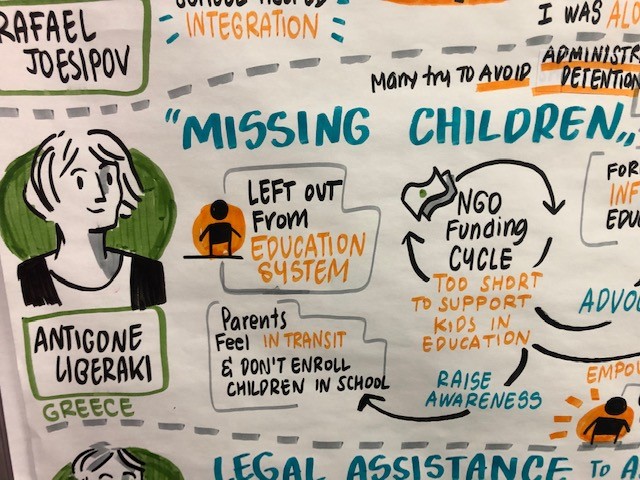
A lost generation with missing children and no childhood?


Antigone Liberaki, General Manager, SolidarityNow

Lost generation?

From 2016 onwards, the global civil society raised the issue of schooling of refugee children.[1] With half of the world’s 19 million refugees being children, and most of them being denied access to education, the timing seemed right, if not already delayed. Most states followed this lead and Greece has indeed gone a long way since then. We can now talk about 65% school enrolment and counting, with the weakest percentages still found at the secondary school level, where there is much room for improvement.[2] Given the already overstretched national education system, due to the austerity crisis, it is inspiring how much has been done during the last two years to cover this unacceptable gap, which unfortunately has created one ‘lost generation’. But no more.

As SolidarityNow, we are aware that the usually short-term funding cycles of NGOs cannot be the sole source that will see children through their entire schooling years. This is an admission of paramount importance, which has shaped our approach on refugee education. As a first step, we had to work on dismissing the fear of governments and, surprisingly, of refugees alike. School enrolment makes the living conditions seem more permanent; an undesired feeling both for the local society and the population on the move, who often sees Greece as a transit country. Nevertheless, political and ideological debates can wait, while education cannot. After circumventing this first barrier, through advocacy, the next challenge was to avoid creating a parallel system, but simply to find ways to strengthen the public one with targeted interventions. Providing non-formal education services in 8 different locations across the mainland, we managed to reach 4.100 students from 36 different nationalities, in one and a half year, keeping a fair gender balance[3]. Paving the way for school enrolment prerequisites has also been a big part of our daily work; advocating for timely appointment of extra teachers, surpassing local xenophobic reactions, covering schools’ needs on additional supplies, securing vaccines, linking parents to school through interpretation and keeping them involved – reinforcing their parenting role – are only a few such examples.

I had to choose among many, due to time restraints, yet at least one pilot[4] education intervention of SolidarityNow is worth a separate mention. We chose to focus on math and not only language courses, providing a continuity in the learning process, linking pre-existing knowledge the children bring with them from their home-country to the learning experience in the host one. Contrary to language classes, where everything is new, children feel more confident with math, as the language is common, a fact which we reinforced with the publication of a dictionary of mathematical terms in 6 languages.[5]

It is important to no longer have to speak about a lost generation. At SolidarityNow, we strongly believe that NO child should be out of school for more than one month, even in displacement living conditions. The education gap can and is being bridged, but there are no grounds for complacency. In this spirit, we are happy to announce that in 2019 our non-formal education services are extended to cover 15 different locations throughout Greece, from the initial 8 ones.

Missing Children…

Taking another look at child rights milestones in 2016, a few months prior to the ‘lost generation’ debate, Europol talked about 10.000 missing children in European territory and EU was silenced by the shock.[6] Yet, it should not have been an unforeseeable development. Where legal options are absent and official pathways are inhumane, illegal networks are bound to flourish. Smuggling and trafficking networks put us all to shame, while it is not up to the civil society to address independently theses issues. On our part, as SolidarityNow, we are proud to have joined the larger network of Blue Dots – a term coined by UNICEF, UNHCR and Red Cross to represent Child and Family Support Hubs established throughout the Balkan migration route. The cross-border link between these safe spaces has helped reduce this inconceivable number. We are proud to have supported more than 700 unaccompanied minors, having lost track of only 1! Maybe one too many. We had to be very creative to counter-fight the attractiveness of illegal networks in the eyes of teenagers. Alternative tools to keep contact with children have been mostly social media, while videos presenting the legal pathways have been proven effective communication tools.

Nevertheless, standing here in celebration of the 30th anniversary of the adoption of the United Nations Convention on the Rights of the Child, I feel ashamed of the recent convictions of Greece[7] and France[8] by the European Court of Human Rights[9] for violations of children rights. Especially, in H.A. v Greece, it was the cornerstone of the Convention, the principle of the best interest of the child that was breached (art. 3). The messages of the Court are loud and clear with a judicial order – just a few days ago added to the list –  addressed to the Greek authorities, in order to put an end to the administrative detention of two unaccompanied girls.[10] However, are we listening? Are the states and the relevant stakeholders ready to make the necessary changes, which would guarantee adherence to the legal framework that we created? The obstacles are known, while the legal basis to overcome them is already there. More precisely, the de facto situation is considerably different than the legal guarantees. First, the detection of minors is impeded, among others, due to fear of administrative detention in inhumane conditions.[11] This leads to the lack of access to accurate information about legal options, as many minors are being briefed on their rights as adults.[12] Furthermore, even if an unaccompanied minor is identified and chooses the legal safeguard of family reunification, which he/she is entitled to, the waiting period by far exceeds the 6-month limit set by the Dublin Regulation. The lengthy procedures are among the top reasons of the high absconding rate from shelters, thus increasing the number of missing children. All these factors can and should be corrected.

Lost childhood?

Education and protection are obviously in the forefront. However, in my opinion, our forum would be moot if the debate would not at least glance towards the overarching issue, which is none other than childhood, when it comes to children. But how about refugee children? The civil society and donors often speak about a smooth transition to adulthood and are preoccupied with shaping children into active citizens. At some point, during a visit in one of the many refugee camps in Greece, I found myself wondering how we can talk about a smooth transition to adulthood, when there is nothing to transition from. The proactive, yet premature, focus on a future adulthood, has sidelined the present childhood. The causes of this anomaly are multiple and complex to convey. The poor psychological condition of most refugee parents, the overwhelmingly poor living conditions they find themselves in, the cumulative traumas that surface when safety is reached, the lack of options within isolated camps vis-à-vis the need of children to be kept busy and many more abnormal conditions have deprived children of their childhood; right here, right now, not in the days to come, not in the days of their adulthood. Roles have become blurred and parenthood is under crisis, while childhood is under extinction in refugee camps.

We see so commonly, to the point of acceptance, young girls as young as 10 taking up household chores and caring for younger siblings, instead of playing with them. Working always with a bottom-up approach, it shocked me to hear that it took one of our field teams two months of weekly meetings with teenage girls to identify one interest of their own, not linked to household. Just one! The first requests were knitting, infant care for their siblings etc. We settled at pencil drawing! This is a quote of the daily routine of a 14-year old girl! Not to mention the ‘violent’, yet common, practice of using children as interpreters, as they pick up the language faster. There is nothing natural or child-like about a 13-year old boy interpreting his mother’s words about how she was raped before managing to flee.

Education reduces the risk of stigma, isolation, intra-community tensions, marginalisation and radicalisation; while, adherence to the core child rights should be a given. Yet, these two elements are not enough on their own. In fear of a dark adulthood, we failed to notice that the childhood has been stripped off its colors, as well. Being a child should be the end goal.

In SolidarityNow, we believe in our everyday heroes and we like color! We create colorful child-friendly spaces and we fill them up with colorful smiles through hours of playtime! Because the right to play is no less important for the well-being of a child (art 31 of the convention on the rights of the child)[13] than the rest of the children rights.

We believe, with constant effort, we can do it! Not just for the children, but with them!


[1] It was first raised in an organised manner at the World Humanitarian Summit held in Turkey in May 2016, resulting in the creation of the “Education Cannot Wait” fund, the first global fund to prioritise education in humanitarian action.

[2] 80% enrolment in primary school and 50% in the secondary level. The lowest percentages are of course encountered in the islands.

[3] 50-50 in primary school, 70-30 in secondary education.

[4] Other interventions to choose from are the following:

– An element that is lost for children on the move, as they struggle to integrate, is schooling in their mother tongue, which leads to losing an important bond with their parents and their community. We offer mother tongue classes in Arabic and Farsi, in order to maintain this connection, but also because having strong reading, writing and expression skills in one’s own language aids a child’s cognitive development, builds on critical thinking skills, and improves children’s intuition in the overall learning process.

– Making sure to match what is learned in the classroom with real-world skills, we periodically launch different life skills seminars. These have included professional interpretation seminars, computer literacy lessons (aiming for the ECDL certification), and nail art courses! We are continuously exploring options to expand the wide variety of talents of children.

[5] Usually non-formal education projects in this context focus on language classes. SN chose to highlight math and science skills, validating the pre-existing knowledge the children carry with them from their home-country. This continuity of learning was achieved, among other things, by the publication of a mathematical dictionary in 6 languages (Greek, English, Arabic, Urdu, Farsi, Turkish). This slight shift in focus increased children’s self-esteem and devotion to school considerably.

[6] The statement is attributed to Brian Donald, Chief of Staff at Europol, in January 2016.

[7] H.A. and others v Greece, https://www.asylumlawdatabase.eu/en/content/ecthr-ha-and-others-v-greece-greece-violated-convention-placing-unaccompanied-minors

[8] Khan v France, https://www.asylumlawdatabase.eu/en/content/ecthr-khan-v-france-france%E2%80%99s-failure-protect-unaccompanied-minor-breached-article-3

[9] Another even more recent case has been the O.S.A. and others v. Greece, where the ECHR found a violation of Article 5 – Right to liberty and security and Article 3 – Prohibition of torture, as Greek authorities failed to offer asylum seekers the essential, namely legal protection and documents translated in a language they could understand. I am not including it because it is not related to children.

[10] https://www.efsyn.gr/ellada/koinonia/188715_dikastiko-stop-stin-praktiki-tis-prostateytikis-fylaxis?fbclid=IwAR0INZGg–2WhTKwUlpKJJ4Ajdu3WvSWv-e7PqxOvceYiJFUKhJga7c_sC8

[11] Upon registration, the limited capacity of the First Reception Service, the non-cooperation of the minors due to the fear of detention and the disuse of the medical age assessment methods, might result in many unaccompanied minors being undetected by authorities and hence deprived of their right to family reunification.

[12] There is no channel of information on family reunification, while the Prosecutor cannot play an active role in the decision-making process. Additionally, there is no family tracing mechanism. As a result, a lot of minors cross Greece without considering family reunification as an option.

[13] 1. States Parties recognize the right of the child to rest and leisure, to engage in play and recreational activities appropriate to the age of the child and to participate freely in cultural life and the arts.

  1. States Parties shall respect and promote the right of the child to participate fully in cultural and artistic life and shall encourage the provision of appropriate and equal opportunities for cultural, artistic, recreational and leisure activity.

SolidarityNow @ the Metropolitan College


At the graduation ceremony of the Metropolitan College, which took place at the Athens Concert Hall, SolidarityNow participated with its General Manager, Ms Antigone Lyberaki, who said during her speech: “The aim of education is to understand the world out there, but also the world inside us and how they interact with each other. But even more, education is to find ways to make both worlds even better. Our collaboration with the Metropolitan College refers to all aspects of the educational experience. ”

The invitation to this important event for graduates took place in the context of the collaboration between the Metropolitan College and our organization, when a group of Arizona State University students from the USA attended a two-week program in accommodation structures run by SolidarityNow .

Read below the greeting of Antigone Lyberaki during the event.


Education has always been an experiment, a journey with known routes but with many unexpected incidents along the way too. A journey aiming to make us understand the world around us but also our inner world. To make us understand the different ways in which the inner and outer-side world coexist.. and of course, make both worlds better.

This cooperation between solidarity now and the Metropolitan College, is connected to all sides of educational experience. We try to offer opportunities to comprehend the world around us and embed in the inner world of young people the compassion for the least lucky people around us. We are aiming to offer tools for the interaction of young people belonging to different worlds with the ultimate goal of making them better. (Both the world and young adults)

We had the pleasure of hosting 6 students from Arizona State University to our programs here in Athens for two weeks last May. Those young girls had the opportunity of getting to know and experience Solidarity’s Now actions and activities first hand.

They had an orientation visit at the Solidarity Centre in Athens. They participated in entertaining activities alongside children of the Hosting Centre Facilities of Solidarity Now in Paiania. They helped with the collection of clothes for the Bazaar that the Care Centre for Minors had organized. They participated in a brainstorming session on how an ideal youth center should be like in Athens. Finally, they had a summary/overview discussion in which they went through everything they’d learnt the past weeks and evaluated their overall experience.

All of us here in Solidarity Now, are always eager to welcome students from the Metropolitan College and share with them experiences that we’ve gained through our work and open for them the door to our world.

We would be very grateful if also the Metropolitan College, from their side, opened the door of opportunities and qualitative education to young people belonging to the population we support. In order for them to gain real valuable opportunities which – we are certain – will enrich the lives of both the recipients of scholarship from Solidarity Now but also the rest of the College students.

During this effort for an open and welcoming society of understanding and opportunities, those collaborations based on reciprocity are a valuable tool.


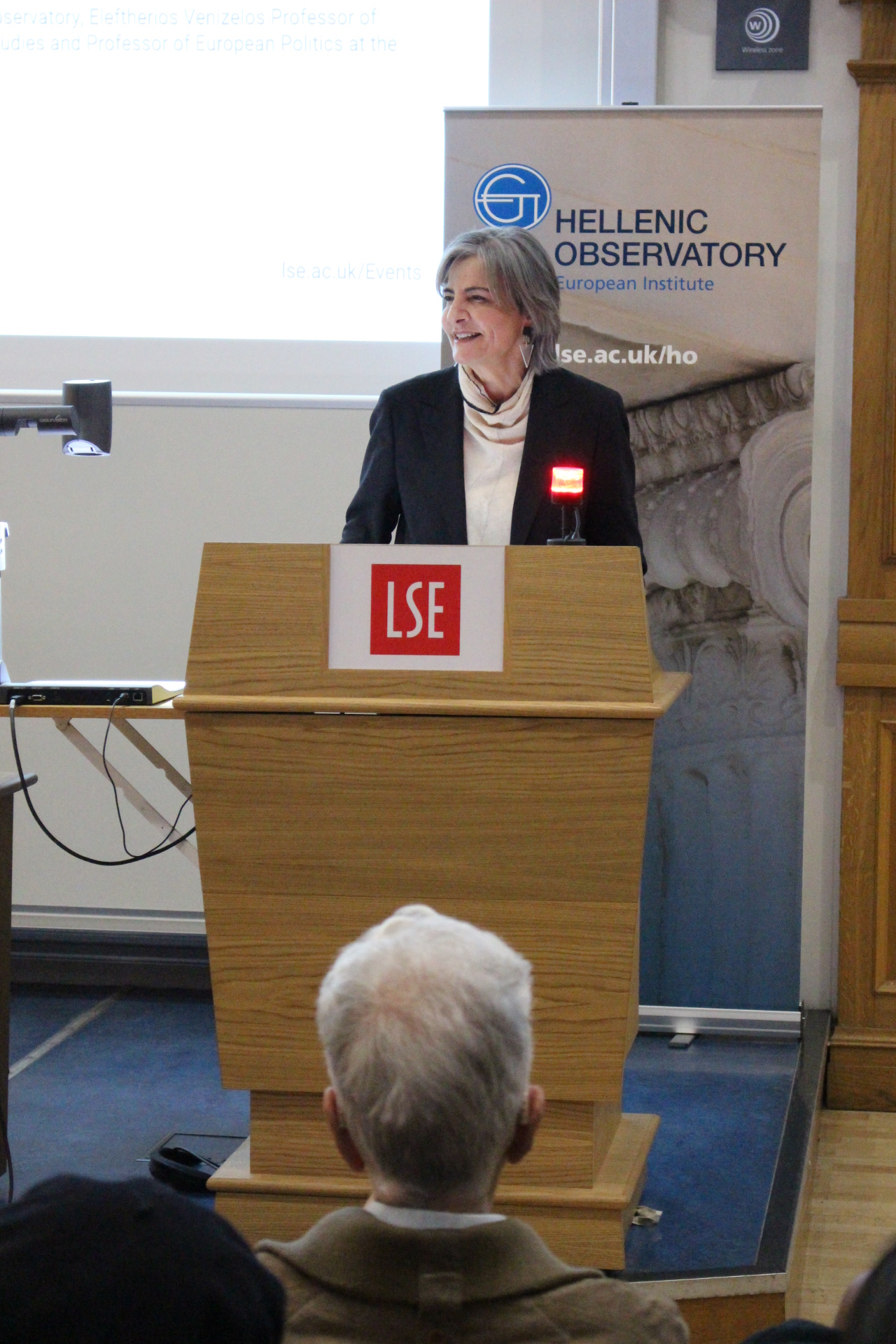
ANTIGONE LYBERAKI @ LSE: Immigration as catalyst for social policy modernisation


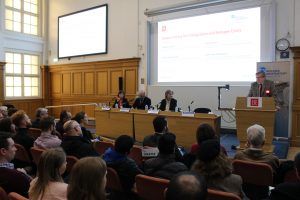
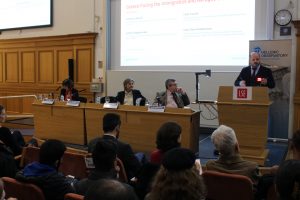
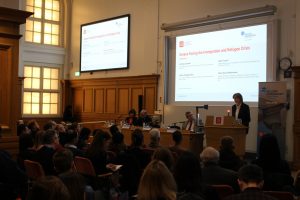
SolidarityNow General Manager, Antigone Lyberaki, was one of the three speakers of the “Greece Facing the Immigration and Refugee Crisis” organized by the Hellenic Observatory of the London School of Economics on February 20th. Mrs Lyberaki spoke about how Greece handled the unprecedented refugee and migratory flows in the country, but also about SolidarityNow’s innovative initiatives implemented to help all those affected by the consequences of the refugee and economic crisis in Greece.
“The refugee crisis demonstrates why a modern country needs an active and effective social policy. In this way the refugee crisis can force the pace of social reform in Greece and provide an example that can be applied more widely. It also demonstrates how national social policy cannot be an island – what happens in Greece (to both Greeks and refugees) is not simply a Greek problem but benefits from international and especially European solidarity” said Mrs Lyberaki.

Her speech follows.


Immigration as catalyst for social policy modernisation

  1. Basic facts on immigration lead to two paradoxes

There are two distinct questions on immigration: One refers to facts and the present: what is happening to the refugees stranded by the previous immigration wave? The other is conjectural and refers to a possible future. What could happen, should there be a repeat of 2015/6, if for example the refugees currently assembled in Northern Syria or in Turkey decide to make their way westward? I will deal with the first question, though the second ought be in our minds as an eventuality.

How many and what are the trends? According to UNHCR there exist this week 71,200 refugees in Greece. This number is more or less stabilized – as the numbers flowing in are more or less equal to those leaking out.  Of them 14600 (20%) are in the islands, in reception centres, under appalling conditions. 21300 (30%) are accommodated in apartments in urban centres.  A further 17000 (24%) are in mainland camps. The rest (25%) have made their own arrangements outside the system, including squatting or staying with friends, and are essentially unaccounted for.  This population was targeted by 1.4 billion Euros which were designated by the EU to their benefit covering the period from 2015 to 2020 (in practice three years from 2018 to 2020).

As far as living conditions are concerned: In the islands, conditions are shameful: endemic violence, insanitary conditions, exposure to the elements.

In the mainland camps, things are better. However, there is overcrowding, inadequate and/or insufficient services. The key problem is geographical isolation – they are in the middle of nowhere. Recall that the origin of the camp model lay in the 1940s and 1950s when the UN saw them as temporary solutions while resettlement was being implemented. In the event, they have turned into permanent settlements – marking decades of existence.

Those in urban accommodation are more fortunate, in the sense that their conditions are better and that they have greater freedom to act. Their key problem lies in agency: they are living in a kind of poverty trap – in the classic sense that, if they were to start working, they would lose their benefits. They pass their life in a kind of limbo – waiting for their eventual resettlement in Northern Europe.

A number of paradoxes are staring us in the face:

  • We are talking about small numbers which should be manageable for a country of 10 ½ million part of an EU of 550 million.
  • The earmarked funds are very large if calculated per head of beneficiary,
  • The kind of benefits available to refugees can be more generous than the social protection on offer to local vulnerable groups in need. We must remember that the Greek welfare state is top heavy on pensions and hardly concerned with other social risks.
  • All this is played out at the tail end of the largest and deepest crisis of the developed world – GDP per head is lower by a quarter what it was in 2008, recovery is still the most hesitant in the EU. Prospects are dire – driven by the need to repay debts.

We may summarise the situation by two paradoxes:

One from the inside-out: Social policy is facing financial stringency at the same time as there are funds for refugees. Austerity in social policy; generosity for refugees.

Another from the outside-in: How can conditions still be so bad, after all this time and all this money? Who benefits? Qui bono?

  1. Immigration and social policy – how do they fit? Four observations highlighted by recent events

Four stories to give a flavor of problems ‘in the field’.

Story 1. A refugee child needs a difficult spine operation. A team of top surgeons offers to perform the operation for free. The public hospital could not sidestep the waiting list. A private hospital stepped in, but did not know how to donate the cost necessary. A Swedish hospital volunteered, but the child could well be returned, not to Greece but to Syria or worse. Day-to-day refugee work is a legal minefield. You need a can opener for a (legal) can of worms.

Story 2. A donor asks an NGO working with unaccompanied minors why they are directing actions only to 230 beneficiaries. Why not spread the same amount to the 2000 unaccompanied minors who are currently in the streets of Athens. The reply was that spreading the benefits thinly may look good for donors, but will be ultimately wasted. If the objective is to create life chanced, the minimum that could be considered must include individual services and a long term commitment. Low quality is no quality. 

Story 3. Majd from Syria, a school leaver aged 20 with no other qualification, was helped by SolidarityNow as an interpreter and cultural mediator, in Arabic, Greek and English. He started work immediately, and after a while enrolled at a private University in Athens, studying English Language and Literature, with a scholarship from the US Government. Majd, no matter how good, could not attend a Greek public university. His take on all this was ‘Social Integration is no big deal; it is doable. It’s a matter of wanting it’. Solidarity works if it leads to empowerment.

Story 4. Social science graduates in Thessaloniki are living glory days. From being plagued by unemployment, they are now in heavy demand by refugee-linked NGOs. The sociology and social work market is so tight that NGOs are poaching staff each from the other. Whereas the curriculum was heavy on ex post analysis, which was all that could be practiced while social policy was simply spending on pensions and cash benefits. Suddenly, there was a demand for individual social services, with an emphasis on measurable results. Active, hands-on, social policy created a kind of Say’s law and changed the job market for social sciences.  Changing the type of social policy creates the need for new delivery structures.


  1. Immigration as catalyst for social policy modernization: the role of SolidarityNow

SolidarityNow was founded in 2013 on the initiative of the Open Society Foundation as a civil society response to the Greek financial crisis. The concern was that humanitarian effects of the crisis were feeding extreme reactions – evidenced inter alia, by the rise of Golden Dawn. Its interventions were to found two Solidarity Centres in Athens and Thessaloniki to provide free legal, psycho-social and employability services in deprived areas.

This work was underway, when the refugee crisis erupted. SN was well-placed to adapt the solidarity model to the needy refugee population. In other words, SN was not active on the beaches but took action as the second line of defence – concerned mainly with integration and advocacy – i.e. applying the existing solidarity model to a wider population.

Achievements to Date

  • SolidarityNow has interacted with over 300,000 individuals through direct implementation and regranting
  • SolidarityNow has established two Solidarity Centres (in Athens and Thessaloniki) and the Blue Refugee Centre in Thessaloniki, benefiting 100,000 individuals to date
  • SolidarityNow has provided shelter to 7,100 individuals through its accommodation project across Greece.
  • SolidarityNow, working with UNICEF and other partners, has facilitated the establishment and operation of Child and Family Support Hubs in refugee camps and urban areas. These centres have supported almost 14,000 children and care-givers
  • SolidarityNow’ reached more than 6,000 children and adults through its holistic Educational Programme. This combines language with vocational training and school support
  • SolidarityNow’s staff was 364 people across Greece in 2018; more than a sixth of that number were of migrant/refugee origin
  • SolidarityNow has received almost 500 volunteering applications, since the programme began in March 2017; it has taken on 145 volunteers across programmes and regions.
  • SolidarityNow’s 2018 total budgeted outlays amounted to €12.1 million. This was financed from the following source: 59% of this sum originated from UNHCR, 18% from UNICEF, 19% from the Open Society Foundations (OSF) and 4% from other donors.  SolidarityNow’s estimated budget for 2019 is in the order of €16 million.

So, SN is and was an organization concerned with social policy in Greece. Its involvement with refugees must be seen as a part of its overall mission. However, the refugee crisis can act as a catalyst for the kind of modernization that is long overdue in Greece. SN is acting as an innovator in social policy, in the following areas:

  • Result- driven social interventions. In a social system concerned with disbursing money to secure privileges or political leverage, responding to the immediate needs of refugees cannot escape confrontation with results.
  • Value for money. SN acts as a mediator between external donors and beneficiaries. It is accountable to both – and needs to prove it on a constant basis.
  • A need to align benefits for refugees with what is available to others. Individually tailored actions must be made available to a wider population – for which extra, internal finance must be sought.
  • Social policy is not the responsibility of the State alone. The State is assisted by civil society, volunteers, donors and professionals. Novel needs demand novel approaches. Experimentation is necessary if we are tackle new problems. First we need to test what works, amend it and scale it up.
  • Social policy can work if it provides life chances. It is not simply providing hand-outs or securing favourable publicity.
  • Thinking out of boxes – very frequently two issues can be dealt together. An example is Long Term Care, very important in a rapidly ageing country facing austerity. A certified training course for carers addressed to unemployed Greeks and refugees will create a type of inter-generational and inter-ethnic solidarity bridge.

The refugee crisis demonstrates why a modern country  needs an active and effective social policy. In this way the refugee crisis can force the pace of social reform in Greece and provide an example that can be applied more widely. It also demonstrates how national social policy cannot be an island – what happens in Greece (to both Greeks and refugees) is not simply a Greek problem but benefits from international and especially European solidarity.