


(Ελληνικά) ΚΟΙΝΟ ΔΕΛΤΙΟ ΤΥΠΟΥ | Παιδιά χωρίς χαρτιά, παιδιά σε κίνδυνο, μέχρι πότε;


Mahsa Amini was a 22-year-old Kurdish girl.
She was in Tehran when the so-called “Morality Police” arrested her for not wearing her hijab properly (meaning that the hijab should cover her hair completely). Shortly after Ayatollah Ruhollah Khomeini took power during the 1979 Iranian revolution, the hijab became mandatory and the morality police were tasked with enforcing that and other restrictions. Hijabs are mandatory to wear in public for all women in Iran, regardless of religion or nationality. Amini was accused of violating the country’s law on headscarves. She was then severely tortured and beaten to death. The Iranian government denied her death being intentional and said she died from a heart stroke. After the coroner’s investigation, it was revealed that she died from a severe stroke to the head.
This sparked anger and fury and people took to the streets. It started with protests that intensified and Iran is now on the verge of a revolution, a feminine revolution. People are fed up with the Islamic Government. They want freedom. The motto of the revolution is “Woman, Life, Freedom”. Mahsa Amini’s hashtag broke the world record on Twitter and has been tweeted 120 million times up to now. In support of Amini, women are cutting their hair and men are shaving their heads as a symbolic gesture. Women in Iran are taking off their hijabs in the streets, and burning them. They are not doing this against Islam, but against the Islamic dictatorship of Iran. Protests have spread all over Iran and until now the regime has not been able to control it. Amini died on September 16th, but throughout the protests many others have been killed. There is no official number to verify, but sources say that hundreds have been killed and thousands have been arrested. The government quickly cut-off the countries internet access so the world wouldn’t see what’s going on in Iran. But people found a way around. The regime also banned Instagram and Whatsapp so no news or video gets spread, but Iranians started using VPNs to bypass the censorship. Facebook and YouTube were already banned so most Iranians were using Instagram and Whatsapp. Elon Musk did announce that he has activated Starlink for Iran, but the problem is that Starlink needs terminals to be set up in the country, which the regime will not allow. The crackdown has intensified but people are still continuing.
People don’t want to stop the revolution, because they know that if they stop now, the regime will execute the arrested and nothing will change. But the regime is ruthless, and history shows that they will do a severe crackdown, and kill thousands if necessary. In the uprisings in 2019, 1500 people were killed. The regime is in a weak state, and is only standing by using force, but this time it’s different. The revolution started with women, against a misogynist regime. People are fearless, and they are chanting “death to Khamenei”, which is a serious crime and you can be executed for using this slogan. We have seen women’s rights movements in the past years, which is completely against the ideology of the Islamic republic, but this uprising is completely in another level. People have had enough. This is all happening at a time when Iran’s hardline government is under growing pressure with talks to revive the stalled 2015 nuclear agreement and the state of the economy under US sanctions, while ordinary Iranians are struggling to cope with soaring levels of inflation.
Many celebrities have supported the Iranian people, celebrities like Kim Kardashian, Yungblud, Justin Bieber, Roger Waters, Khaby and many more. Iranians across the globe joined the protests. This is the first time that all ethnic groups and political groups have joined to stand against the Iranian regime. The Iranians are now more united than ever before. Also, the Anonymous hacking group has stepped in and started an operation against the regime called OpIran. Until now they have hacked several government agencies and banks. They are paralyzing the Iranian dictatorship. This has become a global movement that needs support, but unfortunately western governments are not doing enough to support the Iranian people. The Iranians expect support, western governments should stop the nuclear deal with Iran, they should recall their embassies, and close Iranian embassies in their countries. The people of Iran are making history. Their revolution should be supported. They want freedom, the basic freedom that everyone has, like choosing what to wear. This uprising holds a feminist nature, and is just. The regime is using the same tactics that it has used for 40 years, calling the protestors rioters and evil. The regime had no place in Iran from the first day, they took power by force and have kept power by force. Unlike what the media shows, Iran is a very westernized country, and the new generations are fed up with Islamic laws. Many Iranians claim asylum in other countries to be allowed to practice Christianity and political freedom. Iran has a very educated population, and they are now standing up for what’s right. It’s time for change.
The revolution must be supported!

Breakfast briefing titled: “Migrant Children’s Transition to Adulthood”
SolidarityNow organized today, within the framework of the annual Athens Democracy Forum, a discussion on the topic of unaccompanied children becoming 18 years old in Greece and the challenges they face deprived of any previous supporting framework.
The Chairman of the Board of Directors of SolidarityNow, Mr. Stelios Zavvos welcomed the participants stating: “It is important to strengthen democracy, especially in today’s geopolitical situation, with the continuous crises including the climate one, notably in a Europe plagued by populism and the aging of population. We speak for and experience democracy when we take care of everyone, let alone young people, the most active part of the population, which with its dynamic and diversity can push all sectors of our society forward”.
Afterwards, the Special Secretary for the Protection of Unaccompanied Minors, Mr. Heraclus Moskoff, spoke about the work of the Special Secretariat and its impact on the lives of unaccompanied children living in the country, recognizing the importance of substantial support for unaccompanied children coming of age. “To date, the Secretariat has supported the relocation of 1,271 children in 13 European countries. The main priority of the SSPUAM is the integration of the children who remain in our country, offering them opportunities for education and employment”.
The Head of the Unit for Integration and Support of UAMs of the Special Secretariat, Ms. Gelly Aroni, emphasized on the importance of education, the exchange of good practices, and the participation of the children themselves in the decisions that concern them while underlining that: “Today, we are working on integration practices of the children but essentially what we need to do is to draw up a policy”.
The discussion was honored by the presence of the internationally renowned economist, academic and political analyst, Jeffrey Sachs. In his presentation, Mr. Sachs referred to the global challenges and their consequences on migration, to the imperative need to plan policies, while criticizing the West and especially his birthplace and global superpower America, for its stance on current geopolitical issues with reference to the war in Syria and Russia from 2008 onwards.
In addition, the academic Ms. Jennifer Cavounidis, a member of the Board of SolidarityNow, emphasized the importance of education for integration, stating that: “24% of students attending Greek schools are first or second-generation migrants. We need to support them for their well-being and development, but also for the society”. Marilyn Polena, General Manager of SolidarityNow, summarized the work of the organization for unaccompanied children and the need for further support, especially in the first years of adulthood, with the aim not allowing marginalization to be an option for any child.
The conclusions from the discussion highlighted the gap that arises in the care of unaccompanied children once they turn 18 and the need for further initiatives. It was particularly pointed out that investing in the future needs to be done on children’s potential and not on their vulnerability. The aim is to bring out the children’s talents, through the provision of opportunities for education and skill development, to create a two-way benefit relationship- both for the young people and the society in their new country.
In the context of the meeting, a short video-testimony of an 18-year-old from Gambia was presented, through which the difficulties, anxiety, and impasse experienced by children when they turn 18 were expressed. The issue of the transition of unaccompanied children to adulthood is also addressed by a short film entitled “I Woke Up 18” directed by Vera-Iona Papadopoulou and produced by SolidarityNow which will be shown for the first time tomorrow September 30th at 17:00 at the Danaos cinema, as part of the Athens International Film Festival.


Dreams, disillusionment, fear and hope of six young people
SolidarityNow invites the public in the premiere of the short film “I Woke up at 18”, on Friday, September 30th at 5:00 p.m., at the Danaos cinema (109 Kifissias Avenue).
The film “I Woke up 18” presents through the stories of its six young protagonists, the difficulties that unaccompanied children face as soon as they turn 18 and is hosted at the 28th Athens International Film Festival.
According to the data of the Special Secretariat for the Protection of Unaccompanied Minors-Ministry of Migration and Asylum, on September 1st, 2022, the estimated number of unaccompanied children in Greece was 2,224. Greece takes care of them, by providing accommodation in suitable structures, psychosocial and legal aid and access to education. When children “turn 18” however, they are asked to leave the structures, regardless of their legal status, and make the transition to independent adult life. They thereby lose the care, security and the supportive framework provided so far. Consequently, previous social integration efforts are interrupted, and children are often deprived access to fundamental human rights such as health, work and education, pushed to the edge of society.
Director and script writer: Vera-Iona Papadopoulou
Directors of Photography: Nikos Palaiologos and Thodoris Nikolaou.
Trailer link: https://youtu.be/EE7-V8ZSo4I.
*The short movie was produced in the context of the European project “Building Futures, Sharing Good Practices: Supporting Migrant Children’s Transition to Adulthood” implemented by 5 partners: the Special Secretariat for the Protection of Unaccompanied Minors-Ministry of Asylum and Migration and SolidarityNow from Greece, Convive – Fundación Cepaim from Spain and NIDOS, guardianship for refugees from the Netherlands, under the coordination of the Council of Europe. The project is funded by the European Union’s Asylum, Migration and Integration Fund and the Council of Europe.

The “Homework and Creative Activities Centers” operate in mainland Greece in the context of the program “All Children in Education” program, implemented by SolidarityNow since October 2021, with the support and funding from UNICEF Greece. The program aims to facilitate the integration of refugee and migrant children in formal education through the provision of non-formal education services and other complementary activities.
SolidarityNow invests in education since its establishment, recognizing its fundamental role both in the smooth social integration and the creation of independent and empowered adults. Through specific programs and actions, the organization creates and offers opportunities to vulnerable population groups – Greeks and non-Greeks- to enhance their educational and life skills by providing them with access to non-formal education activities.
Just “before the bell rings” we give the floor to Iliana, Louisa, Shevin, Mr. Ali, Elpida, Basira, Maria, Ramazan, Ms. Sabrmha, Charis, Badal, Iqbal, Chrysa, Hasti, Kosar and Alexandra!
*The project “All Children in Education” (ACE) is implemented by SolidarityNow with support and funding from UNICEF Greece.

From December 2018 to June 2022, SolidarityNow in partnership with STAR UK provided an innovative interactive and communication experience to its beneficiaries -refugees and asylum seekers- and to students-volunteers.
The aim of the program was on the one hand to challenge students’ daily life regarding stereotypes and prejudices through personal experience, and on the other hand, to strengthen beneficiaries’ knowledge in the Greek and English languages, providing a friendly and safe environment, thus make them feel more confident paving the way of social integration in Greece. Providing support to young refugees by young Greek students was an opportunity for both parties to experience together the importance of equal opportunities in a person’s life.
In the beginning of the program’s implementation, the students-volunteers were mainly from the Universities of Thessaloniki (Aristotle, University of Macedonia, International University of Greece), whereas in March 2020, after the outbreak of the Covid-19 pandemic, all actions became digital, fact that led to the expansion of the network to other Universities.
In addition, what was particularly emphasized during the program’s implementation was for refugees and asylum seekers to acquire the ability to take initiatives, not just develop skills. For this purpose, specially designed educational and recreational activities were organized, based on non-formal education, as well as significant partnerships with voluntary university networks. Also, the students-volunteers actively participated in the festival Refugee Week (20-26/6/2022) and in the Thessaloniki Pride Festival (25/6/2022).
Students become the new STARTnow leaders!

In a specifically designed multi-room within the Blue Refugee Center of SolidarityNow in Thessaloniki, students-volunteers will be the ones to continue “STARTnow”, by taking initiatives and interacting directly with the refugee population!
There, they will continue, through Conversation Clubs and other non-formal learning activities, their contact with refugees and asylum seekers, supporting them in learning Greek and English. The primary goal is always the development of language skills, recognizing the important role of language as the unique and essential tool for smooth social inclusion, especially when it is taught through alternative educational methods (discussion, interactive games, audiovisual media) as it suits to the youth!
*The program was implemented by SolidarityNow in partnership with STAR UK.


Dear Manos Logothetis and Patroklos Georgiadis,
In light of information collected through input from numerous organizations and focus groups from the community, we are sending you this letter highlighting particular concerns relating to the situation of LGBTQI+ asylum seekers in Greece. We appreciate your reception to our feedback and hope we can continue to work with you on this matter further.
It is agreed that a specific dedicated area for LGBTQI+ people within the camps would not be appropriate as there is a risk of further isolation and stigmatization. Nonetheless, at present Greece is failing to provide appropriate reception conditions for LGBTQI+ applicants. Currently, LGBTQI+ asylum seekers are housed with non-LGBTQI+ people (hereafter ‘mixed housing’). It was widely agreed in the focus groups that mixed housing, particularly in camps, does not allow for the applicant to feel safe or comfortable to be open with their identity. Resultantly, people who have fled their countries are still having to hide and conceal their identity at all times. The following quotes are from LGBTQI+ individuals living in mixed housing:
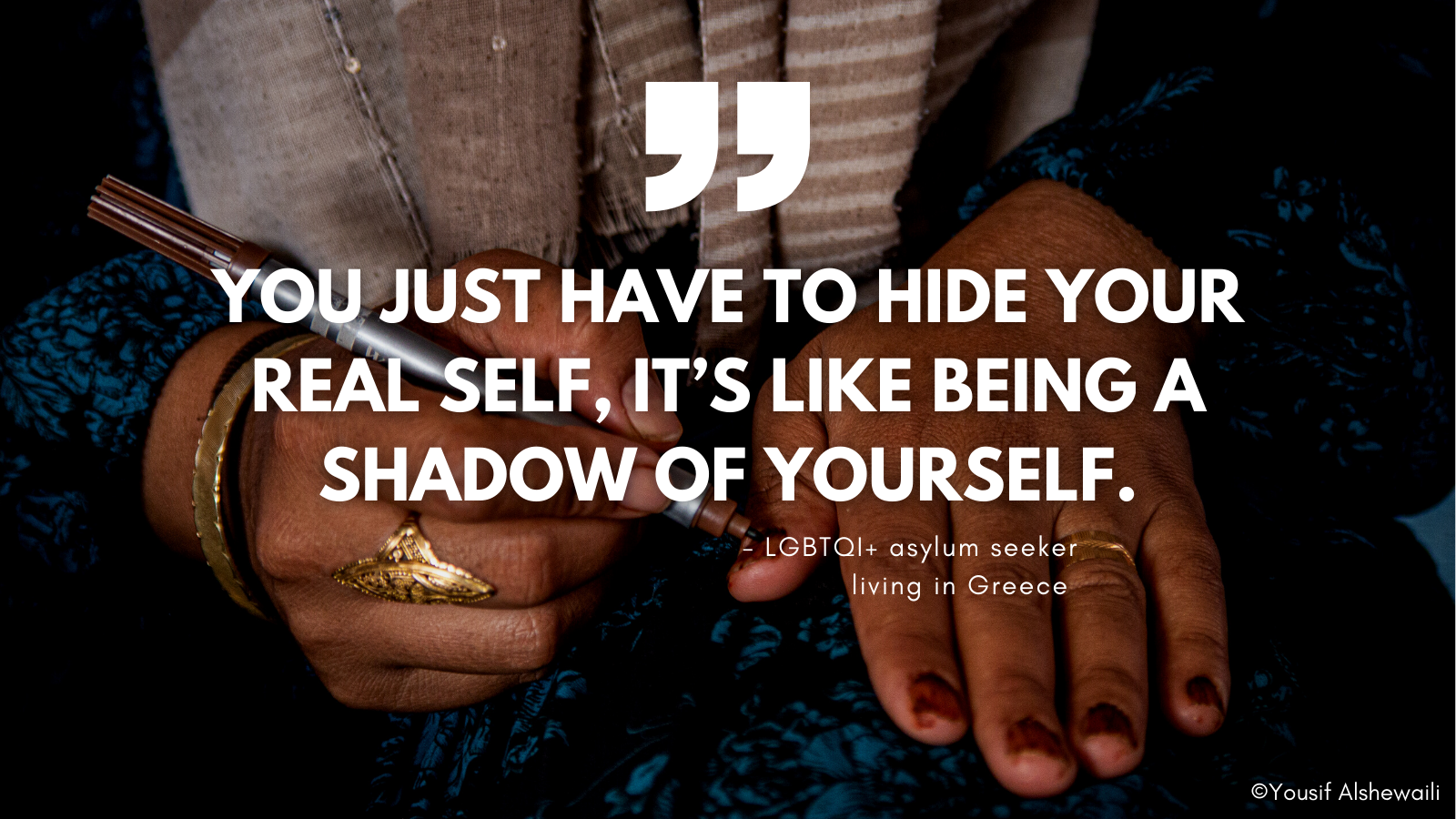
“You just have to hide your real self, it’s like being a shadow of yourself.”
“Hiding in my country and hiding here, it’s no difference.”
The accommodation offers no respite from the discrimination, threat or stigma, which has potentially severe mental health implications.[1]
“[B]eing compelled to conceal one’s sexual orientation and/or gender identity may also result in significant psychological and other harms.” (European Court of Human Rights)
Expecting people to conceal their sexual orientation or gender identity to avoid harm is contrary to the applicants’ human rights, as recognized by the European Court of Human Rights, EU Court of Justice and the Greek Special Appeals Committee.[2]
It is therefore recommended that:
Through discussions with affected applicants, it has been revealed that very few of the LGBTQI+ asylum seekers know of, or have had the opportunity to speak with, an EODY psychologist. Those that have stated there were not enough psychologists for the number of applicants requiring support, and the support provided was not specialized in the issues that uniquely relate to LGBTQI+ persons.
It has been further noted that a focal point in RIS, GAS or elsewhere who could be approached if there was a problem, would contribute towards a safer space. The focal point should be discreet and sensitized to LGBTQI+ issues.
In line with these observations, it is recommended that:
The detailed process required to assess asylum cases on the grounds of sexual orientation, gender identity, gender expression or sex characteristics (SOGIESC) can be undeniably difficult for the applicant, particularly where a person may have to relive trauma. It is recognized and understood that a thorough process is necessary to fully assess the claim. Nonetheless, it is possible to conduct such an assessment without causing further traumatization.
On account of the personal and sensitive nature of the claim, LGBTQI+ applicants are afforded special protections under European and Greek law. The European Union, through case law at the EU Court of Justice[3] as well as the EU Directives,[4] provide clear and comprehensive standards for these assessments.
Unfortunately, it is currently being noted that these standards are not being adhered to. A review of the transcripts of LGBTQI+ applicants since 2021 has shown repeated examples of procedural violations and prohibited questions contrary to European Union law and international standards. The EUAA, European Commission, representatives of DG HOME and MEPs have also been contacted regarding these issues.
Firstly, LGBTQI+ applicants have been asked questions which are expressly prohibited under EU and Greek law, in particular with regards to questions relating to sexual practices and behavior.[5]
Prohibited questions that have been asked include:
Training and competency
Secondly, the Asylum Procedures Directive states that applications should be examined and decisions taken, “individually, objectively and impartially”. Presumptive, collective decision making, often due to the application of the safe country of origin principle, combined with the potential vulnerabilities and trauma that prevent individuals from sharing certain details of their claim at first instance, prevents a proper individualized assessment from occurring.
Caseworkers conducting the interviews should be sufficiently trained in assessing, and competent in relation to, sexual orientation and gender identity.[6] However, the transcripts of LGBTQI+ applicants indicate they are routinely asked questions which demonstrate a lack of training or understanding with regards to sexual orientation and/or gender identity. LGBTQI+ applicants reported encountering skepticism and prejudice upon sharing their sexual orientation, to the extent it was described as similar to a “forced interrogation”. Questions that fail to adhere to European standards include:
The use of stereotypes
Finally, the reliance on stereotypes is of serious concern. Following a judgment at the EU Court of Justice, decisions on credibility cannot be based on stereotypical notions.[7] The judgment further clarified that a decision based on a person’s (lack of) knowledge of LGBTQI+ organizations suggests that the authorities have relied on stereotypes in making their decision. In addition, the UNHCR Guideline no. 9 on international protection states:
“Interviewers and decision makers need to maintain an objective approach so that they do not reach conclusions based on stereotypical, inaccurate or inappropriate perceptions of LGBTI individuals… There are no universal characteristics or qualities that typify LGBTI individuals any more than heterosexual individuals. Their life experiences can vary greatly even if they are from the same country”.[8]
Nonetheless, there are transcripts which are dominated with stereotypical questions, such as:
More worryingly, contrary to the ABC judgment,[9] applicants have been rejected on the basis of stereotypical notions, including on the grounds of a lack of knowledge of LGBTQI+ organizations.
On account of the above, it is recommended that:
We thank you for your continued attention to this matter. We remain at your disposal for any further clarifications and continued discussions.
*The letter can be downloaded by clicking here.
Signatures
[1] B and C v Switzerland (Applications nos. 889/19 and 43987/16) (ECtHR, 2020); James Michael Brennan (2021), ‘Hiding the Authentic Self: Concealment of Gender and Sexual Identity and its Consequences for Authenticity and Psychological Well-being’, Available at: https://scholarworks.umt.edu/cgi/viewcontent.cgi?article=12892&context=etd; B and C v Switzerland (Applications nos. 889/19 and 43987/16) (ECtHR, 2020).
[2] X, Y, Z v Minister voor Immigratie en Asiel (2013, CJEU); B and C v Switzerland (Applications nos. 889/19 and 43987/16) (ECtHR, 2020); Greece, Special Appeal Committee (A.G. v. the General Secretary of the former Ministry of Public Order, No. 95/56266) (Special Appeals Committee, 2012).
[3] Joined Cases C-148/13 to C-150/13, A, B, C v Staatssecretaris van Veiligheid en Justitie, (2014 ) (ABC decision); Joined Cases C-199/12 – C-199/12 – C-201/12, X, Y, Z v Minister voor Immigratie en Asiel (2013) (XYZ decision).
[4] See European Parliament and Council Directive 2013/32/EU of 26 June 2013 on common procedures for granting and withdrawing international protection (recast), OJ L 189 (Asylum Procedures Directive).
[5] Joined Cases C-148/13 to C-150/13, A, B, C v Staatssecretaris van Veiligheid en Justitie, (2014, CJEU) (ABC decision); Applicant (Iran) v Asylum Office (Greece). Case no: 16937/2019.
[6] Asylum Procedures Directive, Article 4(3) and 15(3).
[7] Joined Cases C-148/13 to C-150/13, A, B, C v Staatssecretaris van Veiligheid en Justitie, (2014, CJEU) (ABC decision).
[8] United Nations High Commissioner for Refugees (UNHCR), ‘Guidelines on international protection no. 9: Claims to Refugee Status based on Sexual Orientation and/or Gender Identity within the context of Article 1A(2) of the 1951 Convention and/or its 1967 Protocol relating to the Status of Refugees’ HCR/GIP/12/09, 23 October 2012.
[9] Joined Cases C-148/13 to C-150/13, A, B, C v Staatssecretaris van Veiligheid en Justitie, (2014, CJEU) (ABC decision).

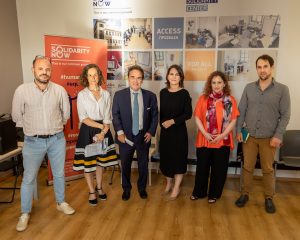
The German Foreign Minister, Analena Baerbock, visited SolidarityNow’s Athens Solidarity Center on Thursday 28th July, on the first day of her arrival in Greece, where a discussion was held with representatives of civil society organizations.
The Chairman of SolidarityNow’s Board of Directors, Mr. Stelios Zavvos, welcomed the Minister to the Athens Solidarity Center and coordinated the discussion aiming to share information about the current situation of migration in Greece, the work of the participating organizations and the role of other European countries in managing the issue. The visit was an initiative of the German Ministry of Foreign Affairs and the German Embassy in Greece, and the discussion was attended by the German Ambassador to Greece, Dr. Ernst Reichel. The representatives of the other three organizations which participated were: Lefteris Papagiannakis, Greek Council for Refugees, Alexandros Chrysomallos, Equal Rights Beyond Borders, and Maria Moudatsou, PRAKSIS.
“It is with great pleasure that we welcomed the Minister of Foreign Affairs, Mrs. Baerbock, at our emblematic Solidarity Center in Athens where we had the opportunity to present the work carried to support the most vulnerable members of our society and, together with the representatives of other organizations, to inform her of the issues concerning refugees and migrants in our country, but also to emphasize the solidarity with which Greeks have welcome refugees in recent years and the need for further practical support from Europe, always in the spirit and vision of European solidarity”, Mr. Zavvos stated at the end of the visit.
“It is extremely positive that the German Minister of Foreign Affairs held a meeting with representatives of NGOs active in Refugee and Migration issues. On this occasion, and on behalf of the Greek Council for Refugees, she was informed about issues of pushbacks, reception, and difficulty in accessing asylum, the lack of a national policy for integration, and the criminalization of solidarity, and the action of NGOs”, Lefteris Papagiannakis, Director of the Greek Council for Refugees.
“At the meeting with the German Minister of Foreign Affairs, we had the opportunity to highlight the issue of the complete lack of integration prospects for recognized refugees in Greece, as well as the implementation of a policy to deter migratory flows, either through obstacles in accessing the asylum process on the islands and the mainland, when returns to Turkey have been suspended, or through a systematic reduction in benefits for asylum seekers. We also expressed our concern about returns of recognized and rejected applicants from Germany to Greece within the framework of Dublin refugees in the future, as this would constitute a violation of fundamental rights and expose them to pushbacks, exploitation, and inhumane living conditions”, Alexandros Chrysomallos, Equal Rights Beyond Borders.
“On behalf of PRAKSIS, we informed the German Foreign Minister on issues relating to refugee and migrant support, the needs, gaps, and weaknesses of social inclusion, as well as our concerns for the immediate future. Reception, housing, vulnerable population groups, issues related to central policy in support of refugees and migrants, were the main topics discussed”, Maria Moudatsou, Vice-President of the Board of Directors of PRAKSIS.

Beneficiaries of the “Guaranteed Minimum Income” are excluded from its payment due to an increase in the objective value of their property
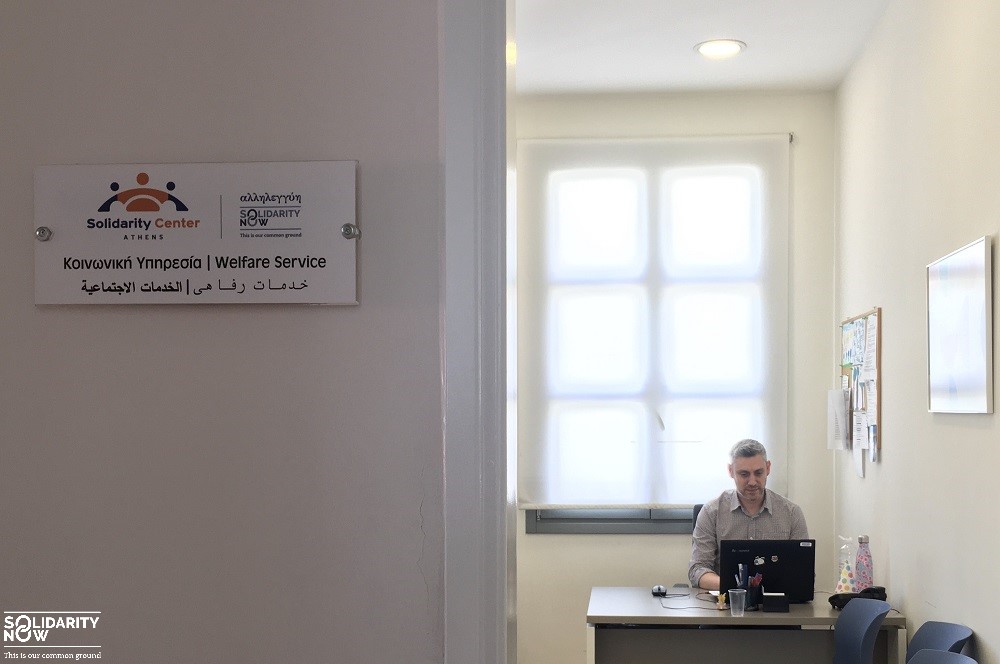
The Social Service of SolidarityNow’s Athens Solidarity Center observes an increase in people visiting the Center in an effort to understand why they are no longer entitled to financial support through the “Minimum Guaranteed Income” (MGI) program.
The MGI is a unique source of income for hundreds of thousands of Greek citizens and foreigners living in Greece, below the poverty line. The beneficiaries of this aid are determined by income and other property criteria, which have been determined on the basis of its fairest possible distribution.
In practice, however, it can be observed that sometimes decisions concerning general economic policy and indirectly leading to the redefinition of the presumptions of subsistence exclude from the MGI individuals and families whose real economic situation does not justify this exclusion.
Such an example is the recent redefinition of the objective values of real estate and their increase, especially in neighborhoods of the center of Athens. Due to this development, MGI beneficiaries, who are beneficiaries of SolidarityNow’s Solidarity Center in Athens, are excluded from its payment, due to the increase in the objective value of their property, in which they live.
A typical case is the case of a Center’s beneficiary, whose objective apartment value was increased from 60,000 to 115,000 euros, thus far exceeding the limit of 90,000 established for the MGI. This woman has no other income, she is over 55 years old and faces health problems, which make the payment of the Minimum Guaranteed Income literally a matter of survival.
Finally, it is worth noting that this development does not concern only MGI, as this property limit is applied to determine the beneficiaries and other social benefits, such as the pension of uninsured elderly people, etc.
by the Social Service of the Athens Solidarity Center by SolidarityNow
The income support provided through the welfare program “Guaranteed Minimum Income” (GMI) is the only means of financial aid for hundreds of thousands of Greek citizens as well as foreigners living in Greece in conditions of extreme poverty. The beneficiaries of the program are defined through income and other property criteria, which have been determined with a view to its distribution as fair as possible.
However, in practice, it is noted that sometimes, decisions concerning the general economic policy leading indirectly to the redefinition of living standards, exclude from the specific financial support, individuals and families whose real financial situation does not justify this exclusion.
Such an example is the recent redefinition of the objective property values and their increase, especially in the center of Athens. Due to this change, beneficiaries of the “Guaranteed Minimum Income” program, who are beneficiaries of the Athens Solidarity Center by SolidarityNow, are excluded from its payment, due to the rise of the objective value of their property, in which they live.
Mrs. E.X. case
The case of E.X., beneficiary of the Athens Solidarity Center by SolidarityNow, is one among many other serious cases. The objective value of her apartment increased from 60,000 to 115,000 euros, thus far exceeding the limit of 90,000 established for the GMI. This woman has no other income, is over 55 years old and suffers a lot of health problems that make the financial support of the “Guaranteed Minimum Income” literally a matter of survival.
Finally, it is worth noting that this condition does not only concern the GMI, as the specific asset limit is applied to determine the beneficiaries of other social benefits, such as the uninsured elderly pension, etc.
Learn more about the welfare program “Guaranteed Minimum Income”, by visiting the webpage of the Greek Ministry of Labour and Social Affairs: https://ypergasias.gov.gr/en/combating-poverty/.
———–
*From 1/8/2021 till 31/7/2022, the Athens Solidarity Center by SolidarityNow operation is supported through a grant from the Stavros Niarchos Foundation in the framework of its global COVID-19 Relief Initiative.
**From 1/7/2021 till 30/6/2022, Kahane Foundation supports the Psychosocial service of the Athens Solidarity Center by SolidarityNow.
*** The Athens Solidarity Center is also supported by the Municipality of Athens.