JOINT PRESS RELEASE | Call by 17 Organizations: Do Not Abolish the Residence Permit for Unaccompanied Children Who Came of Age in Greece


The Greek Parliament Not to Abolish the Residence Permit for Unaccompanied Children Who Came of Age in Greece and Have Successfully Completed Three Years of Greek Schooling

Through a joint letter, a total of 17 Civil Society Organizations—many of which are members of the Child Rights Advocacy Network—call on the Greek Parliament not to adopt the abolition of the residence permit for unaccompanied children who came of age in Greece and have successfully completed three years of Greek schooling, as provided for in Article 38 of the draft bill currently under discussion in Parliament by the Ministry of Migration and Asylum.

Among other points, and as emphasized in the letter, this specific residence permit:

  • Was introduced in 2023, came into force in March 2024, and constituted a commitment made by the Prime Minister himself and the political leadership of the Ministry of Migration and Asylum.

  • Is the only provision that offers protection to young people who entered and were registered in Greece as unaccompanied children.

  • Grants a residence permit to a group of third-country nationals who are, by definition, already integrated and productive—namely, young people who arrived in Greece as unaccompanied children and have successfully attended a significant number of years in Greek schools.

  • Keeps children engaged in education while simultaneously reducing the risk of exposure to juvenile delinquency and exploitation.

  • Its potential abolition would constitute a serious regression in child protection and would negate a long-term investment by the Greek state in the social and economic integration of young people who arrived as unaccompanied children. At the same time, it would undermine the coherence of migration policy, given that in recent years an approach has been developed that recognizes the need for special treatment of former unaccompanied children and their gradual integration.

The organizations co-signing the letter call on the Greek Parliament to reject the proposed abolition of the relevant provision and to adopt further measures that ensure effective child protection.

Signatory organizations – members of the Child Rights Advocacy Network (CRAN):

ARSIS – Social Organization for the Support of Youth
Network for Children’s Rights
ELIX
Greek Council for Refugees
METAdrasi
Shedia – Center for Pedagogical and Artistic Training
Better Days Changemakers Lab
International Rescue Committee (IRC) Hellas
INTERSOS HELLAS
Safe Passage International – Greece
SolidarityNow
Terre des hommes Hellas
The HOME Project

And the following organizations:

Médecins Sans Frontières / Doctors Without Borders – Greek Section
Greek Forum of Refugees
Refugee Support Aegean (RSA)

ARTICLE | 8 women, 8 journeys, one shared step forward


At the Thessaloniki Solidarity Center, we recently met a group of eight young women from Sudan who are living in temporary accommodation facilities in Lagkadikia, Polykastro, Vagiochori, and Drama. They travelled all these distances to come to the Center in order, as they told us, “to find a job.” It soon became clear that they had no information about what looking for work in Greece actually involves, what is required, and how to take the first steps.

Their stories are different, yet equally powerful:

One participant with a university degree and some professional experience, seeking opportunities to build on what she has already achieved.
A woman facing significant communication barriers, without even a personal phone, who is taking her first steps toward accessing information.
A young mother, recently recognized as a refugee, who must urgently leave the temporary accommodation facility (camp), with no provision for specialized support.

Each of them brings determination, skills, resilience, and a strong desire to learn—qualities that were evident throughout the group session.

For us, these meetings reaffirm the importance of support, timely information, and access to services that everyone is entitled to.

With gratitude for their trust and a commitment to continue standing by their side, one step at a time.

*The “Livelihoods Unlocked” project is supported by the L’Oréal Fund for Women.

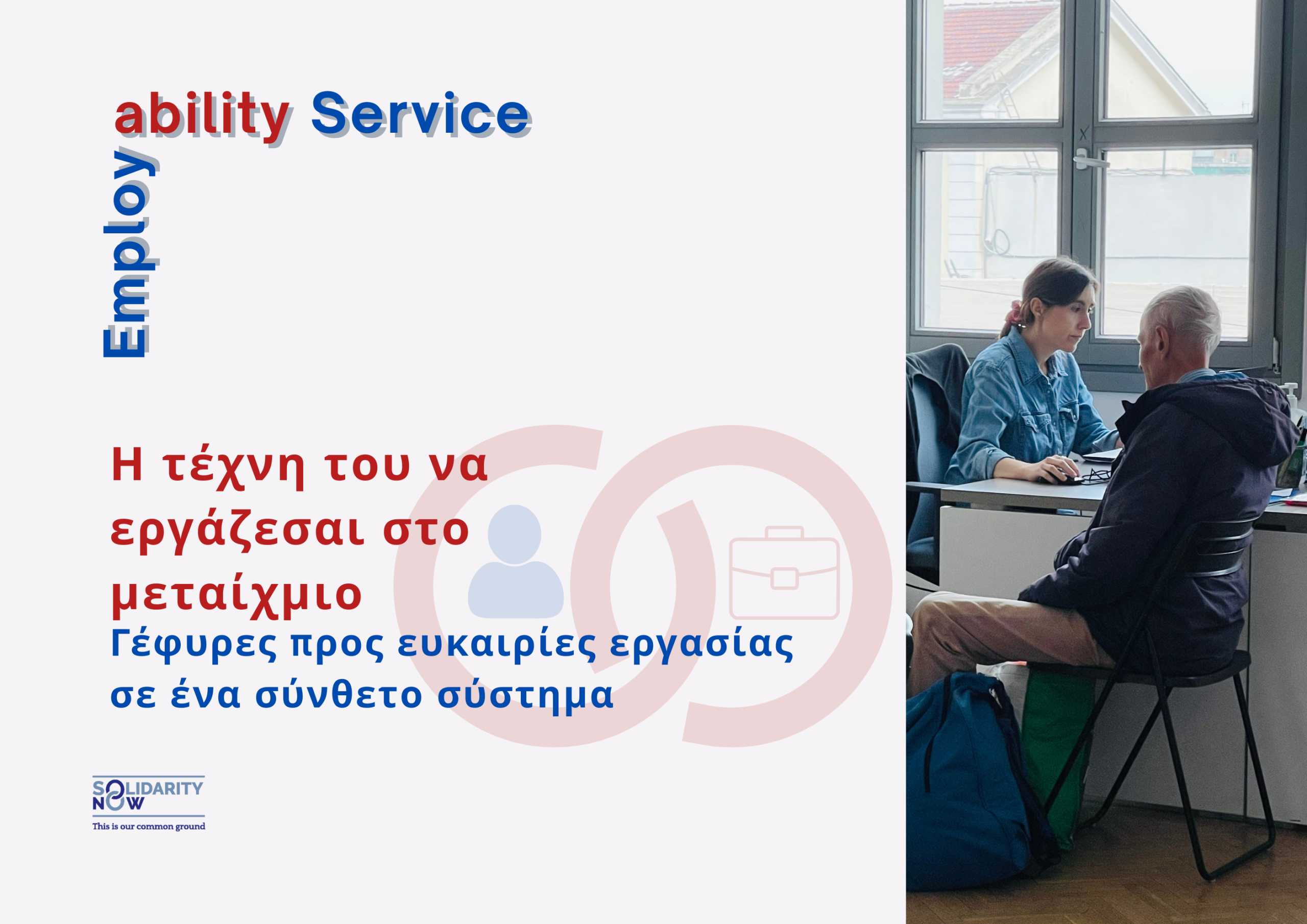
ARTICLE | Working in the In-Between


Every day, employment counselors at the Athens Solidarity Center welcome lots of people who are looking for work.

Their role is multifaceted: assessing backgrounds, identifying skills, exploring needs, creating CVs, providing information about the labor market, supporting job applications and interviews, explaining labor rights and, of course, offering guidance on the bureaucratic procedures required before or after employment.

At a time when the labor market needs workforce, and asylum seekers or recognized refugees are searching for stable, legal employment to begin their integration journey, employment counselors find themselves working in the space in between beneficiaries, companies, and institutions, striving to bridge the gap.

As a result, their work expands to include a wide range of additional actions, supporting all parties involved. Counselors inform businesses about recruitment procedures, provide practical tools, such as SolidarityNow’s new guide and manual on hiring third-country nationals, and, above all, support job seekers in preparing all the necessary documentation: collecting existing documents, issuing new ones, printing insurance contribution records, obtaining a Social Security Number, opening bank accounts, and more.

This is, in essence, the bureaucratic side of employment counseling: navigating a complex landscape of services that stand between employer and prospective employee: social security funds, tax authorities, banks, hospitals, call centers.

Although significant steps toward digitalization have been made in recent years, new obstacles often arise in practice, even where facilitation measures were intended.

Indicatively:

  • Different requirements from bank to bank for opening a bank account.
  • The need for frequent renewals of identification documents, leading to repeated updates with tax and social security authorities.
  • Inactive social security numbers for recognized refugees.
  • Issuance of online tax credentials only through someone who already has them.
  • Limited English-language support in call centers.
  • Public service websites available only in Greek.

Very often, these issues require employees to be absent from work in order to be resolved, sometimes more than once. Each such dysfunction translates into insecurity for the employee, who fears they may not be able to obtain documents they are entitled to and need, and into hesitation for the employer, who worries about taking a risk by hiring someone who must repeatedly be absent just to complete basic procedures.

This is the in-between space where employment counselors work every day: mediating, explaining, clarifying, reassuring and mainly trying to ensure that no one gets lost between intention and implementation.

And so, within a system that often complicates rather than facilitates, solutions are found elsewhere: in people. In colleagues who share knowledge, experience, strategies, and small victories; in informal support networks that emerge; and in connections with individuals within public services, banks, and organizations who are willing to help and become invaluable allies.

These human bridges are what ultimately allow counselors to continue their work finding pathways where procedures close doors, solving problems through collaboration, and supporting beneficiaries so they are not lost in bureaucracy.

In a world where state mechanisms do not always function as they should, the power of community and solidarity becomes the most stable foundation for moving forward together.

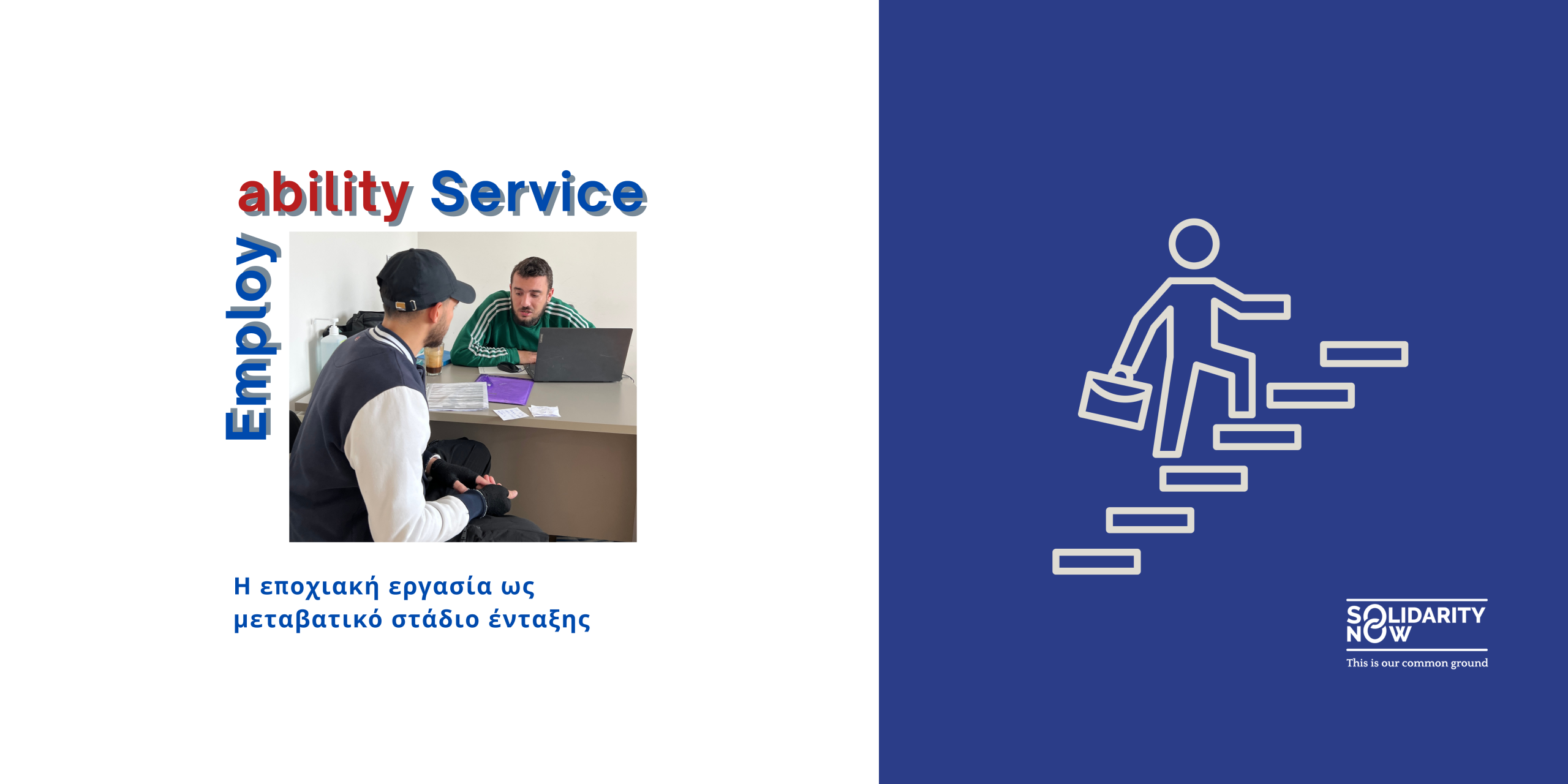
ARTICLE | Seasonal employment as a transitional stage of integration


A few months ago, we reported on former unaccompanied minors (read the respective article) who, faced with the lack of alternative housing options after leaving the shelter, chose to work during the recent tourist season. At that time, the role of the employment counselor was characterized by urgency, immediate problem-solving, and constant availability, as the circumstances allowed no room for delay.

Today, many of these young people have returned and the context has changed.

Having been relieved from housing-related stress and having gained valuable work experience in Greece, they are now more mature and better connected. This shift allows them the time and space to reflect on their next steps. In close cooperation with employment counselors, they are now exploring more stable employment opportunities, with the aim of building a sustainable daily life in Athens.

Seasonal employment is demanding, and the risk of labor-related violations is significant.

The Employment Service seeks to ensure that young people who work throughout the summer in Greek tourist destinations do not return discouraged or with a sense of injustice. For this reason, counselors maintained regular contact with beneficiaries throughout the entire season, while referrals were made to employers within the established employment network, where relationships of trust were already in place.

This trust constitutes the most important outcome of the process. It forms the foundation upon which both ongoing and new cycles of counseling can develop no longer under the pressure of immediate need, but with the opportunity for thoughtful and long-term planning.

*The Athens Solidarity Center project is implemented in collaboration with the Ministry of Migration and Asylum and funding from the Swiss-Greek Cooperation Programme in Greece (Embassy of Switzerland in Greece), for three years starting August 1st, 2023.

ARTICLE | Volunteering at the Thessaloniki Solidarity Center: Lessons on Migration and Human Rights


by Rebecca Fox, volunteer at the Thessaloniki Solidarity Center

Hands-On Experience with Vulnerable Communities

As a postgraduate student in human rights and migration at the University of Macedonia, gaining hands-on experience with migrants, refugees, foreign nationals, and other vulnerable populations through volunteering at SolidarityNow and its Solidarity Center in Thessaloniki has allowed me to get valuable insight into the application of the migration policies and human rights frameworks I am studying. Primarily helping in children’s programs, I have witnessed the organization’s and UNICEF’s approach to children’s fundamental rights, especially regarding education and vulnerable situations such as international migration, refugee status, and displacement.

Since volunteering at SolidarityNow for the past year, I have seen how focusing on equitable access to education, training and learning opportunities, translation services, and childcare and support are to helping someone resettle, make a living, and adapt to a new culture and society.

From Houston to Thessaloniki: A Comparative Perspective

Coming from Houston, Texas, I was familiar with a very different migration policy landscape. The specific regulations, restrictions, timeframes, requirements, and trends of migration and allocation of refugee and asylum protection statuses shape decisions to migrate to Greece, the U.S., and other countries. Although primarily working with children, I have also witnessed the work of the social services, legal, and employability service offices at the Solidarity Center. These offices allow people in need to get the diapers, baby formula, food, clothing, toiletries, healthcare, legal status and documents, healthcare, employment, counseling, and other settlement and integration services. Relying on donations and low levels of international funding means the resources, labor, and capital of organizations like SolidarityNow are heavily strained and overburdened as migratory and refugee flows increase with rising global conflict, environmental degradation and natural disaster, and diminishing economic opportunities outside of industrial centers. While myself and other volunteers learn and play with children, parents can get help to navigate the bureaucracy and hurdles to legally moving, migrating, working, and residing somewhere.

Human Rights in Everyday Practice

This experience has reinforced how basic human rights underpin a humane and just migration system.

Rights to education, healthcare, housing, identity, and freedom of movement are constantly put into practice at the Center. Creating a safe space for children and other marginalized individuals to learn, socialize, and feel supported demonstrates the tangible impact of upholding international human rights standards.

By assisting with programming like English lessons and healthcare information sessions, I have seen how migration affects every aspect of people’s lives, including education, healthcare, childrearing, language, and financial situations. Ensuring rights to preventative health screenings, appropriate school enrollment for children, adequate translators throughout legal proceedings, and safe spaces to grow, learn, socialize, and get support are intrinsic to a fair and human rights-based migration framework.

Systemic Challenges and Lessons Learned

The issues or conflicts that often arise for vulnerable groups on the move like migrants, refugees, asylum seekers, trafficking victims, and displaced youth are the same logistical, administrative, and cultural issues that migrant communities often face worldwide. Language barriers, low literacy rates, lack of legitimate employment, long processing and waiting times in the legal arena, and separation from family and social support all complicate efforts to find permanent housing, employment, childcare, and other necessities.

The shortcomings or experiences of being failed, ignored, delayed, or lost are systemic failings of the migration framework in Greece, the EU, and worldwide, rather than a display of the consequences of recognizing human rights and encouraging free movement and diversity.

The inefficiency of the legal migration and asylum systems, lack of immediate infrastructure and systems to provide safety, care, and support to new arrivals and vulnerable populations, and under-resourced human rights efforts to empower and support marginalized groups cause people to be left in limbo and transient, unstable statuses as they wait for residency permits, employment approval, and other situational factors to change.

ARTICLE | What the Official Gazette leaves out


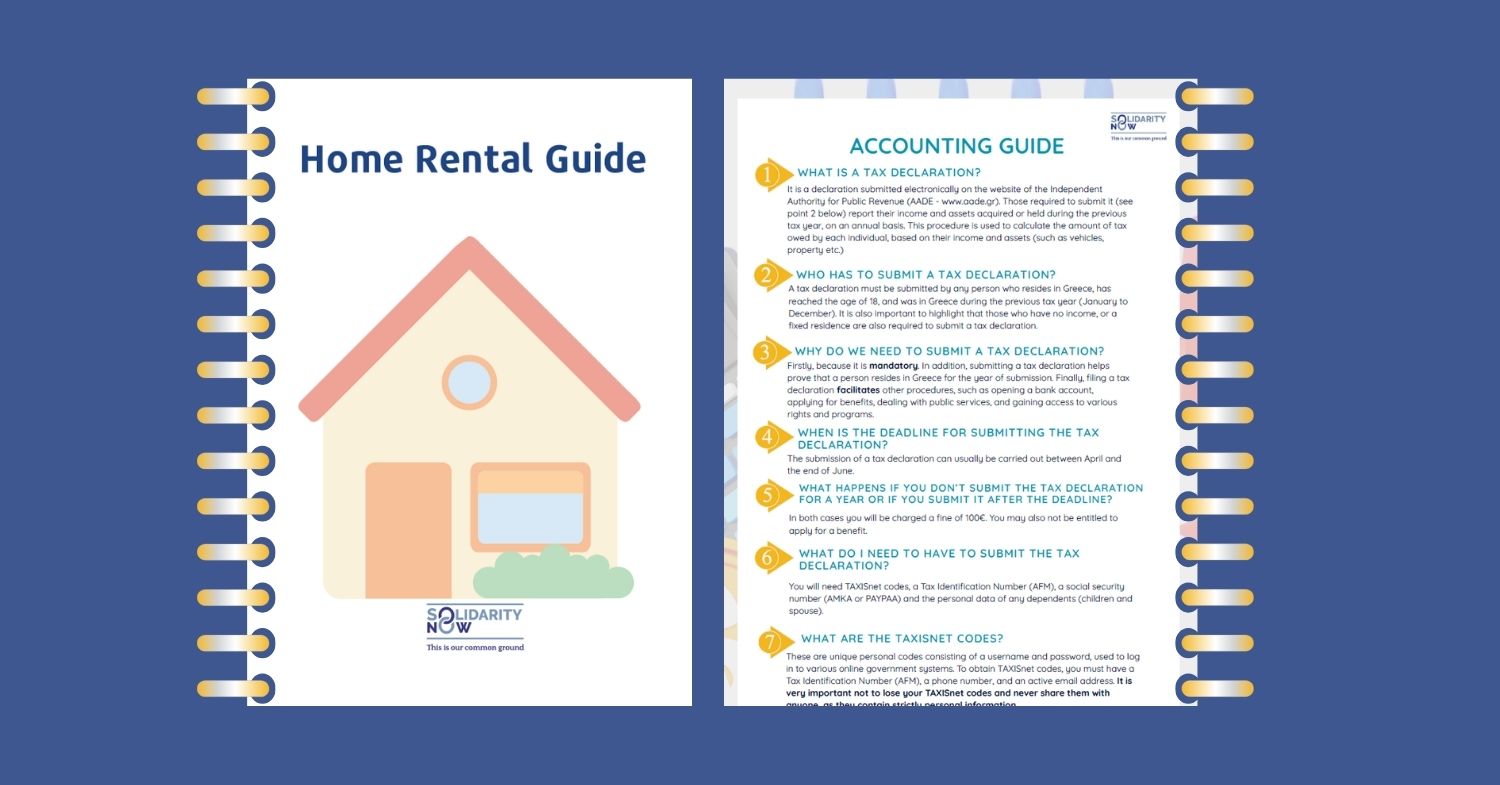
The Real Requests Vulnerable Women Bring to the Accounting Service

When navigating bureaucratic procedures, applications, requirements, and deadlines, all of us have at some point felt lost. Maybe a benefit we didn’t qualify for because we missed one criterion, or a deadline we didn’t meet because we weren’t informed in time.

But what is it like for women who are unfamiliar with these processes, who have no one to guide them on what they need to do or what they’re entitled to, who speak little or no Greek, or who lack digital skills?

The Accounting Service of the Thessaloniki Solidarity Center by SolidarityNow records daily conversations related to typical requests from women participating in the program “Livelihoods Unlocked: Empowering Women through Employment” and showcases the information, guidance, and practical support it provides.

“I gave birth to my first child recently. The woman who shared the hospital room with me received some money from the state. Why didn’t I?”

Unfortunately, you are not eligible for the childbirth benefit because you are an asylum seeker.

  • “So if I had been granted status and had a residence permit, would I be eligible?”

Still no, because you would need to have been living legally in Greece for the past 12 years and to have submitted 12 timely tax returns. So the woman who stayed in the room with you may meet all these requirements—or may be a Greek citizen.

“I rented a house. Can I receive the housing benefit they give for rent?”

Have you submitted all your tax returns for the past 5 years?

  • Yes.

Great. Does the rental contract have your name on it?

  • Yes. I gave them all my papers and they did something, but I’m not sure what…

Logging into Taxisnet with your credentials, I don’t see any rental contract under your name. Who do you live with?

  • With six other women. Some of them have children.

Do you have your ID with you?

  • No… They’re holding it. They only gave me a photocopy.

I understand. But you should know that no one is allowed to keep your ID. It is your personal document, and you must always have it with you. Do you have a moment to speak with the Social Service?

“My electricity bill is too high. Can we do something to reduce it?”

I see that you have a residence permit and that the electricity bill is in your name, so you meet two basic criteria for the Social Tariff. However, you haven’t submitted a tax return, which is also required. We can file your tax return now and then submit the application.

  • Thank you! I also have a friend who doesn’t have a residence permit but has an asylum card. Should I tell her to come too?

Unfortunately, asylum seekers are not eligible for the Social Tariff.

“I have two children. Am I entitled to the child benefit?”

I understand you’ve been living legally and permanently in Greece for the past 5 years, which is one basic requirement. Have you submitted all your tax returns on time?

  • Three years ago, I missed the deadline and submitted the return one week late. Is that a problem?

Unfortunately, yes. All tax returns must be submitted within the deadline, so you are not eligible for the child benefit.

“I heard the government will refund some of the rent I’ve paid. Is that true?”

Yes, it has been announced that one month’s rent from 2024 will be refunded. A key requirement is that the rent must have been declared in your latest tax return, and your IBAN must be registered on Taxisnet.

  • I don’t have an IBAN or a bank account. Can I open one?

To open a bank account, you need to have legal employment with a contract.

  • I’m not working now because I have no one to look after my baby. Can’t they open a bank account so I can receive this benefit?

Unfortunately not.

“My home is very cold. Is there any assistance to pay for heating?”

I see you’ve submitted your tax return and meet the income criteria, so we can apply for the heating benefit. Is the electricity supply in your name?

  • No, it’s in my housemate’s name.

Then you will either need to change the name on the electricity bill or your housemate will need to come for the application. What type of heating do you use?

  • A wood stove.

Then you must upload proof of wood purchases to the system to receive the benefit. Can you do that?

  • I don’t know how…

That’s okay. If you are eligible, we’ll book another appointment and do it together.

“I’m unemployed and don’t have money for food and clothes. Where can I get help?”

Our Social Service can refer you to other services that provide food and clothing, such as your municipality or the local Community Center.

These are only some of the requests the accounting service receives every day. Behind every question lies a need for stability, fairness, and equal access to social rights.

With a holistic approach and individualized support, the accounting service aims to empower each woman, helping her understand the procedures and make use of her rights. Because at the Thessaloniki Solidarity Center, accounting is not just a service, it is a step toward autonomy and social inclusion.

Share the Toys, Share the Joy!


At SolidarityNow, we are collecting gifts again this year!
If you have toys in GOOD CONDITION that you no longer need, give them to us and we will offer them to children this holiday season!

Delivery until December 10:

Monis Petraki 4 (2nd floor) (near the Megaron Concert Hall)
10:00 – 17:30

Tel. 210 6772500, Email: contact@solidaritynow.org

Share the Toys, Share the Joy!

ΠΡΟΣΚΛΗΣΗ | Αντιμετωπίζοντας την Εμπορία Ανθρώπων στην Ελλάδα – Έργο PROCAP


Το SolidarityNow, το ΚΜΟΠ και το ΕΚΚΑ-Εθνικό Κέντρο Κοινωνικής Αλληλεγγύης, σας προσκαλούν στην εκδήλωση “Αντιμετωπίζοντας την εμπορία ανθρώπων στην Ελλάδα: Ο ρόλος των επαγγελματιών πρώτης γραμμής και των κοινωνικών εταίρων”, την Τετάρτη 26 Νοεμβρίου 2025, στο Ιωνικό Κέντρο (Λυσίου 11, Πλάκα) και ώρα 15.30-18.30.

Δείτε αναλυτικά την Ατζέντα Εκδήλωσης 

Στο πλαίσιο της εκδήλωσης εστιάζουμε σε κρίσιμα ζητήματα όπως:

  1. Καλές πρακτικές για την προστασία θυμάτων στην Ελλάδα και νέες τάσεις του φαινομένου, μέσα από το πρίσμα του Εθνικού Μηχανισμού Αναφοράς.
  2. Η δημιουργία ενός δικτύου προστασίας μέσα από τις παρεμβάσεις των κινητών μονάδων, ως ένα ολιστικό μοντέλο εντοπισμού και υποστήριξης θυμάτων.
  3. Η σημασία της συνεχιζόμενης εκπαίδευσης επαγγελματιών, με έμφαση σε έξι κλάδους (τουρισμός, αεροδρόμια και μεταφορές, Επιθεώρηση Εργασίας, Υπηρεσία Υποδοχής και Ταυτοποίησης, εκπαίδευση).

Η εκδήλωση απευθύνεται σε εκπροσώπους Οργανώσεων της Κοινωνίας των Πολιτών. εκπαιδευτικούς, επιθεωρητές/τριες εργασίας, εργαζόμενους/ες σε υπηρεσίες υποδοχής και ταυτοποίησης, στον τουρισμό, σε μέσα μεταφοράς καθώς και στο ευρύ κοινό. Δηλώστε συμμετοχή: https://shorturl.at/Fp1R3 

ΚΟΙΝΟ ΔΕΛΤΙΟ ΤΥΠΟΥ | Εκδήλωση αφιερωμένη στα παιδιά: «Κανένα παιδί μόνο, κάθε παιδί ασφαλές.»


Με αφορμή την Παγκόσμια Ημέρα κατά της Παιδικής Κακοποίησης (19 Νοεμβρίου) και την Παγκόσμια Ημέρα για τα Δικαιώματα του Παιδιού (20 Νοεμβρίου), διοργανώνεται εκδήλωση αφιερωμένη στην ευαισθητοποίηση, την πρόληψη και την προάσπιση των δικαιωμάτων των παιδιών.

Αυτές οι δύο ημέρες μας θυμίζουν πως η φωνή των παιδιών πρέπει να ακούγεται και πως όλοι έχουμε ευθύνη να προστατεύουμε, να στηρίζουμε και να φροντίζουμε τα παιδιά, γιατί είναι το μέλλον του κόσμου μας.

Για να τιμήσουν αυτές τις Ημέρες, το SolidarityNow και η ΑΡΣΙΣ, σε συνεργασία με οργανώσεις και φορείς που δραστηριοποιούνται στην πόλη του Βόλου, υπό την αιγίδα του Δήμου Βόλου (Αντιδημαρχίας Κοινωνικής Μέριμνας –Αλληλεγγύης- Ισότητας και Διαχείρισης Κοινωνικών Κέντρων, Aντιδημαρχεία Παιδείας- Εκπαίδευσης) πραγματοποιούν ανοιχτή εκδήλωση την Τετάρτη, 26 Νοεμβρίου 2025, από 18:00 έως 20:00, στον χώρο εκδηλώσεων του Γυμνασίου Ιωλκού.

Στόχος της δράσης είναι να ενημερώσει και να αφυπνίσει την κοινωνία για την ανάγκη προστασίας κάθε παιδιού από τη βία, την εκμετάλλευση και την παραμέληση, αλλά και να αναδείξει το δικαίωμα όλων των παιδιών να μεγαλώνουν με αγάπη, ασφάλεια, ισότητα και σεβασμό.

Η εκδήλωση θα περιλαμβάνει ομιλίες, παρουσιάσεις και καλλιτεχνικά δρώμενα, με τη συμμετοχή φορέων και οργανώσεων που δραστηριοποιούνται ενεργά στην υποστήριξη παιδιών και οικογενειών.

Υπό την αιγίδα του Δήμου Βόλου (Αντιδημαρχίας Κοινωνικής Μέριμνας-Αλληλεγγύης-Ισότητας και Διαχείρισης Κοινωνικών Κέντρων, Αντιδημαρχεία Παιδείας-Εκπαίδευσης)

Διοργάνωση: SolidarityNow – Κέντρο Εξειδικευμένων Υπηρεσιών ΠΥΞΙΔΑ και ΑΡΣΙΣ – Κέντρο Φιλοξενίας Ασυνόδευτων Ανηλίκων Μακρινίτσας, σε συνεργασία με:

Γυμνάσιο Ιωλκού και Σύλλογος Γονέων Γυμνασίου Ιωλκού

Γραφείο Ενδοοικογενειακής Βίας της Δ/νσης Αστυνομίας Μαγνησίας

Ελληνική Ετ. Προστασίας & Αποκατάστασης Ανάπηρων Προσώπων ΕΛΕΠΑΠ

Θεατρική Ομάδα Πανεπιστημίου Θεσσαλίας «3ος όροφος», με την καθοδήγηση της Μαρίας Καραζάνου, Θεατροπαιδαγωγού-σκηνοθέτη

Ξενώνας Αστέγων Δήμου Βόλου

Ξενώνας Φιλοξενίας Γυναικών Θυμάτων Βίας Δήμου Βόλου

Κέντρο Κοινότητας Δήμου Βόλου – Γραφείο Ψυχολογικής Στήριξης Οικογενειών

Παράρτημα Ρομά Αλιβερίου Δήμου Βόλου

Μέσα από τη συνεργασία όλων αυτών των φορέων, επιδιώκεται να σταλεί ένα ισχυρό μήνυμα ενότητας, ανθρωπιάς και ευθύνης απέναντι στα παιδιά, το πιο πολύτιμο και ελπιδοφόρο κομμάτι της κοινωνίας μας.

Η προστασία των παιδιών δεν είναι υπόθεση μιας ημέρας, αλλά διαρκής δέσμευση όλων μας για έναν κόσμο όπου κανένα παιδί δεν θα βιώνει φόβο, βία ή αποκλεισμό.