PRESS RELEASE | Workshop: “Thessaloniki for All: Building Inclusive Communities”


Information and Awareness-Raising Workshop for Local Authorities and Services on the Integration of Third-Country Nationals

SolidarityNow, as an implementing partner of the integration project “HELIOS+: Comprehensive Integration Actions for Third-Country Nationals into the Labour Market” in the Region of Central Macedonia, organised the workshop “Thessaloniki for All: Building Inclusive Communities” at Thessaloniki City Hall. The event was attended by representatives from public administration, local authorities, migrant communities, civil society organisations, and educators.

At a time when local communities are called upon to respond to complex social needs, strengthening integration mechanisms and fostering collaboration between stakeholders is essential for social cohesion and development.

The event opened with greetings from Mr. Spyros Vougias, President of the Municipal Council of Thessaloniki; Mr. Nasos Vitsentzatos, General Director of Migration Policy at the Ministry of Migration and Asylum; and Ms. Lidija Markovic, Integration Programmes Coordinator at the International Organization for Migration (IOM Greece).

Mr. Nasos Vitsentzatos emphasised the importance of linking pre-integration processes with urban fabric and highlighted the need to evaluate integration programmes after their completion to measure their impact.

During his speech, Mr. Efthymios Chatzitheoklitos, Deputy Mayor for Social Policy, Solidarity & Welfare of Thessaloniki, underlined the city’s historically multicultural identity and its role in implementing social integration policies. As he noted: “The Municipality’s role is to demonstrate respect for diversity, in a city where repatriated and Albanian communities have shaped its identity.”

Ms. Marina Donopoulou, Regional Coordinator of the HELIOS+ project at IOM Greece, spoke about the project’s importance and challenges. Funded by the European Social Fund+ and implemented by IOM in Central Macedonia and 11 other regions, HELIOS+ aims to support the social and economic integration of third-country nationals. She stressed: “Our mission in HELIOS+ is complex, multi-layered, and requires the coordinated contribution of all partners. Together, we share the responsibility for the smooth social integration of those we support, developing the necessary synergies.”

Ms. Eleni Athanasiadou from the Department of Social Policy & Public Health of the Municipality of Thermi added: “The Thermi Community Centre is the first point of contact for any citizen in need of support.” Ms. Maria Terzoudi from the Migrant Integration Center (KEM) in Kordelio-Evosmos, shared field experience: “KEM serves as the local reference point for information, support, counselling, and referral of migrants and refugees to other services and programmes. Collaboration and networking with other organisations is critical, as the needs of individuals often exceed the basic services a KEM can provide.”

Special attention was given to the challenges of social integration and the existing institutional gap that prevents access to programmes for individuals who do not meet specific criteria, such as elderly people with vulnerabilities and health issues, who are unable to work and therefore remain without support.

The discussion confirmed that integration requires collaboration, flexibility, and solutions that respond to people’s real needs. SolidarityNow is committed to continuing to build bridges between communities and the State and to promoting practices that strengthen the social participation of all.


The event was carried out with the support of the International Organization for Migration (IOM) – Greece Mission, for the implementation of the project “Helios+: Integrated actions for the inclusion of third-country nationals into the labor market” in the Region of Central Macedonia, with OPS Code 6018682 under the Programme “Central Macedonia 2021–2027.”

The implementation of Helios+ in the Region of Central Macedonia is carried out by a consortium of organizations led by SolidarityNow, in collaboration with the Major Development Agency Thessaloniki (MDAT S.A.), the YMCA of Thessaloniki, and Caritas Hellas.

ARTICLE | Exploring Emotions: A Reflective Map


As part of the Refugee Week Festival 2025, five civil society organizations collaborated to map the emotional landscape of Athens through the experiences of people with refugee and migrant backgrounds.

47 adults answered questions about where they spend their time, where they feel safe, where they enjoy themselves, where they feel uncomfortable or uneasy, and which parts of the city they choose for relaxation.

Using the map of Athens as a tool, participants captured their personal experiences in relation to the city’s geography. The main benefit is reflection on personal experiences in space, as lived by people with refugee or migrant backgrounds.

At a glance: contradictions, multiplicity of voices, and diverse realities.

Most responses trace paths around Kypseli, Omonia, Viktoria, Syntagma, and Pedion tou Areos. This invites reflection on whether—and why—some neighborhoods are less accessible, or why others may become welcoming spaces or even potential ghettos.

  • Kypseli appears as a place of everyday life and safety, while at the same time being described as an “unpleasant place.”
  • Kypseli and Viktoria are the only areas statistically significant in terms of safety. Additionally, participants spend a lot of time in these two neighborhoods. Thus, the sense of safety is closely tied to familiarity.
  • Omonia remains a central hub but also a space of insecurity.
  • Pedion tou Areos continues to be the main choice for moments of calm.
  • Viktoria stands out as an example: for some, it is a place of safety or where they spend a lot of time, while for many others, it is simultaneously a place of discomfort or an “unpleasant place.” A core refugee experience is the involuntary loss of familiar spaces, making the creation of new familiar spaces a pressing need in multiple ways. Therefore, building communities and supportive networks within a neighborhood is an expected outcome.
  • A small but notable percentage (7%) reported feeling uncomfortable or unwelcome in “urban” areas like Kolonaki, reflecting the sense that one feels more like a stranger there. Within their own community, there is relative safety, but beyond it, insecurity begins.

This emotional map reflects a city that “speaks” differently to each community and invites us to rethink it not only as a sum of infrastructures but as a living organism shaped by our stories, routes, and the places that do, or do not, accommodate us. The map is available here (in greek).

Our personal experience:

As we went out into the streets to ask people, it became clear that every response was a unique story.

Some were in a hurry and answered almost instinctively, while others had just arrived in Athens and looked at the map with curiosity.

This is when you realize that the same space is never the same for everyone—each person carries their own experiences, memories, and emotions. This is what makes the “emotional map” so valuable: it is not merely geography, but a collective memory and feeling built from many personal moments.

ARTICLE | Who Bridges the Gap?


Written by Anna Maria Vouzouneraki
 Employability Officer, SolidarityNow

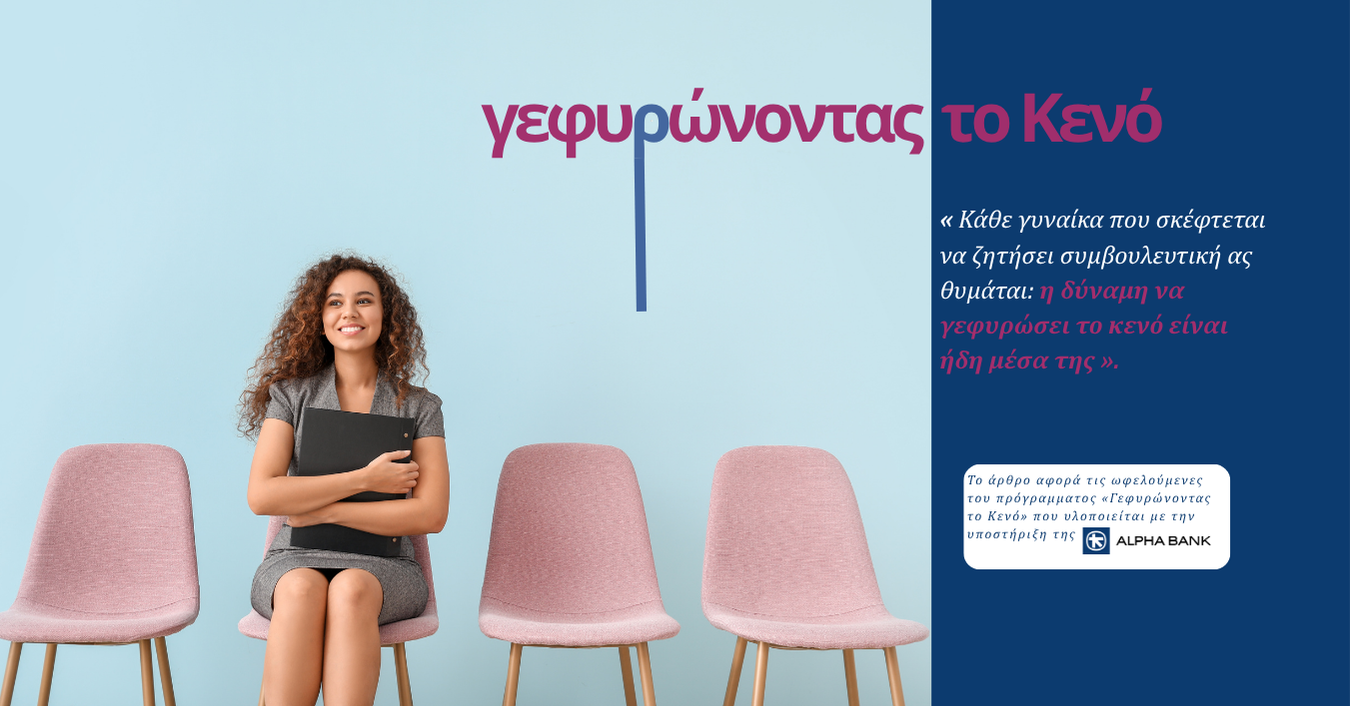
As an employability counselor in the “Bridging the Gap” program, I often ask myself who truly bridges the gap between women from vulnerable social groups and the labor market?

The reality is that employment opportunities are not the same for everyone, especially when certain perceived vulnerabilities based on social and labor realities, such as economic precarity or, unfortunately, gender come into play.

Despite systemic challenges and obstacles though, the answer seems to always lead back to the same place: the woman itself. She is the one who builds the bridge.

She is the one who recognizes that she needs support and dares to ask for it. She is the one who courageously shares her journey, both its bright and dark moments. She is the one who acknowledges the skills she has already acquired and seeks to enrich them by attending courses, training programs, and career days.

With every effort and guided by her own determination, she constructs the bridge she will cross. With the guidance and encouragement of her counselor, she prepares for interviews, regains confidence in her abilities, and takes the first step toward professional empowerment.

Every woman considering counseling should remember: the strength to bridge the gap lies within herself.

*This program is implemented with the support of Alpha Bank.

ARTICLE| New Cycle of Artificial Intelligence Training


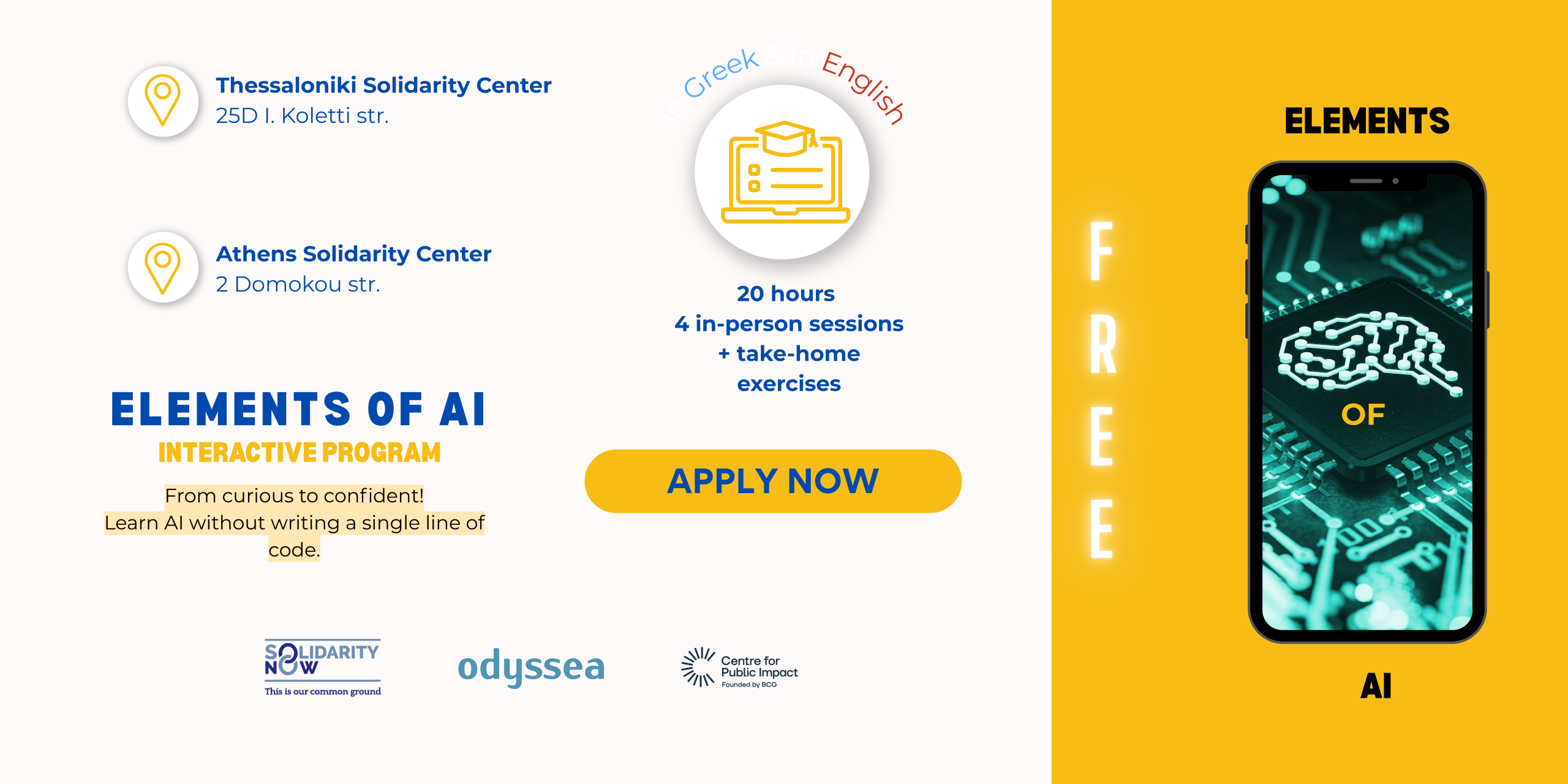
The 4th cycle of the “Elements of Artificial Intelligence (AI)” project begins!  

The training takes place at the organization’s Solidarity Centers: 

  • Thessaloniki Solidarity Center, I. Koletti 25D, One Salonica area 
  • Athens Solidarity Center, Domokou 2, Larissa station 

Through the project, targeted AI training is provided to vulnerable Greek citizens, as well as to individuals with a migrant or refugee background. 

In Greece, SolidarityNow and Odyssea have been selected by the Centre for Public Impact to receive funding from the Google.org AI Opportunity Fund: Europe. The aim is to equip workers from vulnerable social groups with Artificial Intelligence knowledge and tools that are essential for their long-term professional success. 

Training Dates for Thessaloniki: 

  • Monday, November 10, 2025 
  • Monday, November 17, 2025 
  • Monday, November 24, 2025 
  • Monday, December 1, 2025 

The training dates for Athens will be announced soon. 

For more information and registration you may contact: cdotsa@solidaritynow.org or +30 2310 555266. 

ARTICLE | Together We Achieve More: SolidarityNow & Mission Anthropos Standing by the Most Vulnerable


Together We Achieve More: SolidarityNow & Mission Anthropos Standing by the Most Vulnerable

The Thessaloniki Solidarity Center (TSC) collaborates with the organization Mission ANTHROPOS, joining forces to strengthen access to healthcare for all, without discrimination. This partnership includes the implementation of two important programs, offering vital support to the beneficiaries of the Solidarity Center.

“We Embrace – Women 45+”

The goal of this program is to promote prevention and access to healthcare services for women aged 45 and above, coming from vulnerable social groups who cannot afford basic medical services. Through the program, participants receive free, comprehensive preventive medical check-ups, which include:

• Blood tests
• Pap smear test
• Digital mammogram
• Breast ultrasound
• Bone density measurement

This initiative highlights the importance of prevention, awareness, and early diagnosis, giving every woman the opportunity to care for her health with dignity and safety.

“We Support” Medical and Pharmaceutical Care for All

The “We Support” program aims to cover the medical and pharmaceutical needs of uninsured, economically vulnerable individuals — children and adults, Greeks, migrants, and refugees alike. It focuses on people who lack health insurance and cannot meet their medical needs. Beneficiaries are referred from various support agencies, such as Municipal Social Services, NGOs, hospitals, elderly care units, and other community structures.

Through the program, beneficiaries gain access to essential healthcare services, filling a critical gap for those at the margins of the healthcare system.

The Power of Collaboration

For many of the Solidarity Center’s beneficiaries, these two programs represent their only access to healthcare. The collaboration between SolidarityNow (through the Thessaloniki Solidarity Center) and Mission ANTHROPOS proves in practice that together is the answer to the challenges people face — and that solidarity in action means no one is left alone.
Our common goal: to stand beside everyone in need.

Mrs. N.’s Story

After receiving multiple rejections on her asylum claim, Mrs. N. suddenly found herself homeless, having to leave the refugee accommodation center where she had been living. Around the same time, she began experiencing serious health problems, with intense symptoms, while having completely lost access to medical care. When the social workers at the Solidarity Center met her, her symptoms were evident and required urgent investigation. The team immediately reached out to Mission ANTHROPOS, emphasizing the need for emergency medical intervention.

The response was immediate and life-changing. Through the “We Support” program, Mrs. N. underwent the necessary medical examinations, which led to a diagnosis of type 2 diabetes. With the doctors’ guidance and the organization’s support, she began insulin treatment, significantly improving her health and quality of life.

Her story demonstrates the importance of cooperation between organizations and the power of timely intervention. Because every person, regardless of origin or legal status, deserves care, dignity, and health.

Mrs. H.’s Story: When Care Becomes Salvation

Mrs. H., a 29-year-old Palestinian mother of three, faced a severe complication after giving birth to her third child: a brain hematoma. Doctors recommended immediate MRI scans to monitor her condition. However, the cost of private examinations was unbearable, while the waiting time in public hospitals was far too long for such an urgent case.

“I first came to the Solidarity Center in 2022 to get help with my tax declaration. They assisted me with many issues where I needed support. The best thing that happened was that they found a way for me to have an MRI — one that saved my life. It all started during my pregnancy with my third child, when I began to feel unwell and had strange symptoms. I gave birth by C-section in the seventh month because my life and my baby’s were at risk. The diagnosis was a blood clot in my head — I was hospitalized for 25 days. After that, I needed a follow-up MRI, but the hospital wouldn’t take me through the emergency department, and appointments were months away. So, I decided to turn again to SolidarityNow.”

Amid anxiety and uncertainty, she was informed about the “We Support” program for uninsured patients. Thanks to this initiative, she was able to undergo all necessary tests on time, receive proper medical monitoring, and continue her treatment safely. Today, she is recovering and able to care for her children, something that might not have been possible without this support.

Her story reminds us that behind every act of solidarity, there is a life transformed, a family relieved, and a hope reborn.

PRESS RELEASE | SolidarityNow & UNICEF: Initiative for Child-responsive disaster preparedness


Trainings Begin in Six Municipalities Across Greece

SolidarityNow and UNICEF are implementing the pilot project titled “Child Responsive Disaster Prepardeness” in collaboration with six municipalities across the country. The aim is to enhance awareness among stakeholders—as well as children and young people themselves—on the prevention and response to natural disasters.

Tomorrow, October 23, 2025, Training Workshops will begin, conducted by the organization’s specialized staff in the selected municipalities. These workshops aim to train all local stakeholders, associations, and volunteer groups active in Civil Protection, education, and child and social welfare.

2025 Training Schedule

  • October 23, Municipality of Pyrgos, Ilia – Latsio Municipal Hall, City Council Chamber, 10:00 – 17:00

  • November 4, Municipality of Alexandroupoli – Warehouse 1, Port of Alexandroupoli, 08:00 – 13:00

  • November 13, Municipality of Chalkida – Regional Council Hall, 08:00 – 13:00

  • November 20, Municipality of Polygyros, Thessaloniki – Conference Room of the Regional Unit of Halkidiki, 09:00 – 16:00

  • December 4, Municipality of Lemnos – Gkaliouri Hall, 08:00 – 13:00

  • December 11, Municipality of Karditsa – KIERION Hotel, 08:00 – 13:00

Admission is free. More information: https://www.solidaritynow.org/drr-project/

ARTICLE | Needs, Challenges & Support for the Most Vulnerable: A conversation with social workers


Interview at the Thessaloniki Solidarity Center: Needs, Challenges, and Support for the Most Vulnerable

A conversation with social workers Dimitra Kefala, Meni Christidou, Evi Dimadi
and Giorgos Tsitiridis, Program Manager for Northern Greece, SolidarityNow

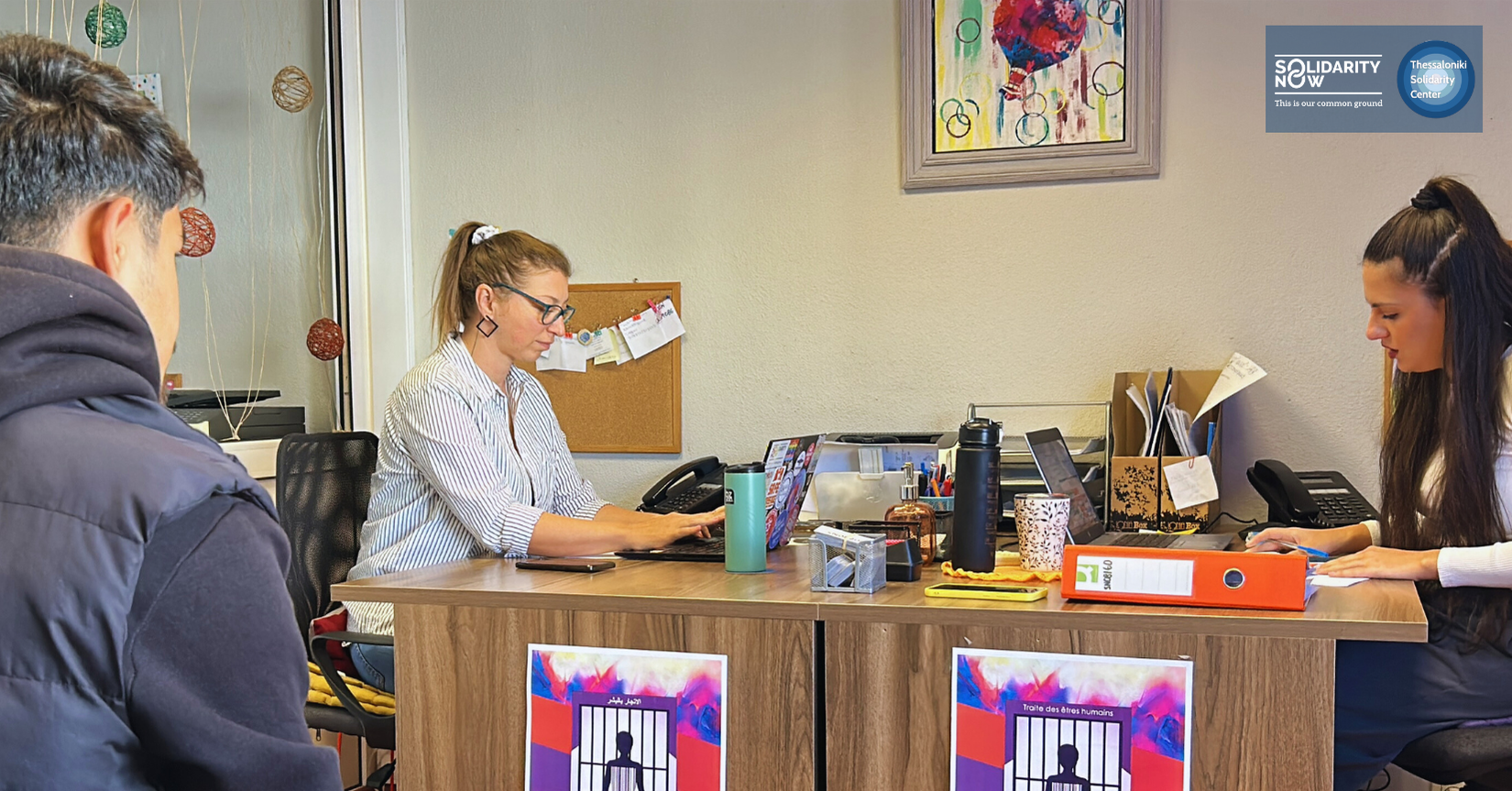
The Thessaloniki Solidarity Center serves as a hub of care and support for vulnerable social groups. Through the provision of integrated services, it aims to bridge critical access gaps in healthcare, social welfare, education, legal aid, employment, and overall social inclusion for individuals facing hardship and marginalization.

To gain deeper insight into the Center’s mission, we spoke with social workers Dimitra Kefala, Meni Christidou, and Evi Dimadi about their work, the challenges they face, and the priorities they set.

A Holistic Approach to Social Support

The Center opened in 2016 to support vulnerable individuals in their path toward social inclusion, offering holistic services tailored to real needs. Over time, service delivery methods have evolved to meet the shifting demands of the population. However, what remains constant are its “open door” policy, non-discriminatory access, flexibility and comprehensive approach.

Today, it remains a vital structure—particularly in Northern Greece, where no similar facility currently exists. The Center serves a wide range of groups, including: single-parent families, children, youth, the elderly, women, persons with disabilities, Roma, refugees, migrants, survivors of abuse, and more.

The Importance of the Social Services Department

“We are the first people that visitors meet when they come here. Regardless of what service they need, their first point of contact is with us. In what we call a ‘dialogue of life,’ we record their social history and assess their needs. This step is crucial, it’s not just about data collection, but also about acknowledging and understanding the emotions and experiences of each person. After this, we refer them to the most appropriate service”, Dimitra Kefala

Empowerment and autonomy are key goals of the Center’s social services. Through guidance and support, beneficiaries are informed and educated on navigating everyday processes, including administrative issues such as obtaining a tax number (AFM), social security number (AMKA/AMA), or access to the digital government system (gsis).

For many refugees and migrants, these bureaucratic procedures can be particularly difficult due to language barriers, lack of digital literacy, or limited access to technology. The digitalization of public services has only widened the gap, creating additional obstacles for those already at risk of exclusion.

“We often encounter people who are hearing about some of these bureaucratic steps for the first time. They don’t know what to do either because they don’t understand the language, or because they have no digital skills”, Meni Christidou

Referrals and Networking

“A core part of our work is making referrals. Depending on their needs, people may be referred internally to another service within the Center or another SolidarityNow program, or externally to other NGOs and public services. That’s why we’ve built a wide network of partnerships; to help us respond to increasingly complex needs”, Evi Dimadi

The Ongoing Housing Crisis

Despite the range of services offered, one issue dominates: housing.

Sharp increases in rent prices have impacted large segments of the population, leading to a rise in homelessness and placing added pressure on individuals and families already in precarious situations. In Thessaloniki, the city’s one and only emergency shelter is insufficient to meet demand. Eligibility criteria for entry exclude many, and there are no other available housing support services in the city.

The Right to Understand, the Right to Belong

There is a significant lack of interpretation and intercultural mediation across almost all local services and institutions. This severely limits people’s access to basic rights such as healthcare, and directly impacts their ability to integrate. In addition, there is a shortage of effective Greek language learning programs for non-native speakers, making the integration process even more difficult and demanding.

Solidarity with a Human Face

At the Thessaloniki Solidarity Center, social services are not just about offering aid. They involve a process grounded in human connection, trust, flexibility, and empathy. When support is offered with dignity and with a focus on individual empowerment, it can truly make a difference not just in one person’s life, but in the overall wellbeing of entire communities. At the end of the day, the Center is not just a place that meets needs; it is a beacon pointing toward a more just, inclusive, and humane society.

“In Thessaloniki, over the past few years, many programs that provided essential services such as shelters and specialized facilities have been drastically reduced. As a result, a large portion of the population finds everyday life increasingly difficult”, Dimitra Kefala

PRESS RELEASE | SolidarityNow & L’Oréal Support Women


SolidarityNow is collaborating for the first time with the L’Oréal Fund for Women to support women in Northern Greece in their journey to access the labor market.

The project “Livelihoods Unlocked: Empowering Women through Employment” provides:

  • Tailored empowerment and employability services for women from vulnerable backgrounds, and

  • Awareness-raising around the barriers women face in accessing employment opportunities.

This initiative strengthens the ongoing work of the Employment Service at the Thessaloniki Solidarity Center, which consistently stands by the most vulnerable social groups.

Livelihoods Unlocked aims to contribute to reducing the gender gap in employment, which remains significant in Greece. In particular, during the second quarter of 2025, the unemployment rate among women was 10.5%, compared to 6.9% among men, while Greece lags behind the European average in nearly all indicators of workplace gender equality. According to the European Institute for Gender Equality (EIGE), in Greece:

  • Women continue to work part-time at significantly higher rates than men.

  • Occupational segregation is evident, with women overrepresented in lower-paid sectors with limited advancement opportunities, such as education, healthcare, and social care.

  • The Career Prospects Index also shows a disadvantage for women compared both to men and to the European average.

These barriers become even more pronounced for women facing multiple vulnerabilities such as single mothers, survivors of gender-based violence, long-term unemployed, and others. Research shows that these groups face additional obstacles, including limited training opportunities, increased caregiving responsibilities, and often, discrimination by employers. Through this new project, SolidarityNow is taking concrete steps to support women who need it most, helping them access the labor market and regain autonomy and confidence through employment.

JOINT STATEMENT | More than 200 Organisations: Inhumane Deportation Rules Should be Rejected


Deportation cannot be the cornerstone of migration policy in Europe. On March 11, the European Commission presented its proposals for the Return Regulation.

This regulation is based on a flawed objective: “increasing return rates.” In practice, it artificially inflates the number of deportation decisions and pushes more people into irregularity and legal limbo. This means that many will be left without access to healthcare and basic rights, exposed to poverty, homelessness, exploitation, or even prolonged detention.

Specifically, the EU proposal:

  • Extends detention up to 24 months, even for children.

  • Allows member states to create offshore “return centers”.

  • Strengthens racial profiling practices and invasive digital surveillance.

  • Restricts the right to appeal and effective legal remedies.

207 civil society organizations across Europe unite and call for its rejection.
We urge the Commission to withdraw the proposal, and the European Parliament and Council to reject this Regulation and instead invest in policies that uphold dignity, support integration, and allow all people to live in safety.

Read more here.

ARTICLE | New Training Cycle on Elements of AI – AI for All: No One Left Behind in the Age of Artificial Intelligence


by Giorgos Tsitiridis, Head of Programs, Northern Greece, SolidarityNow

Top search engines and websites of foundations and universities announce every year the words that the public has searched for most frequently during the year. Paradoxically, in most of them the top word is Google, the leading search platform. Following are various new definitions and words that describe trends and behaviors. Among those that attract global interest are the terms digital world and artificial intelligence (AI).

There are dozens of articles discussing the problems artificial intelligence can solve and its contribution to writing texts and creating images. Likewise, many refer to the dangers poor usage may pose in the future, and whether it could lead to the extinction of humankind as depicted in science fiction books and movies. What is certain is that AI usage is already widespread and increasingly entering modern life, from entertainment to core professional fields. Some AI technologies appeared as early as the 1970s‑80s. However, advances in technology, computers, and mobile phones now allow faster development and easier use.

Worldwide, the largest educational institutions, institutes, and research centers are investing time and resources in the potentials and innovations AI may bring for the future of humanity. The European Union has made artificial intelligence one of its priorities for the coming years. A group of Greek scientists abroad has joined forces to found “Greeks in AI,” aiming to support new researchers and scientists, to strengthen them, and to create a communication bridge between Greece and knowledge sources and business projects overseas.

The Centre for Public Impact, founded in 2015, aims to develop and promote programs that, through innovative tools, allow their implementation in the public sector.

In this context, in cooperation with Google.org AI Opportunity Fund Europe, which supports organizations and associations to deliver AI skills, the Centre for Public Impact has selected non‑profit organizations and civil society actors in over 23 countries, including Greece, to train groups of citizens in basic AI courses designed by Google. These groups include, for example, in Turkey those affected by earthquakes; in Ukraine, professionals affected by the ongoing war. In other countries, training includes unemployed people; LGBTQI+ persons; workers in agriculture and livestock; people with dyslexia, people with disabilities; journalists; artists; young people with fewer employment and educational opportunities; persons with hearing problems; single‑parent families; refugees; migrants; etc.

Standing beside the most vulnerable to bridge the gap

In Greece, SolidarityNow and Odyssea were selected by the Centre for Public Impact to receive funding from the Google.org AI Opportunity Fund: Europe, to equip workers from vulnerable social groups with AI knowledge and tools necessary for their long‑term professional success. Through the program, the two organizations receive support to provide targeted AI education to vulnerable Greek citizens and people with migration/refugee backgrounds.

Initial results have shown the vast scope of AI, but equal access must be ensured for everyone. SolidarityNow and Odyssea support vulnerable social groups including Greek citizens and migrants/refugees who are at risk of poverty and social exclusion. Through their regular programs, they offer services of professional integration, such as counseling, support in administrative procedures, and liaison with employers. This new program offers AI training in Athens and Thessaloniki, allowing the beneficiaries of the two organizations to develop their digital skills and gain a competitive advantage in the job market. To ease participation, interpretation services and childcare during training are provided.

Marilyn Polena, General Manager of SolidarityNow, states about the program: “We are committed to helping our beneficiaries adapt to the constantly changing demands of the labor market. Through this initiative, we hope to make a small step toward bridging the digital divide, which disproportionately affects the most vulnerable members of society.” SolidarityNow, through its Centers of Solidarity in Athens and Thessaloniki, has succeeded in supporting 97,000 beneficiaries, and through free services and non‑formal learning activities more than 350,000 people.

Lukas Oikonomakis, Co‑Founder and CTO of Odyssea, notes: “Artificial intelligence is radically changing the labor market, and the digital skills gap threatens to leave behind the most vulnerable social groups. Through this partnership, we are giving our students the essential tools to adapt to the new reality. We are turning this challenge into an opportunity for them to thrive in a future based on AI.”

The first two cycles of training have been completed, with over 50 individuals in Athens and Thessaloniki obtaining certification from the Google.org AI Opportunity Fund. The next cycle begins soon, and registrations are open.

Results from the previous cycles showed that participants found the training particularly engaging, as it consists of exercises and practical applications of AI in everyday life, across four sessions of interactive learning. Moreover, the multicultural characteristics of the groups contributed to creating a different atmosphere, allowing contact between people of diverse origin, age, and socioeconomic background, etc.

The 3rd cycle is taking place at the:

– Thessaloniki Solidarity Center, I. Koletti 25D, One Salonica area

– Athens Solidarity Center, Domokou 2, in the city center.

The training dates for Thessaloniki are:

Monday 29/9/2025

Tuesday 7/10/2025

Tuesday 14/10/2025

Tuesday 21/10/2025

The training dates for Athens are:

Friday 3/10/2025

Friday 10/10/2025

Thursday 16/10/2025

Thursday 23/10/2025

Morning session (11:00) and afternoon session (17:00) are available depending on participants.

For more information and registration you may contact: cdotsa@solidaritynow.org or +30 2310 555266.