


Giorgos Moutafis for SolidarityNow


SolidarityNow co-signs a call on EU member states and the European Commission, to make a collective pledge of at least 30,000 places to be made available for resettlement to the EU in 2020. It is imperative that these 30,000 places are implemented within the calendar year, guaranteeing a durable solution for some of the most vulnerable refugees in 2020. In addition, EU Member States should continue to expand complementary pathways such as humanitarian visas, private sponsorship, and higher education scholarships.
Read the call here
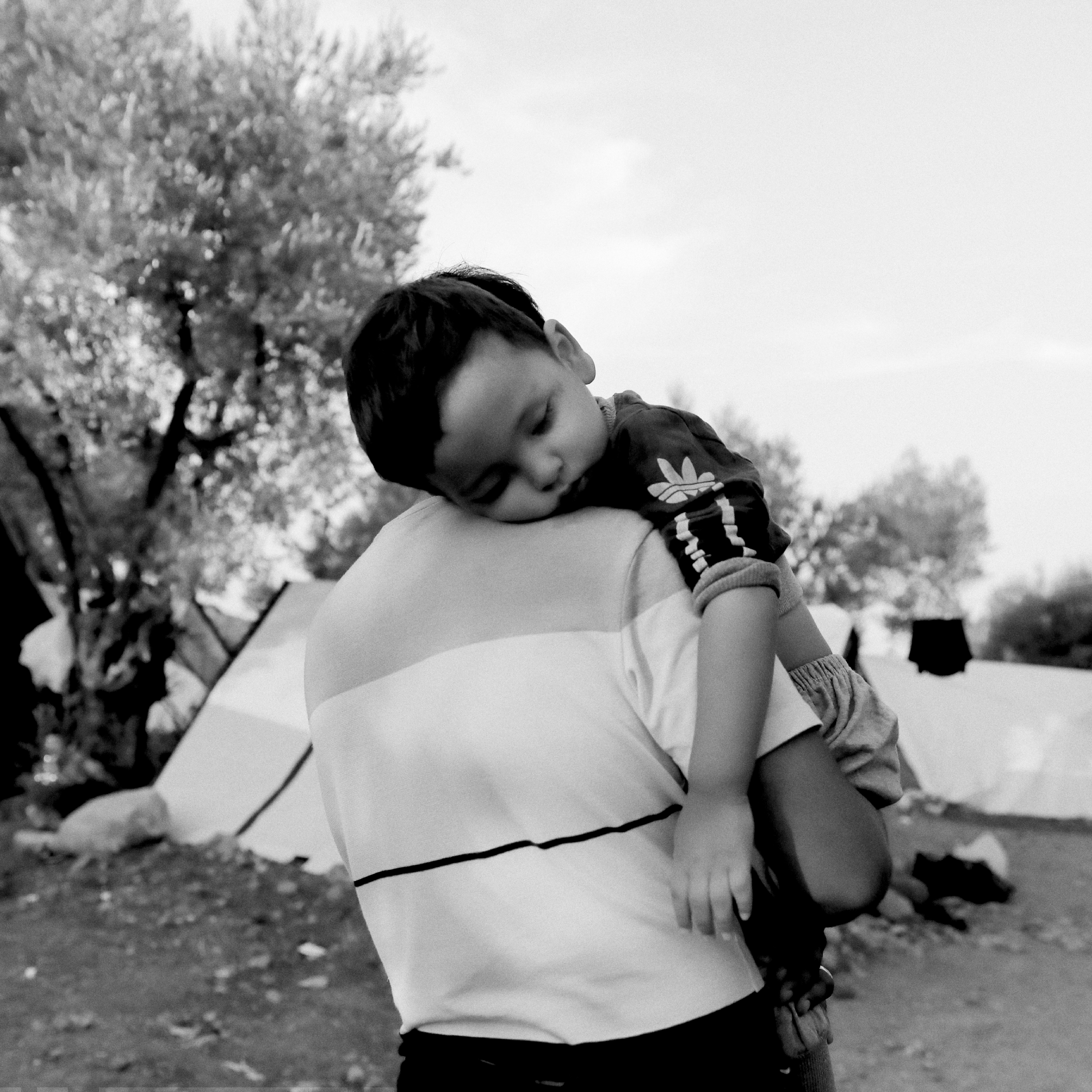
• For the third year in a row, vulnerable asylum seekers – including thousands of children – are trapped on the Greek islands of the eastern Aegean, enduring inhumane conditions in overcrowded hotspots.
• Although the Greek government is moving many people to the mainland, 12 humanitarian organisations are calling for an end to this vicious cycle.
• The organisations urge the Greek and EU authorities to move towards sustainable solutions for the reception, protection and integration of refugees.
Athens, September 18, 2019 – Once again, the overcrowding on the Aegean islands comes as no surprise. Nearly 22,000 people, 35% of whom are children, are housed in Reception and Identification Centers (RICs) [1] across Greek islands. These centers’ capacity has been exceeded by 500%, forcing vulnerable people to live in degrading and dangerous conditions.
The authorities have not been mobilized quickly enough to deal with this year’s increase in arrivals, and it is no wonder the public – which has witnessed the same story before – remains unmoved.
There are still serious implications for the living conditions of people living in these reception centers. Away from the Greek and European mainland, sick people, women and children remain without adequate access to health care, nutrition and sanitation.
Asylum seekers’ have spoken out about how overcrowding creates precarious living conditions, as demonstrated by the recent death of an unaccompanied child in Moria’s [2] ‘safe zone.’
Although around 7,000 people are entitled to be moved from the islands, as their restrictions [3] have been lifted, the process constantly breaks down due to a lack of available hosting places on the mainland. This is further impeded by the absence of an effective relocation program for asylum seekers in Europe and long delays in processing family reunification requests.
A lack of long-term planning for the effective integration of refugees into the country has delayed their removal from housing programs, leading to more extensions and blockages of the system.
A lack of integration programs, the continued postponement of the Helios [4] project, the persistent difficulties in accessing eligible benefits and services (such as AMKA, AFM bank accounts and allowances) and the general lack of essential provisions for vulnerable groups systematically hamper the existing system’s ability to work properly and efficiently.
Moving 1,500 people from Lesvos to mainland Greece is a step forward but it is not a solution for the people who are housed in tents that do not meet basic living standards. Neither is it a solution for the thousands more who live in precarious conditions until it is their turn to move on.
The signatory organizations have been at the forefront of the so-called “refugee crisis” – both on the side of the Greek state as well as refugees – and know that improving the asylum, reception and integration system in Greece is possible. Greece can meet the needs of asylum seekers [5] with a long-term strategy that acknowledges the benefits of refugee integration as well as the needs of host communities. What is needed is a coherent plan that makes the most of the resources [6] made available by the EU. This plan must also deliver adequate infrastructure and human resources and should work effectively with civil society.
European leaders must share the responsibility for the reception and support of asylum seekers by creating a permanent relocation mechanism and backing family reunification.
We need a better system that safeguards human dignity and provides people with a future without further delay. We must break this vicious circle.
The signatory organisations: ActionAid Hellas, ASB, Danish Refugee Council (DRC Greece), Defense for Children International Greece, Network for Children’s Rights, Diotima, ELIX, Greek Council for Refugees, Greek Forum of Refugees, International Rescue Committee (IRC), Solidarity Now, Terre des hommes Hellas


[2] shorturl.at/EIU09
[3] https://www.tovima.gr/2019/09/06/society/7-000-prosfyges-mporoun-na-metakinithoun-stin-endoxora/
[5] http://asylo.gov.gr/wp-content/uploads/2019/08/Greek_Asylum_Service_data_July_2019_gr.pdf

On 16 May 2019, on the occasion of the Roundtable Conference “Child Protection & EU Funding for migrant populations in Greece: A reality check and the way forward” several child protection experts and migration stakeholders met to discuss the reception system and integration perspectives of children in migration in Greece, from the perspective of EU funding.
The discussion was focused on child protection challenges that the Greek State encountered in the aftermath of the so-called refugee crisis of 2015 that revealed chronic deficiencies of the reception, asylum and child protection systems of the country.
Read the joint NGO recommendations here

Over 100 independent organisations are calling the new European Commission to stop the criminalisation of solidarity with migrants in Europe in a joint statement published today.
The organisations are calling the European Commission and its newly elected head Ursula Von der Leyen to reform the EU Facilitation Directive, which currently allows Member States to criminalise humanitarian aid.
In particular, the signatories wrote:
“Most investigations and formal prosecutions are related to the vague definition of crime in the EU Facilitation Directive which fails to properly distinguish between human smuggling and humanitarian work. But the European Commission has been reluctant to consider the links between the EU Facilitation Directive and the criminalisation of solidarity”.
The statement also refers to a recent study by the European research platform ReSOMA which found at least 158 Europeans have been criminalised for their help towards migrants since 2015.
The signatories wrote:
“The targets include volunteers, activists, NGOs, crew members of rescue ships, migrants’ family members, and also journalists, mayors and priests. The recent arrest of the Sea Watch 3 captain, Carola Rackete, is just the latest example of how people are being blamed for saving migrants’ lives and providing the humanitarian assistance which Member States are unwilling or unable to provide, despite being obliged to according to international and EU law.”
Notes to the editors:
Read the statement here.

Yesterday, together with 12 other organizations, #SolidarityNow addressed the European institutions and the political, civilian and judicial authorities of Italy, asking them to protect the rights of captain #Carola_Rackete, the people she has rescued, the rule of law and ultimately, the value of solidarity in Europe.
Today we are relieved that justice has been done and Carola, whose only ‘wrongdoing’ was to protect people’s lives, is FREE!
SN has previously taken action against the pan-European trend that criminalizes acts of solidarity, supporting two humanitarian volunteers, Sara Mardini and Seán Binder when they were arrested for helping people arriving safely to Lesvos islands, in 2018. Through close collaboration with other organizations such as Amnesty International and Human Rights Watch, we worked towards their release from pre-trial detention. #FreeCarola #FreeCarolaRackete

Dominika Spyratou is an Advocacy Officer with SOLIDARITYNOW, an organisation supporting those most affected bythe economic and humanitarian crises in Greece. She looks back on the launch of an important new report on the country that took place in May. Dominika is a mentee in the Social Change Initiative’s (SCI) migration mentoring programme – this programme provides mentoring support to leaders working on migration in six countries.
TWO exciting events recently took place in Athens and Thessaloniki.
Their aim was, firstly, to present the findings of a new report on Attitudes Towards National Identity, Immigration, and Refugees in Greece and, secondly, to explore how they might be used by interested parties in their work.
Local media showed a particular interest in the report’s results, some focusing on people’s anger, fear and frustration towards their country (for an example in Greek see here) while others (see report in English here) concentrated on how Greeks still show empathy towards refugees despite the harsh times the country is facing.
The finding that wasn’t highlighted enough though is how Greek society is not divided in two groups – those who are in favour of migration and those against.
In reality the vast majority of people hold mixed views that very much depend on their own personal experiences, values and beliefs.
This important finding together with the report’s segmentation analysis which breaks the Greek population into groups of opinion, make this study a unique tool for migration stakeholders who want to change the negative public narrative around migration and build a more inclusive society.
THE REPORT
The research, polling and focus groups that made up the report were conducted by Ipsos Greece with the support of SCI in partnership with More In Common.
Among the key findings, the research found that: “While Greeks feel deeply disaffected as a result of over a decade of austerity, this disaffection has not been turned broadly against those who have come to Greece seeking refuge.”
This provides a more accurate account of what the majority (67%) of Greeks truly feel about migration, and challenges the prevailing populist narrative on migration.
The report found:
The research also suggests that building a positive and engaging story of Greece’s future should start with pride in Greek identity and in the character and efforts of ordinary Greek people at the grassroots.
It found that Greek achievements in the face of enormous difficulties were also to be seen as a source of pride for its people.
USING THE INFORMATION
The two workshops in Athens and Thessaloniki in May brought together advocacy and communications experts, journalists, academics as well as INGO and municipality representatives and mostly focused on the people with mixed views, or in other words the ‘middle’ segments.
These groups constitute 62% of the Greek population and don’t hold strong opinions therefore their public attitudes can be more easily changed, albeit towards either direction.
Together we tried to identify who these people are, understand each segment’s specific concerns, what drives their behaviour and most importantly, how to connect and speak more strategically with them before more conservative or extremist groups do so instead.
What we have all agreed is that people in all segments have legitimate concerns which need to be addressed.
Refugees escaping war and persecution are not a problem for Greeks.
What they are really concerned about is economic uncertainty, increasing inequality, security threats and our joint future under these difficult circumstances.
It’s time for all of us to start discussing more strategically these issues.
In order for that to happen, Greek civil society needs to rebuild trust with the public which – as the report shows – in the last years has reached a very low level.
This should be our common next big project!
This blog was originally posted at https://www.thesocialchangeinitiative.org/refugees-escaping-war-are-not-a-problem-for-greeks/


