SolidarityNow together with other civil society organisations sends a letter to Europe’s leaders on the occasion of the 3rd anniversary of the EU-Turkey deal

Giorgos Moutafis for SolidarityNow

We escaped from war and came to a worse war. Moria was the most difficult part of our history. Only fear. You cannot do anything by yourself, move around, stand up in the queue for food, go to the toilet, sit at your tent that you share with strangers. You are afraid that someone will attack you at any moment, that a rage, fire, fight will break out. You live permanently with fear. You get sick, it is impossible not to get sick. And there is no way out. Moria or Turkey. Female, 28 years old, Afghanistan.

Many of the people we support through our work in Athens and Thessaloniki describe in a similar way their experience of being stranded in reception and identification centres (‘hotspots’) on the Greek islands.

For the past two years, our organisations have been repeatedly stating that the EU-Turkey Deal is not only undermining human rights and Europe’s very fundamental principles but it has also led to ineffective and dangerous policies and practices with great human cost. Today, around 12,000 people are still living in inadequate reception and identification centres, forced to sleep in unheated tents or overcrowded containers with limited access to running water and electricity, and often exposed to ongoing violence, harassment and exploitation.

With this letter, we urge European leaders to take immediate action to end the unfair and unnecessary containment policy which is preventing asylum seekers from leaving the Greek islands. We also call on them to urgently reach a common responsibility-sharing agreement for hosting asylum seekers across EU Member States.

Read more here

Preserving the right to accommodation for recognized refugees is essential


According to a recent announcement by the Greek Ministry of Migration Policy, as of 31 March 2019 recognised refugees hosted in the ESTIA programme for more than 18 months will start “exiting” the programme, without provision of further accommodation.

SolidarityNow is concerned that due to the lack of appropriate provisions in place, people face serious risks, including homelessness. We therefore urge the European Commission and the Greek Government to continue supporting recognised refugees through the ESTIA programme until an operational accommodation and integration pathway is in place.

To find out more, read the statement that SolidarityNow, a member of the Greek Network supporting the Right to Shelter , has endorsed.

#Your Vote Our Future-EP Elections 2019


SolidarityNow’s work in support of vulnerable and marginalized populations is driven by the goal of strengthening social cohesion. The protection of rights on all levels, and for all people, is core in this effort. As is the promotion of active citizenship.

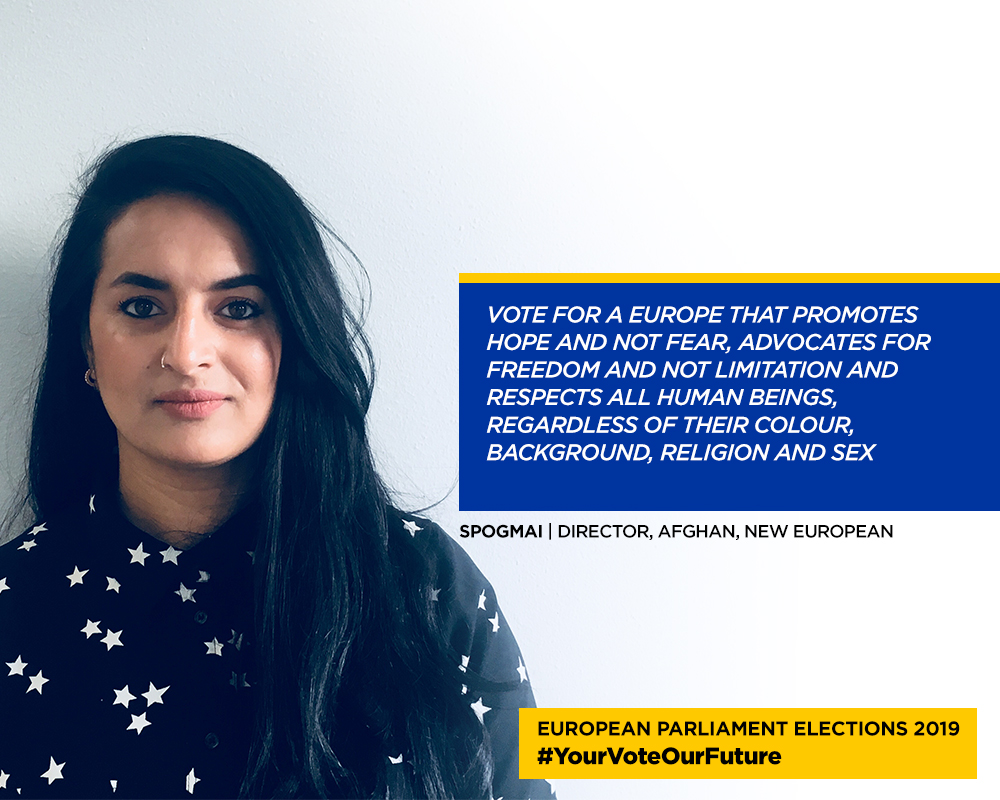
At SolidarityNow we believe that the upcoming European Parliament (EP) elections are crucial for defending the vision of an inclusive Europe that respects human dignity and fundamental rights for all. For this reason, we participate in this campaign launched by ECRE and many other civil society organizations across Europe.

  • To encourage each and every one of us to take a stance, re-claiming a welcoming Europe!
  • To encourage Greek citizens to claim the solidarity of other Europeans and to stand in solidarity to marginalized populations, including the non-Europeans who are residing in Europe but are not able to vote.
  • To participate in the EP elections and make a difference, supporting a Europe that safeguards the fundamental rights of all human beings and promotes social inclusion.

Every vote counts!
Visit the campaign website to find out why it is important to vote and learn more about the role of the European Parliament and the positions of various EP Parliamentary groups.

#YourVoteOurFuture | EUROPEAN PARLIAMENT ELECTIONS 2019 – ecre.org

We are the majority! Public opinion studies shows consistently and across EU member states that hostility towards migrants and refugees is a minority phenomenon

www.ecre.org

At SolidarityNow we are asking for a #Welcoming Europe


While the Criminalization of Solidarity Continues,

at SolidarityNow we are asking for a Welcoming Europe

 At the #WelcomingEurope Campaign every Signature Counts!

Learn more and sign the petition here.

 by Melina Dunham, intern at SolidarityNow’s Advocacy Unit

As people continue to arrive in Europe’s shores, volunteers, locals, and NGOs have stepped in to help where national authorities have struggled and fallen short. Unfortunately, governments across the region have been vilifying these acts of compassion and kindness instead of sustaining them. This is neither what all citizens stand for neither the Europe they believe in.

To address this worrying trend, 170 civil society organizations united and put forth the first European Citizen’s Initiative (ECI) campaign that deals with migration. This specific ECI, #WelcomingEurope, is looking to combat the arrestation, fining, and intimidation of humanitarian assistants and volunteers, which fall under the umbrella of the criminalization of solidarity. ECIs are democratic tools that encourage political participation by allowing citizens to propose legislative changes to the European Commission. There is a sincere relationship between contributing to an ECI and provoking concrete policy reform. All nationals eligible to vote can sign a campaign. To be successful, 1 million signatures must be gathered with minimum thresholds reached in at least 7 countries, after which Brussels must examine the recommendations and respond. Managed through an official and well-regulated process, there is a guarantee that signatures do not get ‘lost’ on a page or website.

Greece has a profound stake in this demand to reclaim the right to help. As a frontline state in the migration route, the needs for humanitarian support and intervention are immense. While ensuring safe and dignified migration is espoused as a policy priority, this is not reflected in the reality. Not only do refugees endure severe injustices, but Greek Authorities are increasingly targeting those who have come to help, claiming that NGOs and volunteers disrupt operations and fail to collaborate. This does not warrant arrestation and #WelcomingEurope is an important part of ensuring effective future relations between State and non-State actors.

There have been approximately 80 cases, but two recent instances received particular attention. In 2016, three Spanish firefighters and two Danish volunteers were charged with illegally bringing migrants to Greece. It was only this May (2018) that they were finally cleared of their “wrongdoings”. This August (2018), Sean Binder of Germany and Syrian National Sarah Mardini ­– heralded as a hero for saving a boat of 18 people in 2015 – were re-arrested with charges of human trafficking and espionage. Evidently, the lines between humanitarian intervention and criminal activity are being politically and legally blurred, both as a deterrent strategy and a ploy for governments seeking to fuel the regional trends of nationalism. This manipulation is exactly what this ECI seeks to address. #WelcomingEurope is a demand for safety, solidarity, and justice.

This intimidation has practical implications for the situation on the frontlines, none of which include the intended deterrent effects; removing volunteers does not mean that refugees will stop coming. Rather, it means that more people are likely to drown while crossing and are less likely to be welcomed by volunteers and locals providing food and dry clothes when they land on the shores.

Cases are emerging across Europe, even in States minimally affected by migration. Hungary is a primary case, where under the purview of Prime Minister Orban, a series of laws criminalizing individuals and NGOS offering help to migrants was set in to motion. This fear tactic has also been used in Italy and France, other key points along the migrant route, where nationals and foreigners alike.

#WelcomingEurope is important and urgent. European Parliamentary elections take place in May and we must capitalize on this next major opportunity to address migration policies. In December 2018, Sean and Sara were released on bail– both a moment to celebrate and reiterate that they should not have been there in the first place. With a successful campaign, the political pressure will be significant. ECIs are instrumental in demands of change and representation and #WelcomingEurope holds incredible symbolic power and potential. As European citizens, it is important that we sustain and encourage its momentum, because ultimately- every signature counts! Sign the petition here.

Sara and Seán are Free and Will Continue to Defend Solidarity


Berlin, 12 December 2018. Last week brought us news worthy of much celebration at SolidarityNow. On Wednesday 5 December, and after spending 107 days in pre-trial detention, Sara Mardini and Seán Binder were finally released on bail. Sara became internationally known when she and her sister Yusra pulled a boat to safety and saved a dozen refugees in 2015. She and Seán worked together as volunteers with ERCI on Lesvos for two years and were arrested in August under allegations of migrant smuggling, espionage against the Greek State, and money laundering. These charges are completely unfounded and end up criminalizing the very essence of humanitarian assistance, including standard practices used by many civil society actors on the front line of the ‘European refugee crisis’.

SolidarityNow supported the humanitarian volunteers throughout their detention, surrounding their defense with advocacy efforts in Greece and beyond. Through close collaboration with other organizations such as Amnesty International and Human Rights Watch, we worked towards their release from pre-trial detention and we will continue to fight until these baseless charges are dropped.

Upon release, we joined Sara in her celebrations with her family and friends who arrived from various parts of the world, as well as with her legal team. Seán was able to be reunited with his mother, who had rented an apartment on the island of Chios where her son was detained. Both Sara and Seán were freed without geographical restrictions. This means that after too long, they will both be able to get back to their normal lives – Sara to Berlin to continue her studies at Bard College and Seán to Ireland to focus on his academic research.

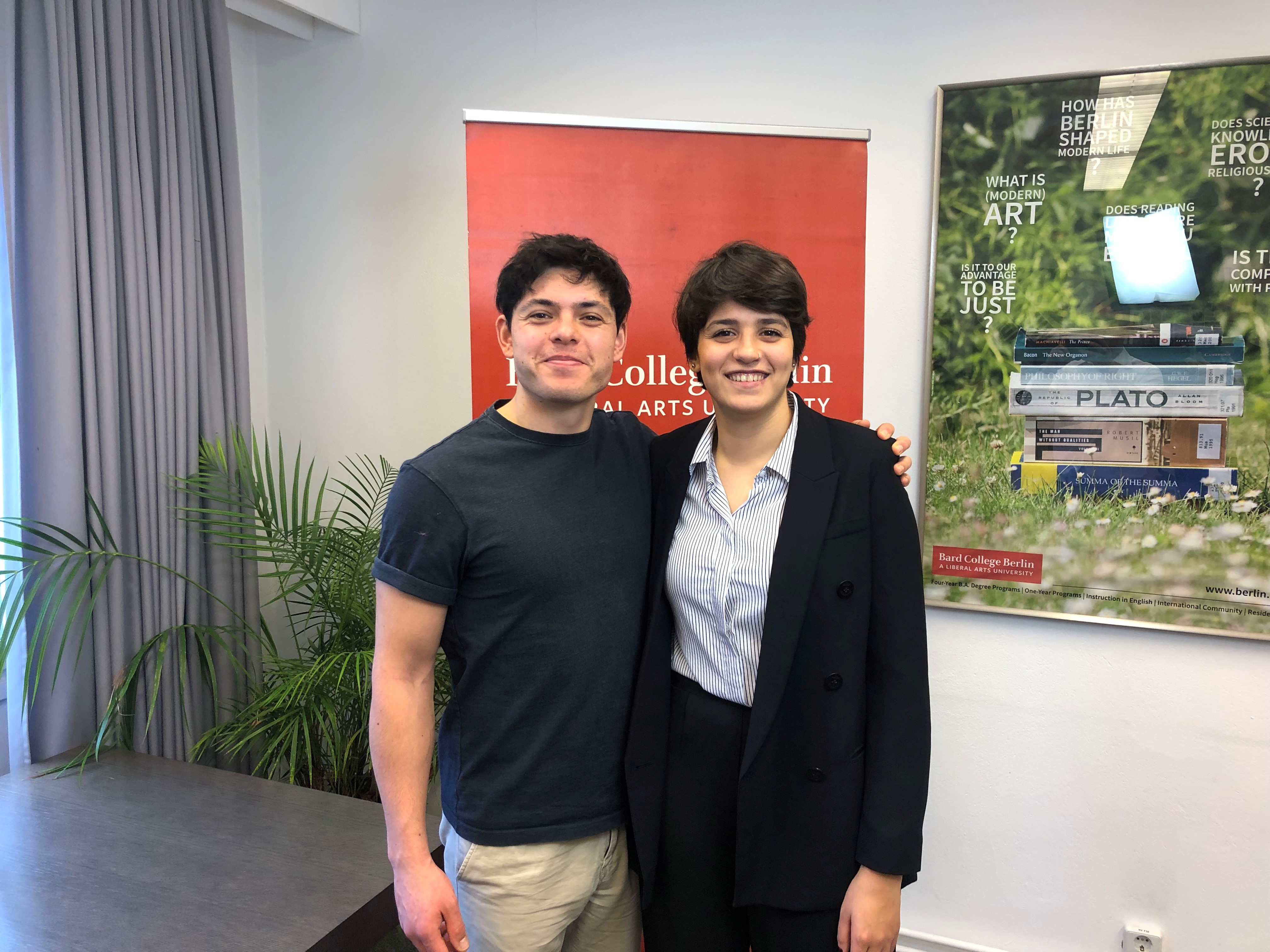
Today, Sara and Seán were reunited in Berlin and gave a Press Conference, shed light on their case, and vowed to continue promoting the values of humanity and solidarity. SolidarityNow participated in the panel to discuss the broader context in which these wrongful accusations occurred. This is part of a pan-European trend towards criminalizing humanitarian aid. While being used as a deterrent tactic by xenophobic governments, it only means that the journey across the Mediterranean will become even more treacherous for those fleeing war and persecution. As part of the #WelcomingEurope European Citizens’ Initiative, hundreds of civil society organizations and thousands of European citizens are fighting back against these restrictive policies that have created a hostile environment for people who help refugees and migrants.

Since May of this year, SolidarityNow has been spearheading the national efforts of the campaign, which is the first of its kind to address migration. Through this officially monitored tool, 1 million signatures from European citizens have the power to insist the European Commission comply with our joint-demand: end the criminalization of solidarity across Europe.

We have until 15 February to collect as many signatures as possible to be sure that humanity and justice are defended.

  • Sign the ECI today to add your voice to our call for a Europe of dignity and solidarity.

Greece, EU: Move Asylum Seekers to Safety End Containment Policy, Organize Transfers Now

Giorgos Moutafis for SolidarityNow

The Greek government and its European Union partners should urgently ensure that all asylum seekers on the Aegean islands are transferred to suitable accommodation on the mainland or relocated to other EU countries as winter approaches, 20 human rights and other organizations said today.

Despite the Greek government’s recent efforts to transfer asylum seekers from the islands to more suitable accommodation in the mainland, as of December 3, 2018, over 12,500 people were still living in tents and containers unsuitable for winter in five EU-sponsored camps known as hotspots on Lesbos, Samos, Chios, Kos, and Leros – almost triple their capacity. In addition to serious overcrowding, asylum seekers continue facing unsanitary and unhygienic conditions and physical violence, including violence based on gender.

The lack of basic protection measures leaves women and girls, as well as lesbian, gay, bisexual, and transgender (LGBT+) people, particularly vulnerable to sexual harassment and assault, and afraid to use site facilities including bathrooms and showers. Medical care, trauma counseling, and psychosocial – or mental health – are insufficient, as is legal counseling and support during the different stages of the asylum procedure. Mental health among asylum seekers has deteriorated amid harsh living conditions and emotional distress.

The humanitarian crisis in the hotspots is the result of Greece’s EU-backed policy of containing asylum seekers on the Aegean islands, until their asylum claims are adjudicated or until it is determined that they fall under one of the “vulnerable” categories listed under Greek law. “Vulnerable” asylum seekers are exempted from the border procedures, and they are allowed to move to the mainland. Greek authorities have periodically accelerated the transfer of “vulnerable” asylum seekers to the mainland but as of late November, an estimated 2,200 people identified as eligible for transfer are still waiting because accommodation facilities on the mainland have similarly become overcrowded during past months, amidst the ongoing lack of an EU-wide responsibility sharing mechanism. Others have fallen through the cracks of lengthy and inefficient vulnerability assessments and are confined to the dire conditions on the islands.

The containment policy was designed and justified as a means to carry out the March 2016 EU-Turkey deal that would return to Turkey asylum seekers who reached the Greek islands by crossing the sea, for their asylum claim to be processed there. The policy imposes unjustified and unnecessary suffering on asylum seekers, while unduly limiting their rights to have their case examined on its merits – as opposed to its “admissibility” – the organizations said.

Speeding up returns, a measure foreseen under the deal, would not solve the crisis on the islands. Many of those trapped on the islands are protected against return and could not be sent back to Turkey, other third countries, or their countries of origin under EU law.

Greece and other EU countries should share responsibility to provide an adequate standard of living for asylum seekers, guaranteeing their subsistence and protecting their physical and mental health throughout a fair and efficient asylum procedure. A recent pledge to move 6,000 asylum seekers to the mainland to provide them with an adequate standard of living is a first step, albeit not one that can ensure sustainability in the long-term.

Greece, with the support of EU institutions and countries, should end its inhumane containment policy and facilitate the transfer of asylum seekers from the Aegean islands. Special care should be given to the needs of children, women survivors of violence, pregnant women and new mothers, and LGBT+ people, among other groups.

European governments should be ready promptly to relocate asylum seekers from Greece and ensure their access to adequate living conditions while their asylum applications are being processed. Portugal’s recent agreement to transfer 100 asylum seekers and potentially up to 1,000 through 2019 is a positive step that other EU countries should follow.

EU governments should follow the lead of the European Parliament in reaching an agreement on a functioning and fairer EU asylum system, which supports Member States, including through a mandatory distribution mechanism; protects people in need; and enables families to reunite in the EU.

The Greek and European authorities should show genuine, humane leadership in addressing the deplorable conditions for the people trapped on the Greek islands. Women, men, and children seeking protection in Europe should be treated in accordance with their rights and not be forced to spend another winter in squalid and unsafe camps.


The Organizations Supporting This Statement:

Amnesty International
ASB – Arbeiter Samariter Bund
Campfire Innovation 
Caritas Hellas
CEAR – Spanish Commission for Refugees
Centre for Research on Women’s Issues – DIOTIMA
Churches Commission for Migrants in Europe
Greek Council for Refugees
Greek Forum of Refugees
Greek Helsinki Monitor
HumanRights360
Human Rights Watch
Jesuit Refugee Service
Legal Centre Lesvos
Medecins Du Monde – Greece
Oxfam
PRAKSIS
Refugee Support Aegean
SolidarityNow
Terre des hommes Hellas

Takeaways: The first Sirius Policy Dialogue Workshop on Labour Market Integration


The first SIRIUS policy dialogue workshop Integration of Migrants and Refugees: a contested issue in domestic and EU politics and how to address it was held in Athens on Friday 9 November. The SIRIUS consortium, in collaboration with its partners SolidarityNow and DIKTIO, convened different stakeholders to explore how Europe can approach migration and asylum through integration and not externalization.

Antigone Lyberaki of SolidarityNow and Simone Baglioni of SIRIUS made welcoming speeches, which were followed by a keynote remark from Deborah Carlos-Valencia of Melissa Network. After presenting how Melissa’s programs promote the specific needs of women refugees, she highlighted why migration and integration policies must adopt a gendered approach and address the specific challenges and vulnerabilities women and girls face to ultimately support their empowerment and agency.

The first session featured principal investigators of the SIRIUS Project who provided an overview of the results of the two Work Packages completed thus far (available here and here), which compare various barriers and enablers of labour integration across the SIRIUS Countries (Czech Republic, Denmark, Finland, Greece, Italy, Switzerland, and the United Kingdom). Dr. Konstantinos Konstantakis of NTUA presented macro-economic findings on the relationship between migrants’ skills and the needs of the national labour market and showed that given the uneven economic landscapes, opportunities for labour market integration vary substantially by country.  Dr. Veronica Federico of UNIFI provided a comparative overview of migration and labour integration law in the seven cases, and emphasized that the complexity of legal frameworks, combined with hierarchical classification of migrants contributes to the narrowing access to rights and protection.

The second panel focused specifically on Greece. In her introduction, Dr. Maria Mexi of DIKTIO stressed the timeliness of the discussion given the EU and National elections, where migration remains the central agenda priority across the spectrum. Representatives of PES Women (The Party of European Socialists), the Municipalities of Athens and Thessaloniki, To Potami (a central and socialist-liberal political party in Greece) and DG Home of the European Commission discussed the challenges of integration faced at the national and local levels.  The speakers agreed that when it comes to migration, widespread socio-political polarisation sets limitations to policymaking. Employment was highlighted as conditio sine qua non for integration alongside education, skills and qualification recognition by MP Mavrotas of To Potami. However, the lack of political will in the Greek context threatens the possibility of focusing on integration and instead only promotes a short-term emergency response. The necessary role of the EU to support Greece and the other “first destination” countries was identified as fundamental and Ms. Dimadama of PES women emphasised the need for a better functioning common asylum system. Ms. Psyrra of DG Home stated the Commission’s willingness to promote inclusion through funding tools to better leverage local level capacities and policies. Ms. Lambiri and Mr. Pengas of Athens and Thessaloniki, respectively pressed the fundamental role of municipalities in addressing and implementing integration which has been consistently overlooked and consequently places these local actors in an institutional vacuum. Both shared examples of locally-initiated plans and programs for emergency situations and integration.

The day closed with a panel of best practices of inclusion of migrants, refugees and asylum seekers into the labour market with case studies in Germany, Northern Ireland and Spain. Presented respectively by Dr Monika Gonser, Dr Ulrike Vieten and Federica Rosato, they shared examples from profit-companies, non-profit organisations and the public sector.

With the array of perspectives and positions accounted for, all participants stressed the following key points. The first being the critical need for stronger and supportive education and employability programs. Doing so also requires robust methods for skill assessment and accurate job placement. At the European level, all experts called for additional efforts to better coordinate States’ labour needs and asylum systems. Finally, the main takeaways for the Greek context were that its role as a transit country requires integration policies to be designed accordingly, whilst ensuring that all services and infrastructure be accessible to all citizens.

You can find the workshop’s agenda here.


On November 25th we demand the elimination of violence against women and girls


November 25th is when we demand the elimination of violence against women and girls. Since its inception in 1991, the international campaign galvanizes concrete actions to ultimately bring the number of women and girls who experience any and all forms of violence down to zero. It was the United Nations Declaration on the Elimination of Violence against Women of 1993 that first amplified the issue as a violation of human rights and demanded international recognition of it as such.

It is time we put an end to violence against women so that an international day of action is no longer needed. Help spread the word and participate in the 16 Days of Activism for the UN’s UNiTE Campaign. This year’s theme is Orange the World: #HearMeToo and you can contribute to advocating for specific policy and legislative changes and amplifying the diverse voices of women.

If you or someone you know is victim of domestic violence, that are people and services available to hear you and support you. In Greece, the 24-hour SOS Helpline is 15900. Support is also available by email at sos15900@isotita.gr You can also find more information online.

Read the infographic below:

November 25th_ Violence Against Women


Joint Letter to European Commissioner for Migration, Home Affairs and Citizenship

Giorgos Moutafis for SolidarityNow

In view of the ongoing reforms of the Common European Asylum System (CEAS) and related national-level developments, SolidarityNow, along with 18 civil society organisations across Europe, calls on the European Commission to seize this historic opportunity to promote an orderly and efficient asylum system which strengthens the EU’s and Member States’ ability to meet obligations under international human rights law. You can read our concrete proposals laid out in the letter:

Joint letter regarding CEAS reform