


(Ελληνικά) ΑΕΚ και SolidarityNow μαζί!


28 November 2019 – On Wednesday, UN High Commissioner for Refugees, Filippo Grandi, visited the Reception and Identification Centre in Moria – Lesvos to witness first-hand the human cost of flawed migration policies which have stranded over 39,000 people in overcrowded and dangerous refugee camps.
Ahead of Grandi’s visit, SolidarityNow together with 16 other NGOs* working in Greece delivered a written statement urging the High Commissioner to address with Greek authorities significant concerns regarding access to asylum procedures, provision of basic services and inadequate protection of children. The signatories also flagged the need for the Greek authorities to implement integration measures and urged the High Commissioner to join Greece’s efforts and actively engage EU Member States in the need for better mechanisms to share responsibility for refugees arriving in Europe.
Since July 2019, thousands of newly arrived asylum seekers don’t have access to the public healthcare system, a gap which puts peoples’ lives at risk. At the same time, the postponement of the implementation of the law on guardianship (4554/2018) violates children’s rights, as they are left without a guardian to support and protect them at every stage of the reception and legal procedure. Pending the implementation of the government’s new action plan for the protection of unaccompanied children, and with the number of unaccompanied children in the country at its highest, protection standards are worsening with thousands of children sleeping among adults, without appropriate shelter or protection, and without access to basic services or resources.
Furthermore, Greece’s new law on international protection, inter alia, abolishes basic guarantees of the asylum procedure at first instance and introduces procedural and substantial obstacles that endanger the right to an effective remedy at second instance, raising concerns about the fairness and effectiveness of the asylum system, as a whole.
Antigone Lyberaki, SolidarityNow’s General Manager said:
“The Closed Detention Centres exercise a pervasive corrosive influence on society. This is not only due to the impact on the rights of those incarcerated within the walls of such Centres. More important is the effect of projecting a negative image of asylum seekers as a potential threat to society at large. It is my fervent wish that these potential impacts are seriously taken into consideration in deciding how these Centres will operate”.
*ActionAid, Arsis, Danish Refugee Council, Defence for Children International, Diotima, Elix, Greek Council for Refugees, Greek Forum of Refugees, Help Refugees, International Rescue Committee, Medecins du Monde, Mobile Info Team, Network for Children’s Rights, Oxfam, Refugee Legal Support, SolidarityNow, Terre des hommes Hellas

“You Can’t See Them.” This is the key message of the new SolidarityNow awareness campaign launched nationwide to inform and raise public awareness of the organization’s diverse actions on the side of the most vulnerable people and of its role in enhancing and empowering their integration without being visible thus, “we can’t see them”. Through this awareness campaign the organization (re)introduces itself to the wider public.
The campaign’s protagonists are SolidarityNow’s beneficiaries, as well as employees of the organization that supported its development.
“You Can’t See Them”
The new TV spot is airing on TV stations as a social message; through this spot SolidarityNow aims to make within 48” its own mark on the country’s humanitarian map and to inform the wider public about its actions.
In the TV spot, we see scenes of everyday life unfolding in the city: we are wondering around a downtown square on a sunny afternoon. In a café, we see friends drinking their coffee and chatting. A group of friends celebrates one’s birthday, next to them two friends are having coffee while one waitress is serving another group. Sitting on a bench, a man and a woman are happily talking. Two parents play with their children in the square.
Looking at these scenes, nothing gives us the “other side” and the twist. Because in reality at that square, we see a homeless man who was sleeping on the streets for three years. We see a frightened woman who had long been abused by her former partner. We see a couple who had been living in poverty for years without any work. We see a family of refugees saved by the war and the cold waters of the Aegean.
But you still, cannot see them.
SolidarityNow, supported them to restart their lives from scratch through psychosocial support, housing and educational programs to help them re-integrate. To date, we have done this with more than 300,000 people in need. And we keep doing it.
“At SolidarityNow we already count six years of continuous and effective action. As an organization operating in Greece, we traveled through the troubled waters of the economic – but also refugee – crisis, and – urgently – we became an organization that learned swimming and navigation while already in the water”, notes Antigone Lyberaki, the SolidarityNow General Manager. And she continues: “With this campaign, we believe we highlight the role of SolidarityNow in helping to create the modern conditions needed to rebuild the lives of those in need, with dignity and perspective. The goal of all our actions aims for people’s smooth integration and their return to normality. So, we can’t see them and distinguish them“.
The campaign’s how and where
Targeting to get the message across, SolidarityNow’s awareness campaign will be “on air” for the general public starting mid-November and for the next two months, and through various communication tools and actions:
The SolidarityNow awareness campaign was carried out pro bono by SohoSquare and the advertisement “You Can’t See Them” is a production of Foss Productions.
Stay tuned & follow our digital campaign!


SolidarityNow co-signs a call on EU member states and the European Commission, to make a collective pledge of at least 30,000 places to be made available for resettlement to the EU in 2020. It is imperative that these 30,000 places are implemented within the calendar year, guaranteeing a durable solution for some of the most vulnerable refugees in 2020. In addition, EU Member States should continue to expand complementary pathways such as humanitarian visas, private sponsorship, and higher education scholarships.
Read the call here

On the 26th and 27nth September, 2019, we are organizing the 1st Job Fair by SolidarityNow Job Fair in Thessaloniki. The Job Fair is a new initiative of the organization, which aims to connect refugees, migrants and asylum seekers with new work contexts and to inform and support Greek employers in order for them to reach refugees and migrants.
People from all over the world, agencies and businesses in Thessaloniki have the opportunity to meet and talk about labor issues. The festival was organized due to the interest and needs of our beneficiaries. In Solidarity Centers in Athens and Thessaloniki, as well as in the Blue Refugee Center in Thessaloniki, people from various countries are seeking support at the Employability Service, which operates free of charge.
At SolidarityNow we believe that everyone has equal access to the workplace. The Job Festival was the first step this message to be heard and shared. The next goal is this Job Fair to become an institution in the city of Thessaloniki and to be organized in other Greek cities.
See the photos below:


Thessaloniki, September 23, 2019
“The right to work is universal. If we are open to difference, people can become carriers of knowledge, development, and creativity. All they need is to be given the opportunity to do so”.
Empowerment, job searching techniques, CV preparation, labor rights, skills development, business connectivity and entrepreneurship are some of the topics to be discussed at the first Job Fair organized by SolidarityNow on 26th and 27th September, in the city of Thessaloniki, at the Blue Refugee Center. This action is an initiative of the SIRIUS program, aiming to bring together refugees, migrants, asylum seekers and companies operating in Greece.
The Job Fair is a new initiative of the organization, which aims to connect people of different cultures with new work contexts and to inform and support Greek employers in order for them to reach refugees and migrants.
The integration of refugees and migrants into the Greek labor market and therefore into Greek society is a process with many challenges. The lack of knowledge of the Greek language and cultural differences in combination with high rates of unemployment and discrimination in the country, create additional barriers of entry into the labor market. If we are open to difference, people can become carriers of knowledge, development, and creativity. All they need is to be given an opportunity. SolidarityNow through its Employment & Job Counseling Service, which operates at the Blue Refugee Center in Thessaloniki, but also at the organization’s Solidarity Centers in Athens and Thessaloniki, strives to create conditions for equal access and opportunities for all.
“It is very important for us at SolidarityNow to inform our beneficiaries, not only about ways to overcome challenges at the workplace, but also to encourage Greek businesses to pave the way for recruitment”, notes Ioanna Fourkiotou, Director of SolidarityNow’s activities in northern Greece and responsible for the organization of the Job Fair.
In this first effort we will be honored with the presence of various organizations and businesses, as well as refugees, migrants and asylum seekers, who will share their relevant experiences. The main objective of the Job Fair organized by SolidarityNow is to promote professional rehabilitation through direct contact and dialogue, and the exchange of views and ideas, to solve concerns and questions but also to create the basis for a better tomorrow, with more workplace opportunities for all.
* The SIRIUS program “Skills and Integration of Immigrants, Refugees and Asylum Seekers in the European Labor Market”, funded by the European Union, started in January 2018 and lasts three years. The program involves 11 actors from 7 countries. The program in Greece is implemented by SolidarityNow.
*The Blue Refugee Center Blue, launched in 2016, is supported by the UNHCR and funded by the European Union.
*The Employment Service operates at SolidarityNow’s Solidarity Centers in Athens and Thessaloniki as well as at the Blue Refugee Center in Thessaloniki, as one of the many services provided free of charge to anyone in need.
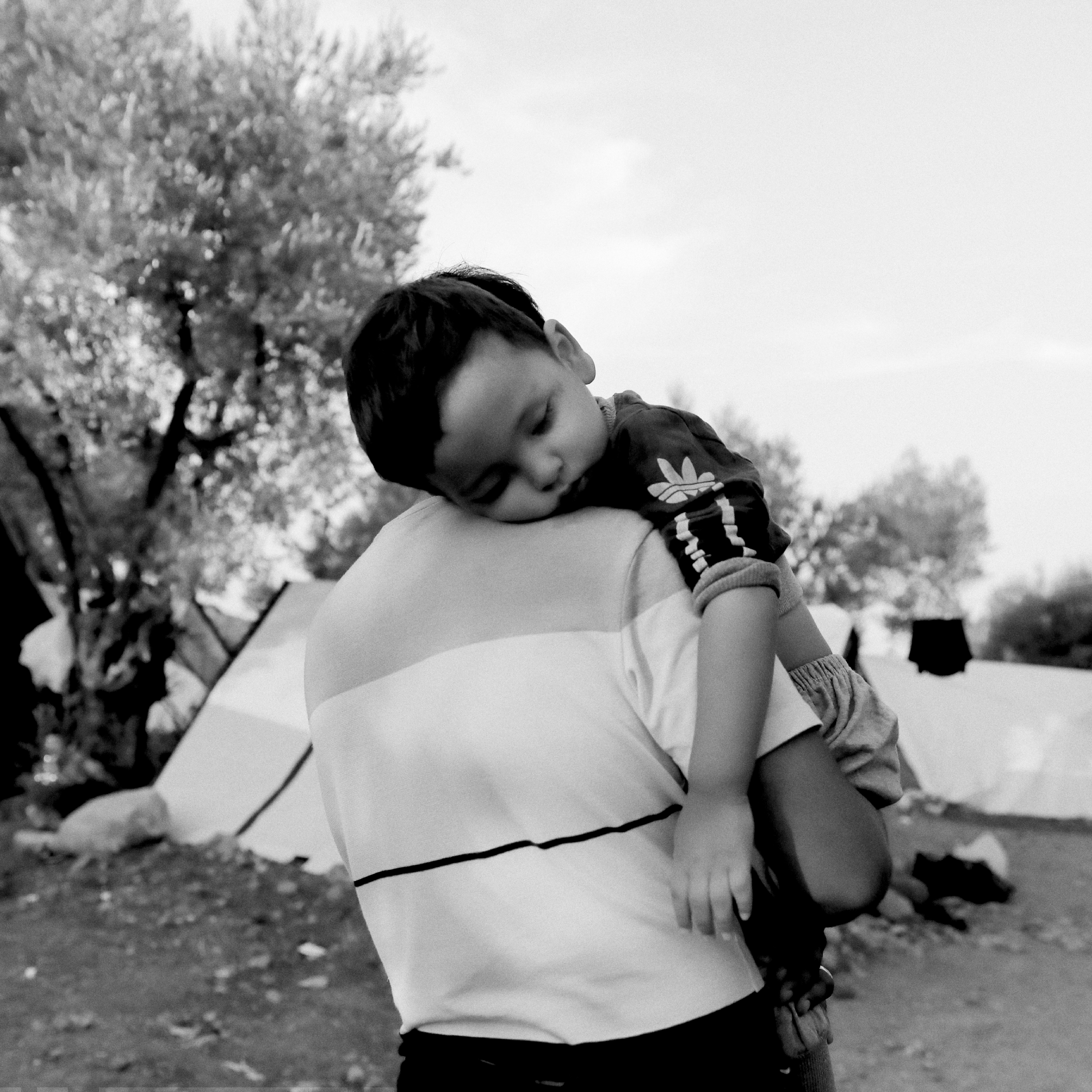
• For the third year in a row, vulnerable asylum seekers – including thousands of children – are trapped on the Greek islands of the eastern Aegean, enduring inhumane conditions in overcrowded hotspots.
• Although the Greek government is moving many people to the mainland, 12 humanitarian organisations are calling for an end to this vicious cycle.
• The organisations urge the Greek and EU authorities to move towards sustainable solutions for the reception, protection and integration of refugees.
Athens, September 18, 2019 – Once again, the overcrowding on the Aegean islands comes as no surprise. Nearly 22,000 people, 35% of whom are children, are housed in Reception and Identification Centers (RICs) [1] across Greek islands. These centers’ capacity has been exceeded by 500%, forcing vulnerable people to live in degrading and dangerous conditions.
The authorities have not been mobilized quickly enough to deal with this year’s increase in arrivals, and it is no wonder the public – which has witnessed the same story before – remains unmoved.
There are still serious implications for the living conditions of people living in these reception centers. Away from the Greek and European mainland, sick people, women and children remain without adequate access to health care, nutrition and sanitation.
Asylum seekers’ have spoken out about how overcrowding creates precarious living conditions, as demonstrated by the recent death of an unaccompanied child in Moria’s [2] ‘safe zone.’
Although around 7,000 people are entitled to be moved from the islands, as their restrictions [3] have been lifted, the process constantly breaks down due to a lack of available hosting places on the mainland. This is further impeded by the absence of an effective relocation program for asylum seekers in Europe and long delays in processing family reunification requests.
A lack of long-term planning for the effective integration of refugees into the country has delayed their removal from housing programs, leading to more extensions and blockages of the system.
A lack of integration programs, the continued postponement of the Helios [4] project, the persistent difficulties in accessing eligible benefits and services (such as AMKA, AFM bank accounts and allowances) and the general lack of essential provisions for vulnerable groups systematically hamper the existing system’s ability to work properly and efficiently.
Moving 1,500 people from Lesvos to mainland Greece is a step forward but it is not a solution for the people who are housed in tents that do not meet basic living standards. Neither is it a solution for the thousands more who live in precarious conditions until it is their turn to move on.
The signatory organizations have been at the forefront of the so-called “refugee crisis” – both on the side of the Greek state as well as refugees – and know that improving the asylum, reception and integration system in Greece is possible. Greece can meet the needs of asylum seekers [5] with a long-term strategy that acknowledges the benefits of refugee integration as well as the needs of host communities. What is needed is a coherent plan that makes the most of the resources [6] made available by the EU. This plan must also deliver adequate infrastructure and human resources and should work effectively with civil society.
European leaders must share the responsibility for the reception and support of asylum seekers by creating a permanent relocation mechanism and backing family reunification.
We need a better system that safeguards human dignity and provides people with a future without further delay. We must break this vicious circle.
The signatory organisations: ActionAid Hellas, ASB, Danish Refugee Council (DRC Greece), Defense for Children International Greece, Network for Children’s Rights, Diotima, ELIX, Greek Council for Refugees, Greek Forum of Refugees, International Rescue Committee (IRC), Solidarity Now, Terre des hommes Hellas


[2] shorturl.at/EIU09
[3] https://www.tovima.gr/2019/09/06/society/7-000-prosfyges-mporoun-na-metakinithoun-stin-endoxora/
[5] http://asylo.gov.gr/wp-content/uploads/2019/08/Greek_Asylum_Service_data_July_2019_gr.pdf