Refugee Crisis and Integration

Steven Tagle

by George Kanaris, Social Services Coordinator at SolidarityNow’s Athens Solidarity Center.

The integration of the newly arrived refugees is one of the biggest challenges that the Greek society will face in the coming years.

Quite a big part of the currently residing in Greece refugees will be relocated in other countries, another big part will be rejected and sent back to their countries of origin. Still an important proportion of the presently asylum seekers will be granted with asylum and will be settling down in Greece.

How ready the Greek society is to integrate these people and make them part of their own society? At what extent are we prepared to accept them and create a fertile ground for them? Is there any chance for the masses of Syrians, Iraqis, Pakistanis and Afghanis and all the other nationalities to become Greek citizens and have equal rights and obligations with the Greek nationals? This is a very complex subject and no easy answer is available for the all above questions.

Many different factors must be taken into consideration e.g. the deep crisis that the Greek society faces the last decade without any clear solution soon, the cultural gap between the country of origin and the host country, the differences in language, religion, mentality that many times prevent or even hinder the integration.

Still, what is our role as host community and what are we doing to facilitate the process and create favorable conditions for their becoming equal members of the Greek society, safeguard their future and prevent them from discrimination and social and professional isolation? One more time, the answers are not easy to articulate.

Despite the difficulty and complexity of the topic, we will try to set priorities and highlight the different aspects that should be taken into consideration when we talk about integration of the refugees.

The very first step in settling somewhere is the languages and communication. When discussing integration, learning the language of the host community is often the first topic to come in mind. Language skills is the key enabler to do all the other things necessary to start a life, like attending schools, looking for a job or interacting with host communities. Education and job opportunities are very often hindered because of the language barrier.
The second step in settling somewhere is the access to public services in building a state – citizen relationship and generating trust in government and other institutions. Asylum seekers and recognized refugees need additional support to access services such as housing, healthcare and schooling at the beginning of their integration process, as they don’t have the same facilities as locals do. Stability is key for them to start thinking about moving ahead with their lives. They need stability during and after the asylum procedure, with access to decent accommodation so that they can then look for a job or start studying the local language. The relationship with host communities is a cornerstone for their integration. Refugees are often treated disrespectfully and unfairly because of discriminatory attitudes and prejudices of the host community based on their culture and religion. The cultural gap and the lack of tolerance and openness to accept and integrate the different hinders the integration. After all integration is all about proper behavior, dignity and acceptance. Treating the foreigners with humanity and respecting their cultural and religious differences, trying to understand them and making them part of our own community.
Job access and activity opportunities is another significant factor for the integration. The refugees as anybody else need economic independence which is very difficult to achieve because of legal or qualification barriers. On the top of that easy access to activities like sports, language learning and training facilitates the integration and changes the routine that becomes depressingly monotonous after months, triggering psychosocial problems. People stay idle all day for a long period either waiting desperately for the answer of their asylum request or for their relocation. They don’t adopt any activity or invest any energy, in the local language for instance, as they don’t know which will be their destination country. This uncertainty and state of limbo in between different countries and cultures doesn’t help them to feel part of the community and be integrated in it. The often-traumatic experiences of refugees on their way from the country of origin renders safety, peace and security a priority in the destination country. Nevertheless, this is frequently difficult to guarantee. Being stranded in camps and squats, trying to survive many times under inhuman living conditions, they feel that the rule of law doesn’t apply to them and they have nowhere to report abuses, fights and other forms of violence. Tensions between communities and a general lack of security provisions make them feel unsafe and abandoned. They even blame the host community for increasing tensions and resentment between communities and different tribes because of perceived differences in treatment between nationalities.
Finally, the social bonds and connections is a primal aspect of the integration of refugees. The presence of family and friends is indispensable when it comes to settling anywhere. Family reunification is often their priority and waiting for this kind of major decision is preventing them from looking to the future. The presence of social bonds and connections is helpful for smooth integration but when it comes to refugees it usually becomes particularly difficult who are often physically isolated from cities and other hubs of human activity. Overall, a sense of uncertainty is preventing the refugees from moving ahead with their lives and hoping for a better future.
The prospects for integration of many asylum seekers and refugees seem low in reception countries and there is lack of long term planning by government authorities on this issue so far. However, ideas for better integration need to involve refugees themselves so they feel a sense of ownership. It would give an awareness and acceptance of the difficulties involved and allow authorities, agencies and organizations to work together with the refugees in developing solutions, rather than them being mere recipients.

Finally, the integration of refuges depends a lot on our own preparedness, cultural sensitivity and openness as host community and individuals. It depends a lot on our capacity to understand, respect and accept. And ultimately that becomes a process of self-awareness and discovery of our own limits. 

Be a #Future Interpreter(s) now!


SolidarityNow, with the support of the Guerrilla Foundation and in collaboration with the Society for the Care of Minors (SMA) and the Panhellenic Association of Professional Translators Graduates of the Ionian University (PEEMPIP) organizes a comprehensive training programme for community interpreters and cultural mediators in Athens and Thessaloniki.

Participants

  • The participants must be native in Farsi, Arabic, Dari, Sorani, Kurmanji etc. and also be proficient in the English or the Greek language.
  • Residents of Athens and Thessaloniki.
  • Number of participants in both towns: 105

Training’s objective and content

The programme includes intensive training sessions on the practices and methodologies of community interpreting and intercultural mediation, with all training sessions exclusively provided by skilled professionals.

The aim of the programme is to prepare in the best possible way the participants for the provision of community interpreting services in various fields such as asylum proceedings, healthcare, court and legal settings, as well as in other fields where similar needs arise.

The training consists of 96 hours (1.5 month) and includes the following sections:

  • Introduction to the concept and techniques of Intercultural Mediation
  • Introduction to the concept and techniques of Translation
  • Introduction to the concept and techniques of Interpreting
  • Greek language support course
  • Interpreting in health settings
  • Legal/court interpreting
  • Interpreting in asylum proceedings

Link with SolidarityNow’s Employability Services

The trainings will be linked from the beginning of the programme with Solidarity Now Employability Programmes based in Athens and Thessaloniki Solidarity Centers.

Certification

Following successful completion of the course and examination in the different modules, a certificate of attendance will be provided by the Panhellenic Association of Professional Translators Graduates of the Ionian University (PEEMPIP).

Duration

Training consists of 96 hours (1.5 month). The specific days and hours will be announced to the participants in due course.

Location

  • (Athens) Athens Solidarity Centre (2, Domokou st. and Philadelphias st., Larissa Station).
  • (Thessaloniki) Thessaloniki Solidarity Center (29A Ptolemaion str.)

Cost

Trainings are provided free of charge.

For more info, you may contact training@solidaritynow.org


Sign the petition: In solidarity with people in Hungary


SolidarityNow, as one of the dynamic representatives of the European civil society, expresses its support for the Civil Society Europe (CSE) network and its initiative to gather support signatures for the Hungarian NGOs that have recently been targeted by the government given the bill on the “transparency of organizations receiving foreign funds”. At the same time, we wish to express our deepest support for the people who have taken the streets of Budapest to protest against this renewed attack on basic freedoms in Hungary.

We also call for you to join our voice and give strength to the European civil society organizations by signing the following petition to support the organizations that are daily fighting for the defense and protection of basic human rights.

Read and sign the text of the CSE Declaration HERE

Blue stories are happy stories!


For the protection of the most vulnerable refugee and migrant groups, special support centers –already known as “Blue Dots”- for children, women and families are being operated in more than 10 points across Greece to provide vital services, counselling and play in a single location.

The BlueDot program is implemented by SolidarityNow, supported by UNICEF and funded by the European Commission – Civil Protection & Humanitarian Aid Operations – ECHO.

Everyday, SolidarityNow teams live the stories of the people they are helping and most of all they create new stories together with them. Stories which inspire joy and hope. Small, everyday stories that we have collected and share with you ….


On the occasion of World Children Day, the #SolidarityNow team at the Refugee Reception Center in Drama, share some moments of #laughter, relaxation and carelessness with the #children, with the screening of a children’s #film. We all enjoyed it so much!


The old #tourist accommodations in the small spa town of Volvi, for the past year have been housing Yazidi families, as well as people from Congo, Somalia, Eritrea, Afganistan, Syria and Pakistan. Due to the diversity of the population and in the context of SolidarityNow Blue Dots program a barbecue was organized outside the Child & Family Care Hub. Everyone enjoyed themselves beyond borders and differences. They sang their traditional songs, they danced, they cooked and ate all together. The friends and family of SolidarityNow’s employees were also there!
* Iliaktida as UNHCR’s partner has the management of Volvi Accommodation Scheme, through IATAP.


Φωτογραφία του χρήστη SolidarityNow.

SolidarityNow loves women’s #volleyball! Last Saturday, 23 teenagers-beneficiaries of SolidarityNow’s Blue #Refugee Center* from Syria, Afghanistan, Iran and Iraq, had the chance to go to watch a volleyball match in the context of the #Greekwomen’s #Volleyball Cup. The game took place in the indoor arena of the Municipal Stadium of Pylaia. The match was between A.C. Aris and A.O. Makropoulo. We would like to thank A.C. Aris Women’s Volleyball Team and its Manager Mr. Yiannis Yiannakis for giving the opportunity to SolidarityNow’s beneficiaries to attend the match and meet the team! In SolidarityNow we support the integration of refugees and immigrants in the Greek society through #sports!


“The sky is our limit”.
With these words the children of Elefsina hosting structure expressed the empowerment they experienced at the Adventure Park at Malakasa, challenging their physical skills, feeling like super heroes in this marvelous adventure!
We would like to thank the Adventure Park for their kind hospitality.


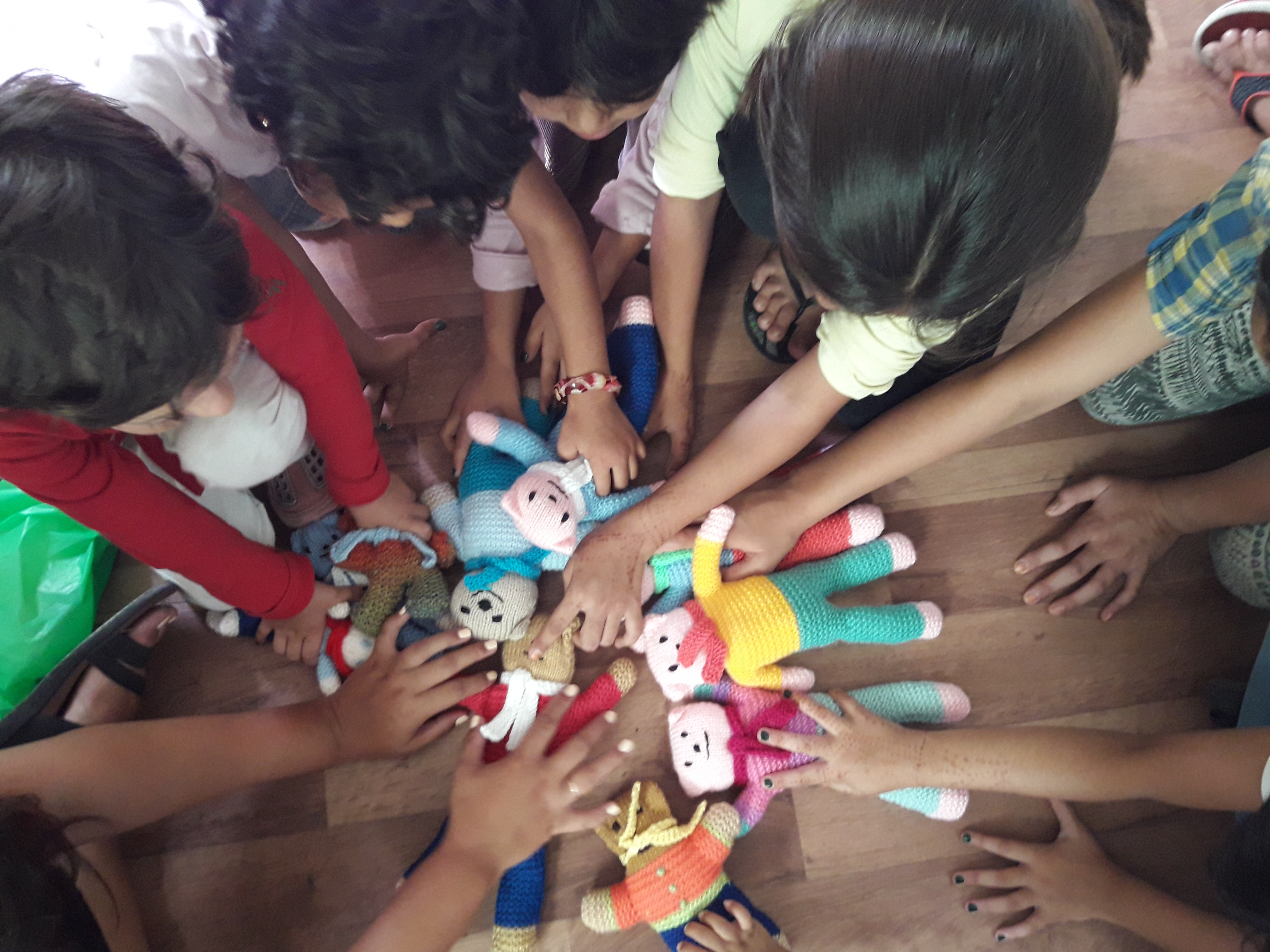
«When toys talk…»: When the girls from the Elefsina camp, held their handmade dolls in their hands, then suddenly…the dolls found their breath and narrated stories that the gilrs could not articulate. The girls’ stories met with a book tale. “How do you take your tea?” Through this story, girls and dolls revealed big and tiny secrets, related to this daily habit.
We would like to thank #Traumateddy and Shelley Deane for the offered opportunity.


“Do you want to see the most important person in the world? ”
Each child opened the box and smiled as they saw themselves in the secret box with the mirror.

With the occasion of World Children Day, the #SolidarityNow’s #Blue #Dot team at the reception center in #Thebes, a game of hidden treasure for the children. The children’s rights were transformed to games, peace posters, homemade smells, hide and seek, games, video, teasing, a clean environment, and discussion on the importance of knowledge … Parents and children, in groups or individually holding their “map” started looking … for their rights!


Φωτογραφία του χρήστη SolidarityNow.

In the Child Friendly Space* of #SolidarityNow in Drama, the story of the Whirl Witch who ate the children’s #toys was the inspiration to explain to the #children a basic right which, quite obviously, is often overshadowed: their right to play! Because as they showed us through their #drawings, a world without toys is a bad #world!


Recognizing the respective needs of the #beneficiaries and the lack of legal #information, especially for the newcomers to the #Hospitality Center of Thebes, the SolidarityNow team, with the valuable collaboration of the Athens Solidarity Center, provided legal information in groups with the participation of families, single men and unaccompanied minors. The briefings were mainly related to asylum and rights issues and were given in Farsi, Arabic, Sorani, Kirmanji and Urdu. Participation was great and the #questions that were risen were answered by the experts and the relevant printed material.


SolidarityNow’s Child Friendly Space in Drama, organized for the children a series of activities about the animal rights. Specifically, they started by showing them pictures that depicted animals’ rights. Then, they discussed each picture, giving them the chance to say what it is depicted in each one. After that, they made a group project titled: “The Earth does not belong only to humans”. On a cardboard, they drew and painted the Earth, putting around it different kind of handprinted animals created by the kids. Then, the children were asked what each animal might need. “Love, care, food and water” were some of their answers!


On September 1st, SolidarityNow‘s Blue Dot team at the reception center in Thebes, organized a painting activity on large surfaces, thus participating in the celebration of the Muslim Easter.
Children of all ages with their parents as well unaccompanied minors were drawing together aiming at the emotional expression of children and the cultivation of a spirit of cooperation. A professional painter was there too, sharing his knowledge on techniques of using the right brushes and colors!
Among the participants was Ali, the leader of a single-parent family, who showed his children how paint big suns and hearts, while singing a cheerful song, saying: ” «You are the sky’s great moon, And I’ll become a star and go around you. If you become a star and go around me, I’ll become a cloud and cover your face…”


We celebrated together with our beneficiaries in Thessaloniki!
In particular, at the Children’s and Family Protection Hub (Blue Dot), on the occasion of the Eid Al Adha celebration, we enjoyed food, festive cookies made by the beneficiaries themselves, gifts for children, songs, dancing, and much laughter! People from different countries – Syria, Congo, Pakistan, Iran, Iraq, Palestine – were given the opportunity to dance their traditional dances from around the world!
A multicultural feast, a celebration of love and solidarity!


“Journey to the World of Emotions”

The 1st Experimental Workshop of the Child & Family Support Hub has been successfully completed through a journey full of colour, music and action! The children’s smile and energy became our strength through to make the adventurous journey to the feelings’ island of the composer, Manos Hatzidakis. Joy and sadness alternated while we were travelling through different landscapes and places with love being our guide.

Due to great participation, the action is going to be repeated for our little friends!


Music has no borders, no color, race or religion! Music brings us together! With this message the 30 children of our choir, composed of refugee children living at the Elefsina camp, sang in Greek, English and Farsi at the Haidari Botanical Garden.
In this special summer party organized by the SolidarityNow Blue Dot** team, the children left their life in the camp for a while and remembered how it is to play, have fun and sing carelessly.
Because for All children, life must be Joyful!


In the very center of Athens, SolidarityNow’s new Blue Dot hub welcomes everyday dozens of refugee children who come to spend their time but also to learn new, exciting things! Creative activities of art and theater, board games, books, painting, reading and singing as well a bunch of other activities delivered by the #SolidarityNow team, fill the hearts of these kids with joy!


The SolidarityNow Team of the #BlueDot Center in Kavalari organized its own gymnastic demonstrations at the end of the school year! The young beneficiaries of our program took part with joy, while their proud parents were watching and encouraging them!
A celebration of well-being and happiness, where everyone has won. We shared smiles and gave medals medals to everyone – even to our youngest friends – and of course countless applause for their wonderful effort and courage!


Are you afraid of the lions? The snakes; The crocodiles? Our little friends and benficiaries of SolidarityNow’s BlueDot Elefsina project, however, seemed not to be scared at all! On the contrary, the visit of the Attica Zoological by the children and their parents living in the Elefsina camp, will surely be unforgettable as they met many of the animals for the very first time!


Φωτογραφία του χρήστη SolidarityNow.

A very interesting and useful session was organized by our active team at Elefsina!
Our Blue Dot team in Elefsina, with the collaboration of the legal service of Athens Solidarity Center, realized a legal briefing to the inhabitants of the refugee camp of Elefsina.
During the two meetings, the participation rate by both women and men was high. At the end of the meetings, discussion was held, questions were answered and brochures with relevant information was distributed. The topics covered were human rights and asylum, family reunification, etc.
Also, a special reference was made to issues regarding gender violence and abuse.


SolidarityNow team of the BlueDot program in Elefsina escorted the children from the refugee camp in the area to a 5X5 pitch to play football with their peers from nearby schools. In an effort to get in touch with the community, the children played and mingled with each other! Αt the end of the event, each little player received a ball as a gift! Thank you all!

“Loose parts” are objects that are not toys. Instead, everything can be used to play with emphasizing in the procedure rather than the result. Children at the Elefsina Refugee Camp, in the context of BlueDots program by SolidarityNow, used plastic bags, branches and strings to bring in Greece something from the place they come. The result: some wonderful kites !


Φωτογραφία του χρήστη SolidarityNow.

At Kavalari Thessaloniki, the BlueDot program team surprises us again and keep us posted on the following field activity:
“Facing the not ideal living conditions of the refugee camps, we took the situation in our hands and, through creative activities, we – together with the refugee children of 6 up to 10 yo- put big red Xs on the dangers they face in places they live. There were more than we we imagined, but we treated them with courage! ”


A very interesting and useful session was organized by our active team at Elefsina!
Our Blue Dot team in Elefsina, with the collaboration of the legal service of Athens Solidarity Center, realized a legal briefing to the inhabitants of the refugee camp of Elefsina.
During the two meetings, the participation rate by both women and men was high. At the end of the meetings, discussion was held, questions were answered and brochures with relevant information was distributed. The topics covered were human rights and asylum, family reunification, etc.
Also, a special reference was made to issues regarding gender violence and abuse.


Spring struck us to Kavalari, and the BlueDot SolidarityNow team together with our young beneficiaries celebrated it by making small indoor gardens! We picked up our materials, we grew our lawn, we put water in the pond, we decorated it with some stones and we planted nice flowers!


Each activity is the occasion for a new activity for SolidarityNow team at the Elefsina camp in the context of the BlueDot program.
Our staff together with our little friends have recycled the branches from the pruning of the trees and made houses for the children to discuss
the concept of personal space and any feelings associated with it. Just think how hard is for the children to open up about the traumatic issue of the abandonment of their own homes.
But this activity also had its entertaining side! The use of materials has led children to use their imagination and work together!


There are many ways to feel the concept of family, to create and ultimately to maintain what we call “family bonds”. The love that makes you feel another person like brother or sister has nothing to do with the blood. Love goes beyond the decisions of the grownups, the pain, or the conflicts!

The most important lessons of life come from the children. Children who think with their heart. And they express their thoughts spontaneously during the creative activities organised by SolidarityNow at the BlueDot project in Drama …


The highly creative team of SolidarityNow’s BlueDot in Faneromeni – Ioannina implemented an entertaining traffic education course for the young beneficiaries of the program.
Altogether they crafted traffic lights and traffic signs, and after the children learned about their usefulness, they played various interactive games to better understand the importance to respect the traffic rules and to be careful when being on the road – whether you’re an adult or a child!


The BlueDot team of SolidarityNow in Drama, visited Serres Therapeutic Equestrian Center, along with 76 beneficiaries – including 45 children. We had such a great time playing, have a picnic, and of course horse riding!


Esra, one of our BlueDot beneficiaries, was still pregnant when we met. Our team was since by her side, providing the necessary counseling and care during her pregnancy. Time went by and the day came when little Ali was about to come to our world. With his father Mahmud we were waiting outside the door of the delivery room, when a nurse let us know about a slight that worried us a great deal. But finally, all went well and since then we don’t enough of seeing our cute boy! The parents are more than happy! And so are we!


First day at school yesterday for the young beneficiaries of our BlueDot program at Elefsina, a program implanted by SolidarityNow, supported by UNICEF and funded by the EU.
SolidarityNow was beside them in during this joyful moment. We help the children get prepared and escorted them to the school with our interpreters and the scientific staff in order to work together with their teachers for their smooth integration.
The reception of children by the parents, students, teachers and neighbors was really moving, with all these banners, songs, gifts and treats.
Solidarity lessons into practice!


The BlueDot at Doliana team organised a very interesting, useful and … funny activity for the young beneficiaries of the program concerning the hygiene of their hands! The need of daily care and hygiene is imperative in all our structures – especially when it concerns the children! And when it is taught in a fun way, the kids never forget it!


We celebrate the first day of spring and the first day of the persian year – aka Norooz.

Beneficiaries of the program together with the team of SolidarityNow set the traditional table, cooked with the help of the NGO”The Other Man”, we dance we have fun!

Happy new year! Νοrooz Mabarak!


“Children here can rest, forget the war and the difficult journey they made and they can also express their dreams: one of them wants to become a horseman and another wants to work for NASA,” says a member of SolidarityNow team in the BlueDot in Serres where 45 children from Syria are learning sports, are doing creative and artistic activities to develop their cognitive capabilities.


“Blue Dots is the image of our world as envisioned by SolidarityNow – a planet where people will be equally treated and have the same opportunities living in societies based on solidarity and peaceful coexistence and this begins by helping children and families”

Epaminondas Farmakis, Managing Director of SolidarityNow.

“Stranded in Souda, Chios” SolidarityNow records in a 360 video, the struggle of a refugee family for survival in Chios

Photo: SolidarityNow

SolidarityNow utilizes the new technology and process in the production of audiovisual material 360o to record and highlight the negative and often inhumane conditions under which the refugees live; the refugees trapped for months in the reception camps of the Greek islands. The organization’s goal is to high-point the existing major problem and underline the urgent need for the camps’ closure and the direct transfer of vulnerable populations in safe structures of the mainland.

The panoramic video (360°) “Stranded in Souda, Chios” of 3’25” duration was produced in collaboration with the award-winning photojournalist Giorgos Moutafis. The video enables viewers to engage to the 51-year-old Adulla everyday life, who was forced to leave her city, Kobanî in Syria, because of the war and is trapped for the past seven months, in Souda camp in Chios, along with her four children. Viewers will become part of the family’s life and the ongoing effort for survival along with their fear for the future.

The 51-year-old Adulla, with Syrian origin, has come to Greece along with four out of her eleven children. Her 17-year-old son was killed in Lebanon. Adulla and her children were forced into a constant “hide and seek” to escape from ISIS. They managed to escape from Lebanon and after the murder of the 17-year-old son returned to Syria to be found later in Iraq and today in Chios.

Adulla’s family is one among the 700 refugees currently residing in Souda camp, whereas more than 3,500 refugees have passed from Chios only during the first months of 2017. “We live everyday by the day, by the hours. We don’t have hot water, we sleep on the floor, we are afraid”, Adulla says.

Several times Souda camp has turned into a “battleground”. The groups of extremists, with stones and flaming objects have tried to impose and expel the refugees. Very often, refugees are forced to spend the night outside the camp for fear of attacks, seeking a safe place until dawn.
One year after the EU – Turkey agreement and many refugees has been abandoned in the Greek islands; thousands of people remain trapped, living under poor and often insecure for their health conditions, facing an uncertain present and an even more uncertain future.

Inferences of the Open Discussion Europe in the Mirror: the French Elections and the “Extreme Right International”

(Ελληνικά) Photo: Ν. Kominis

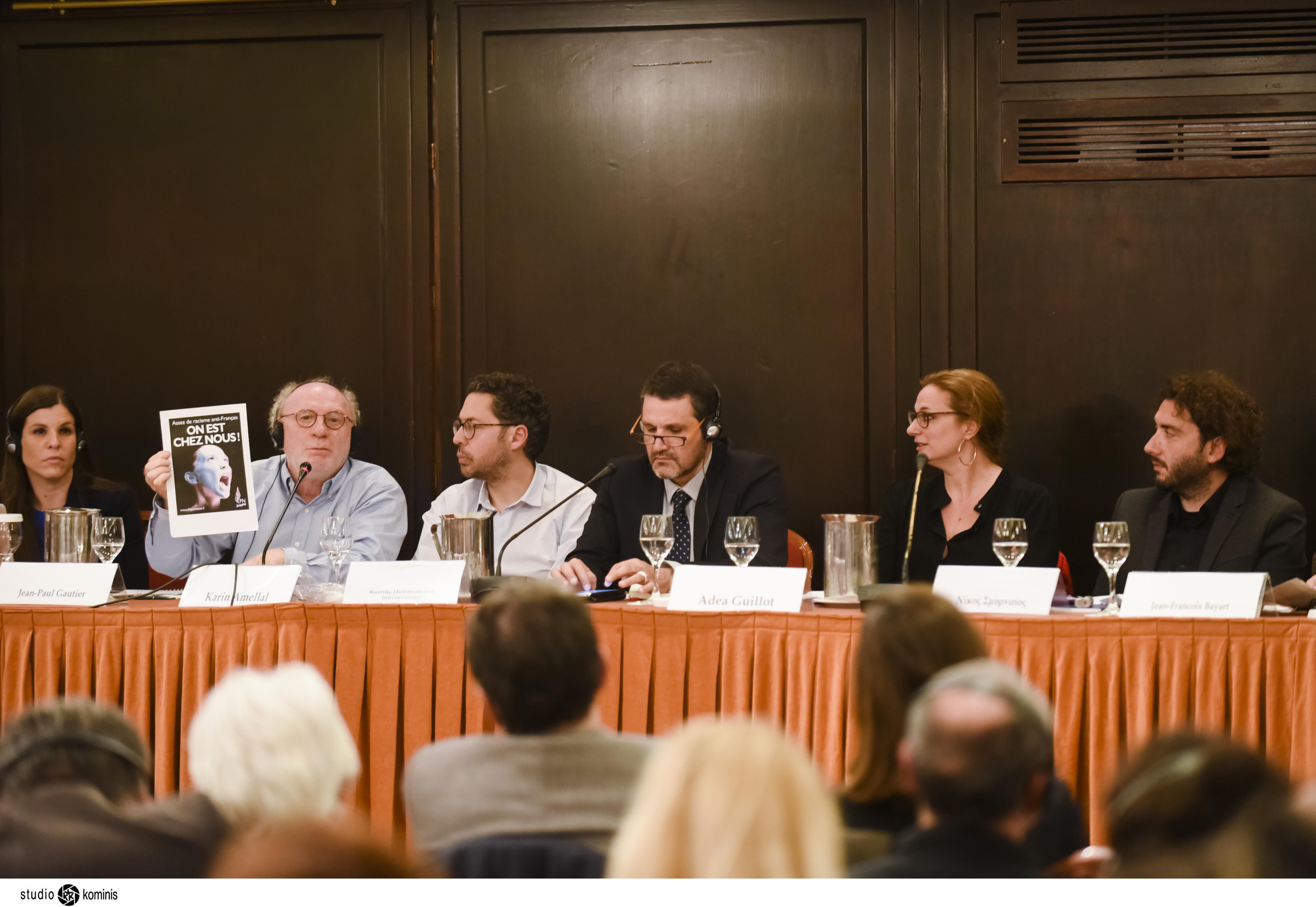
This year Europe is coming face to face with her ghosts. Extreme right forces are seeking a leading role in several countries. The importance of the French election becomes crucial. In this context, SolidarityNow organized yesterday (27.03.2017) the open discussion entitled Europe in the Mirror: the French Elections and the “Extreme Right International”.

Six distinguished speakers presented their ideas and discussed: the rise of nationalism and racism, multiple identity issues, migration, “the Extreme Right International”, its historical roots and spread if its ideology, the economic crisis, terrorism and security threats, normalization of ideas and practices of the far-rig, the role of the media.

Speakers

  • Karim Amellal, Writer, Institute of Political Studies, Paris
  • Jean-François Bayart, Political Scientist, Graduate Institute of International & Development Studies, Geneva
  • Jean-Paul Gautier, Political Scientist (PhD) and Historian, Researcher on Extreme Right in France
  • Adéa Guillot, Journalist / Correspondent in Greece (Le Monde, Arte, Le Soir)
  • Nikos Smyrnaios, Senior Lecturer, Political Economy of the Media, University of Toulouse III-Paul Sabatier
  • Daphne Halikiopoulou, Associate Professor in Comparative Politics, Reading University

Moderator: Kostis Papaioannou, f. General Secretary of Human Rights
Karim Amellal mentioned that, in a way, Le Pen and the National Front have already won the elections since they have won the ideological battle in France. Two are the main issues today he explained: “Firstly the ideas of the far-right are normalized inside the French society – Islam, terrorism, leaving the E.U etc.- and secondly, there is a generalized indifference by the people, not a new phenomenon but one we were not paying attention to and now we see its consequences”.

Daphne Halikiopoulou approached the French elections from a comparative perspective. She made a comparison between the National Front and other European extreme right parties in terms of three key areas: a. programmatic discourse and the ‘de-demonization’ strategy, b. the voter profile, which expands to include more women and younger voters, c. the use of context, through the management of the economy and immigration.

Jean-Paul Gautier, highlighted that the rise of Marine Le Pen in the leadership of the National Front, gave new momentum to the party, by ‘smoothing’ the language it uses. “Le Pen seems to support homosexuals and women who feel threatened by Islam. She seems to have a more liberal agenda in comparison to her father but essentially, it’s the same shop with a slightly different showcase. The ideological base is the same”, explained Mr. Gautier.

Journalist Adéa Guillot, linked the discussion to the exploitation of the refugee issue. “How can the far-right exploit the refugee problem in Greece? By exploiting people’s anxieties and fears, taking normal feelings, and using them to manipulate people”, she stated.

Nikos Smyrnaios analysed the confidence crisis in the media, highlighting that “we conclude that the basic explanation when it comes to information confusion (confusionnisme), conspiracy theories and prejudice which dominate a large section of the French public, is the outcome of their disappointment and lack of trust towards mainstream media. Thus, the media system as well as part of the journalists are significantly responsible for this situation which favors the rise of the far-right”.

Jean-François Bayart mentioned that our weakness to face constructed ideas as well as the rise of the National Front is related to globalisation, the declining idea of the state and the subsequent identity crisis. “Europe today has to face a ‘national-liberal’ (national-libérale) system. The problem in Europe is not the lack of employment but the lack of stable employment, which is the basis for far-right ideas”, stressed Mr Bayart.

Kostis Papaioannou closed the discussion by saying that “we are threatened by the diffusion of the xenophobic far-right ideology into an electoral domino where anti-establishment views, democratic fatigue, fear and anger prevail. However, a leveling anti-populism of no alternative (there is no alternative) is suggested as the antidote to the European populism. In this way, political elites are detached from the real problems and the far-right seeks to be the only force that proposes solutions. Le Pen’s and Orban’s scarecrows are less frightening when representatives of the European political dreadlock surround them. At the same time, the extreme right agenda is fed by the Jihadist terrorism and vice versa. In Greece, the importance for both the criminal response against Golden Dawn as well its political isolation is constantly proven. In this context, the joint appearance of Golden Dawns leaders with religious leaders consists a major faux pas”.

The Civil Society Prize awarded to Amed Khan

Prior to the event, the President of the SolidarityNow Board of Directors, Mr. Stelios Zavvos, awarded a Civil Society Prize to Amed Khan, a great philanthropist and founder of the Elpida Home in Thessaloniki. In the framework of the Elpida Home, Mr. Khan and his team rehabilitated an abandoned clothing factory in the north part of Thessaloniki, transforming it to a unique camp with a humane approach which provides shelter to 800 refugees.

Home for Hope and four awards


Four Ermis distinctions (1 Gold, 2 bronze and 1 silver) were awarded to SolidarityNow awareness campaign on our hospitality project HomeforHope which is implemented with the support of UNHCR GREECE.

Four major awards for us and the advertising agency Soho Square Athens! The creative team was inspired by our work and they were very eager to design -pro bono- the campaign, resulting to the prestigious advertising awards.

This is a great honor and a great recognition for the work of the organization by the side of people in need.
Thank U @Soho Square Team, thank you FOS  – with your help we made more people to chase fear away and to open their homes and their hearts to accommodate refugees!

The Blue Refugee Center on the side of refugees and migrants in Thessaloniki

Cecile Abi Tayeh

SolidarityNow launches the Blue Refugee Center in Thessaloniki; this Center will operate as an information and assistance hub for all refugees and migrants, living permanently or residing temporarily, in Northern Greece.

The new Center is part of the programs implemented by SolidarityNow in Northern Greece, in response to the urgent needs of the vulnerable populations that are trapped in our country after the closure of the borders. In the Blue Refugee Center, refugees, migrants, and asylum seekers, can take immediate and effective support for a range of needs by the organization’s professional groups (lawyers, social workers, psychologists, etc.), through the different services provided pro bono.

The main target of the Blue Refugee Center, that is operated in Thessaloniki with the support of the UNHCR and UNICEF, is the empowerment of the refugees and migrants as well as of the host communities. Furthermore, the conception of the Blue Refugee Center relied on a great need that is not directly visible; the essential need of people with different cultural origins for a friendly space of coexistence and social interaction.

The timely and reliable information to the refugees and migrants is the key priority of the Center’s operation and this becomes reality through:

  • Helpline (tel.no: 2310 555 266| *charges apply at national landline cost) and
  • Open and accessible front desk, which operates at the Center and provides administrative information and services.

In parallel, the aim is to promote a better quality of life, enhancing self-reliance and developing a sense of security for the Center’s beneficiaries.

“The core basis of the Blue Refugee Center is the expanded service package provided to the beneficiaries that symbolizes the open, easily accessible and friendly nature of the Center. In such a hub, the beneficiaries feel safe being in a place where they can find practical assistance to their needs. Above all, the Blue Refugee Center is a place where refugees and migrants enjoy the respect they deserve“, says Ioanna Fourkiotou, the organization’s Programs coordinator in Northern Greece. And she continues: “The Center addresses all those people who live for months under hazardous conditions in camps, on the street, or in temporary shelters. SolidarityNow tries to level up the quality of assistance involving the beneficiaries in the design of the services provided at the standards of its Solidarity Centers. We are actually trying to bring refugees closer to Thessaloniki and Thessaloniki closer to the refugees”.


In the Blue Refugee Center, the following services are provided:

– Health services

– Legal Counselling

– Psychosocial Support and Counseling

– Employability consulting/ support

– Educational and Recreational Activities

– Women Safe Space

– Child Friendly Space

– Breast-feeding corner

– General Information, Translation/Interpretation Services

SolidarityNow operates the Blue Refugee Center, in the heart of Thessaloniki and anticipates to provide help to a great number of beneficiaries, based on solidarity.


BLUE REFUGEE CENTER

Helpline: 2310 555 266

Safe Refugee: The specialized assistance program of SolidarityNow for LGBTI refugees and asylum seekers


Athens, February 13th, 2017.  SolidarityNow, in order to meet the increased needs and the multiple risks faced by the LGBTI refugees and asylum seekers during their stay in Greece, implements a specialized housing and assistance program entitled Safe Refugee, for the support of this particularly vulnerable population group.

Since 2016 until today, SolidarityNow through the implementation of the housing and accommodation programs for refugees and asylum seekers “Home for Hope” and with its specialized teams, has offered accommodation and free services to more than 3,700 refugees in Athens, Thessaloniki, and their surrounding areas.

“LGBTI refugees frequently face multiple risks in all phases of the displacement cycle and need additional protection. They are often at heightened risk for discrimination and exclusion from access to basic services, and they are also subjected to different forms of abuse, marginalization, and exclusion. For the above reasons, we could not leave this vulnerable group without support and assistance“, says Margarita Kontomichali, the coordinator of the Safe Refugee program; and she continues: “In SolidarityNow, we believe in the respect of human dignity, freedom, equality, and in the respect of human rights for vulnerable people“.

Up to date, under the Safe Refugee program, SolidarityNow has offered accommodation to 20 LGBTI refugees residing in Greece, through independent apartments in Athens and Thessaloniki.

What the program offers

A major concern to cope with is the double stigma (being both LGBTI and a refugee) that this community must bear. Thus, psycho-social assistance to this specific target group is vastly needed to handle and resolve issues, such as trauma, violence, abuse, exclusion.

The beneficiaries of the program receive free-of-charge services to improve their lives while staying in Greece. Most of all, through this program, these people are treated with discretion, respect, and understanding.

SolidarityNow, through the specialized assistance program Safe Refugee for LGBTI refugees and asylum seekers, provides a range of free-of-charge services, such as:

  • Accommodation in fully equipped apartments
  • Psycho-social support
  • Referrals to medical assistance and legal counselling
  • Support and empowerment groups
*The program Safe Refugee is part of the housing and accommodation project Home for Hope, implemented by SolidarityNow with the support of UNHCR and funding by the European Union.

Connecting Blue Dots to support refugee and migrant children


SolidarityNow on the side of the most vulnerable populations through the operation of Care Hubs in Attica, Epirus, and Eastern Macedonia

As part of ongoing efforts to protect the most vulnerable refugee and migrant groups, special support centers –known as “Blue Dots”- for children, women and families are being rolled out in more than 10 points across Greece to provide vital services, counselling and play in a single location.

SolidarityNow, with UNICEF support, is implementing this innovative approach to connect the Blue Dots on a national scale. Piloted in Greece in the Port of Piraeus earlier in 2016, the Blue Dots concept was developed originally by UNHCR, UNICEF and ICRC to ensure a minimum package of services was available to the refugee population across Europe and foster complementarity amongst protection actors on the ground. The SolidarityNow “Blue Dots” are easily identified, since they have the distinctive mark of the blue dot indicating that through the present structure the several essential services are provided free of charge. Through this program, SolidarityNow is addressing the inadequate supply of services in 4 different geographical areas of the country: Attica (Elefsina and Marathonas), Central Macedonia (Oreokastro and Kavalari), Eastern Macedonia (Drama) and Epirus (Filippiada, Ioannina and Doliana).

The Blue Dots in detail

The “Blue Dots” are Child & Family Care Hubs for children, women and other vulnerable people living in refugee camps in Attica, Epirus and Central and Eastern Macedonia, as well as in the urban environment of these regions, where the greatest populations’ needs are recorded.

Every “Blue Dot” is a safe place for refugee children and their families, while the range of services offered at each one includes legal counseling, psycho-social support, case management and referrals, specific area exclusively for mothers and babies/children.

“The Blue Dot is the image of our world, as envisioned by SolidarityNow – a planet where people will be equally treated and have the same opportunities living in societies based on solidarity and peaceful coexistence and this begins by helping children and families”, says Epaminondas Farmakis, Managing Director of SolidarityNow.

More specifically, the operation of the Child & Family Care Hubs includes:

  • Child-friendly spaces that provide recreational and educational activities for children in order to restore the sense of normalcy that they have lost during the journey and while stranded.
  • Identification and referral of vulnerable persons to specialized services, including vulnerable families, single mothers, children at risk with a specific focus on unaccompanied children, persons with disabilities or illnesses, cases of suspected trafficking, survivors of sexual and gender-based violence (SGBV).
  • Breastfeeding corners and provision of reproductive, neonatal, and postnatal care and counseling.
  • Sharing efficient and accurate information to refugees and migrants, about their rights (before and after applying for international protection).
  • Providing general psycho-social services, and referrals when needed.