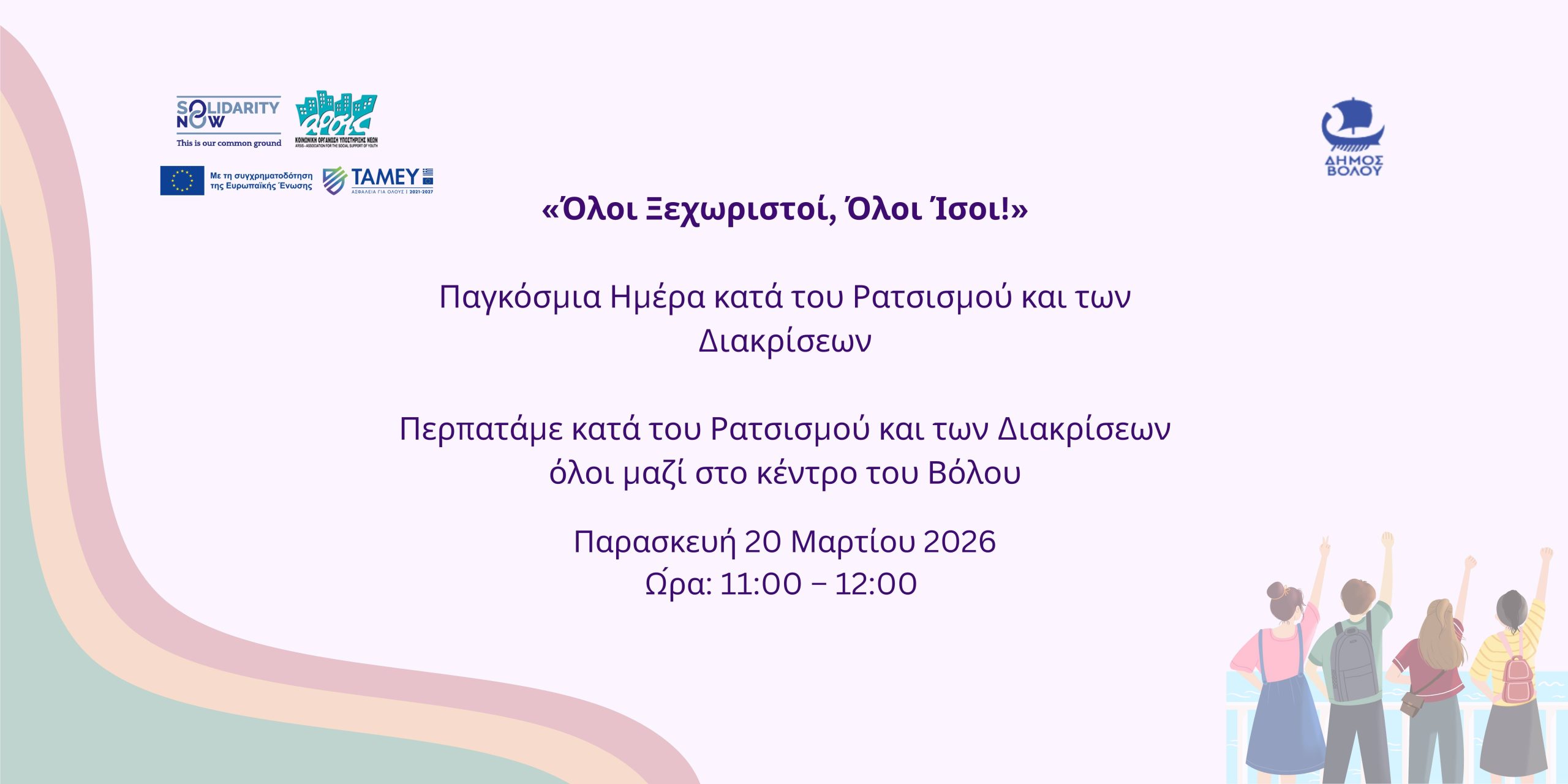
PRESS RELEASE | Walking in Volos for the International Day for the Elimination of Racial Discrimination


“All Different, All Equal!”

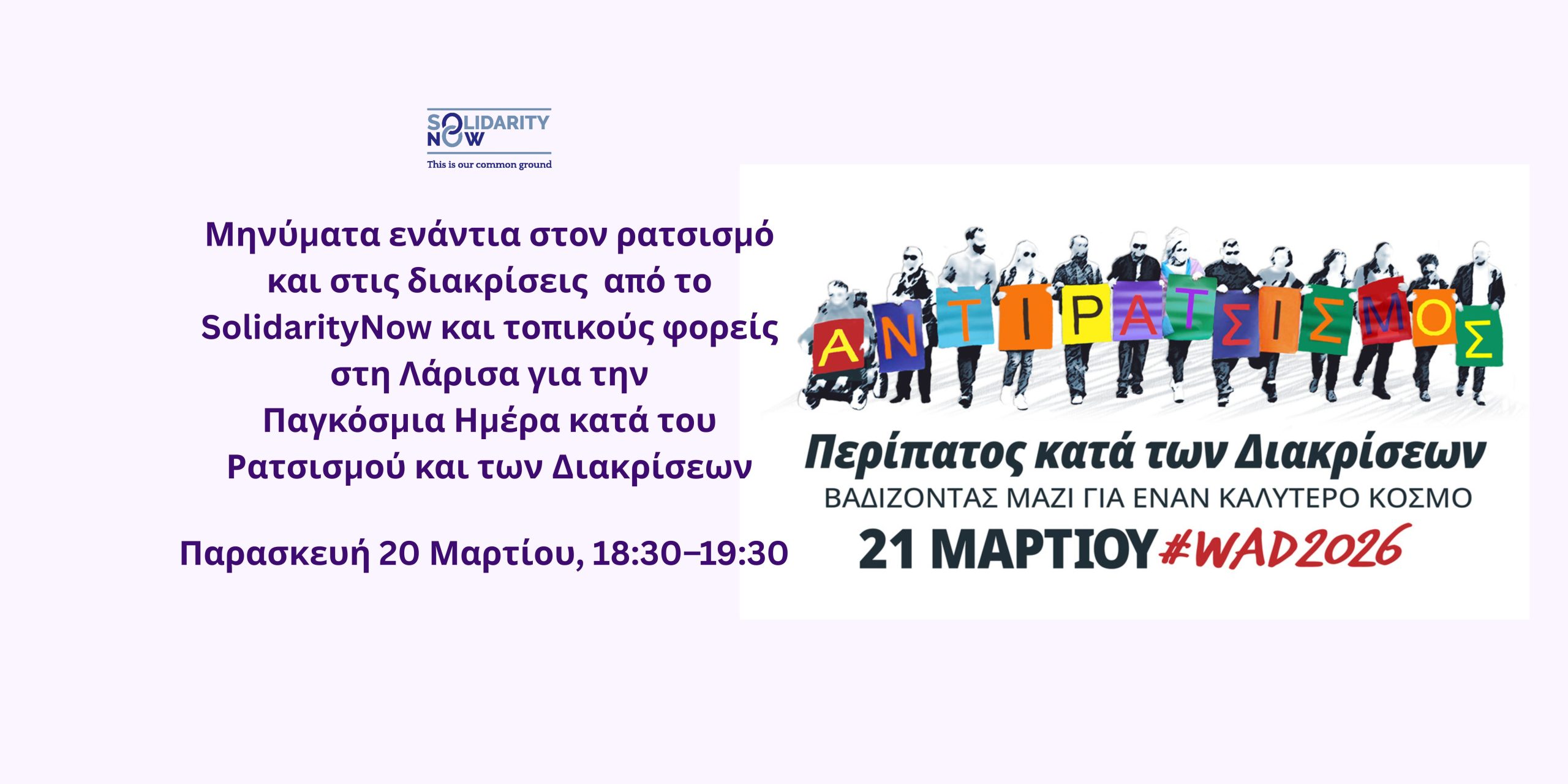
On the occasion of March 21, the International Day for the Elimination of Racial Discrimination, SolidarityNow (through the PYXIDA* Specialized Services Center in Larissa), ARSIS, and a wide network of local stakeholders invite the citizens of Volos to take part in a symbolic Walk Against Racism and Discrimination in the city center.

The Walk will take place on Friday, March 20, 2026, at 11:00, starting from the Library of the University of Thessaly (2 Metamorfoseos Street) and ending at the pedestrian street in front of the Church of Agios Nikolaos.

This Walk is a symbolic act of unity, sending the message that diversity is a strength and that racism has no place in our society.

At the end of the route, participants will have the opportunity to attend music and theatrical performances, fostering a spirit of participation and social solidarity.

The initiative is held under the auspices of the Municipality of Volos (Deputy Mayor for Social Welfare – Solidarity – Equality & Management of Social Centers and Deputy Mayor for Education) and aims to highlight the importance of acceptance, equality, and social inclusion for all residents of the city.

In collaboration with:

Gymnasium of Iolkos

Hellenic Society for the Protection & Rehabilitation of Disabled Persons (ELEPAP)

Community Center of the Municipality of Volos

Homeless Shelter for Transitional Accommodation, Municipality of Volos

Roma Branch of Aliveri, Municipality of Volos

Participating organizations:

10th Primary School of Nea Ionia, Volos

Special Primary School of the Institution for the Education of Minor Boys, Volos

2nd Gymnasium of Nea Anchialos (with Upper Secondary Level)

2nd Gymnasium of Nea Ionia, Magnesia

12th Gymnasium of Volos (with Upper Secondary Level)

1st Vocational High School (EPAL) of Volos

DIODOS AMKE – Psychosocial Rehabilitation Organization – KIPOS Day Center for Mental Health Promotion

EDIP – Students of the course “Puppetry and Intercultural Applications,” Department of Early Childhood Education, University of Thessaly

Hellenic Alzheimer’s Disease and Related Disorders Society of Volos

EPANODOS – Volos Branch

KDAP-MEA Volos (Creative Activities Center for Persons with Disabilities), Municipality of Volos

Social Welfare Center of the Region of Thessaly

University of Thessaly – Department of Language and Intercultural Studies & the research group VLLRG

Roma Branch of Agia Paraskevi, Municipality of Volos

Association of Parents of Persons with Disabilities, Magnesia

Parents & Guardians Association of the Gymnasium of Iolkos

Counseling Center of Larissa

Urban Education Coordinator for Refugees and Migrants, Magnesia


*SolidarityNow participates as a partner in the implementation of the project “PYXIDA – Complementary Support Mechanism to the National Strategy for the Protection of Unaccompanied Minors in Greece.” The project is funded by the European Union through the “Program Greece – Asylum, Migration and Integration Fund 2021-2027″ and aims to create an effective mechanism to address the needs and structural gaps identified during the implementation of the National Strategy for the Protection of Unaccompanied Minors in Greece.

PRESS RELEASE | Opportunity+ Job Fair Successfully Held in Thessaloniki


Building bridges to the labor market

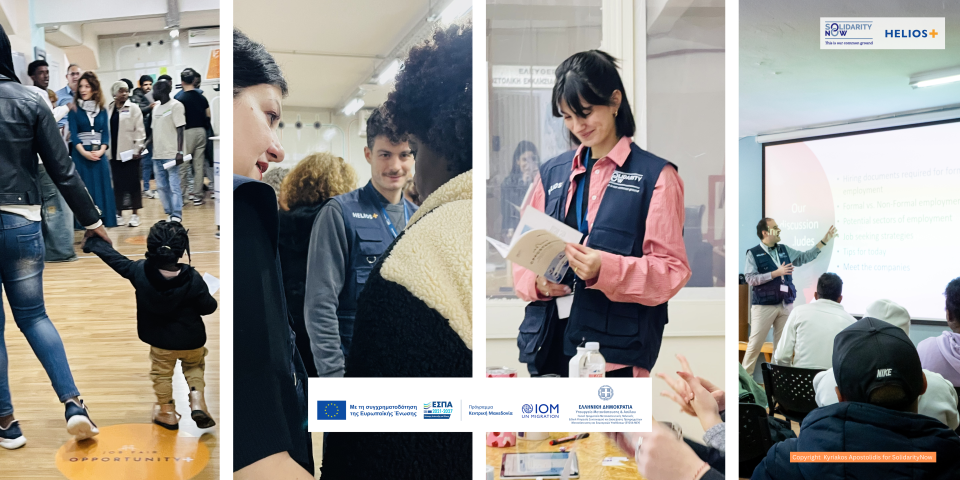
SolidarityNow organized the “Opportunity+” yesterday, March 12 at the HELIOS+ Center in Thessaloniki, as part of the HELIOS+ project for the integration of third-country nationals into the labor market in the Region of Central Macedonia.

The event brought together beneficiaries and local businesses, offering opportunities for networking and on-site job interviews. It also featured information sessions on entering the Greek labor market, CV preparation, labor rights, and housing search, with the support of Caritas Hellas, a SolidarityNow partner in the Region of Central Macedonia.

Opportunity+ in Numbers:

  • 168 participants

  • 6 companies operating in the sectors of tourism, industry, construction, food services and industrial cleaning

  • 25 job openings across various specialties

  • 337 interviews conducted on-site

  • 45 candidates positively evaluated for potential collaboration

Participants stated that they had the opportunity to meet multiple employers and gain a better understanding of the local labor market.

A representative of one of the participating companies said: “I’m leaving the Opportunity+ Job Fair feeling very positive. I didn’t expect to meet so many people. I spoke with around 60 candidates for four job openings, and I strongly believe in the purpose of today’s initiative and the HELIOS+ project.”

Participating companies:
PAP CORP, KARRAS SERVICES, Delta Pi, Houtos Catering, JOBTRUST, Niki Inox.

Opportunity+ was carried out with funding from the International Organization for Migration (IOM) Mission Greece, for the implementation of the project “Helios+: Integrated actions for the integration of third-country nationals into the labor market” in the Region of Central Macedonia, with MIS Code 6018682 for the Program “Central Macedonia 2021-2027”. Its implementation in the Region of Central Macedonia is carried out by a consortium of partners led by SolidarityNow, in collaboration with the Major Development Agency Thessaloniki S.A. (MDAT), the Young Men’s Christian Association of Thessaloniki (YMCA), and Caritas Hellas.

PRESS RELEASE | International Women’s Day: SolidarityNow supports the labor inclusion and empowerment of hundreds of women


274 women supported through employment programs with 25% securing employment, while 565 women participated in empowerment initiatives

On the occasion of International Women’s Day on March 8th, SolidarityNow presents the results of three programs supporting women in labor inclusion and empowerment for 2025:

  • 274 women were supported through the employment programs “Bridging the Gap” and “Livelihoods Unlocked: Empowering Women through Employment”.
  • 25% of participants secured employment.

Through personalized guidance and practical tools, participants gain the skills and resources they need to enter or re-enter the labor market. The programs focus on women from particularly vulnerable backgrounds who face limited opportunities. Key employment sectors include tourism and hospitality.

From Support to Employment

N.S., a mother of one, was seeking employment in order to leave an abusive marriage. Through SolidarityNow’s network of partner employers, she now works in jewelry making. Her employer supported her with understanding, accommodating her request for reduced hours, even though the position was originally full-time.

  • 565 women were supported through the empowerment program “Female Forward: Together for Women’s Inclusion”.

The program focuses on personal development and skill-building to help women recognize their potential and chart their own path. It is implemented in three asylum seeker accommodation centers in northern Greece.

At the program’s Female Friendly Spaces, I., a single mother of five, shared: “I think I found something I never had before; a little time for myself, an environment of understanding and creativity.”

Women in the Greek Labor Market

In 2026 in Greece, women represent approximately 46% of the labor force, yet inequalities remain evident. The gender pay gap stands at 13.4% (2024), and women’s participation in the labor market remains below the European average.

According to the Gender Equality Index, Greece scores 57/100 and ranks 22nd in the EU, lagging the European average, particularly in employment and time allocation.

Women from vulnerable groups, such as migrants, refugees, and those living in poverty, face multiple barriers to employment and social protection.

Progress is being made, but equality has not yet been fully realized. Enhancing women’s participation in the economy, ensuring equal pay for equal work, equitable distribution of caregiving responsibilities, and greater representation in decision-making are essential for a fairer society.

Because when women thrive, everyone prospers.


“Bridging the Gap” is implemented with the support of Alpha Bank.

The “Livelihoods Unlocked” project is supported by the L’Oréal Fund for Women.

“Female Forward • together for women’s inclusion” is funded by the Kahane Foundation. 

ARTICLE | World Day of Social Justice 20/2: “Social Justice Can’t Wait”


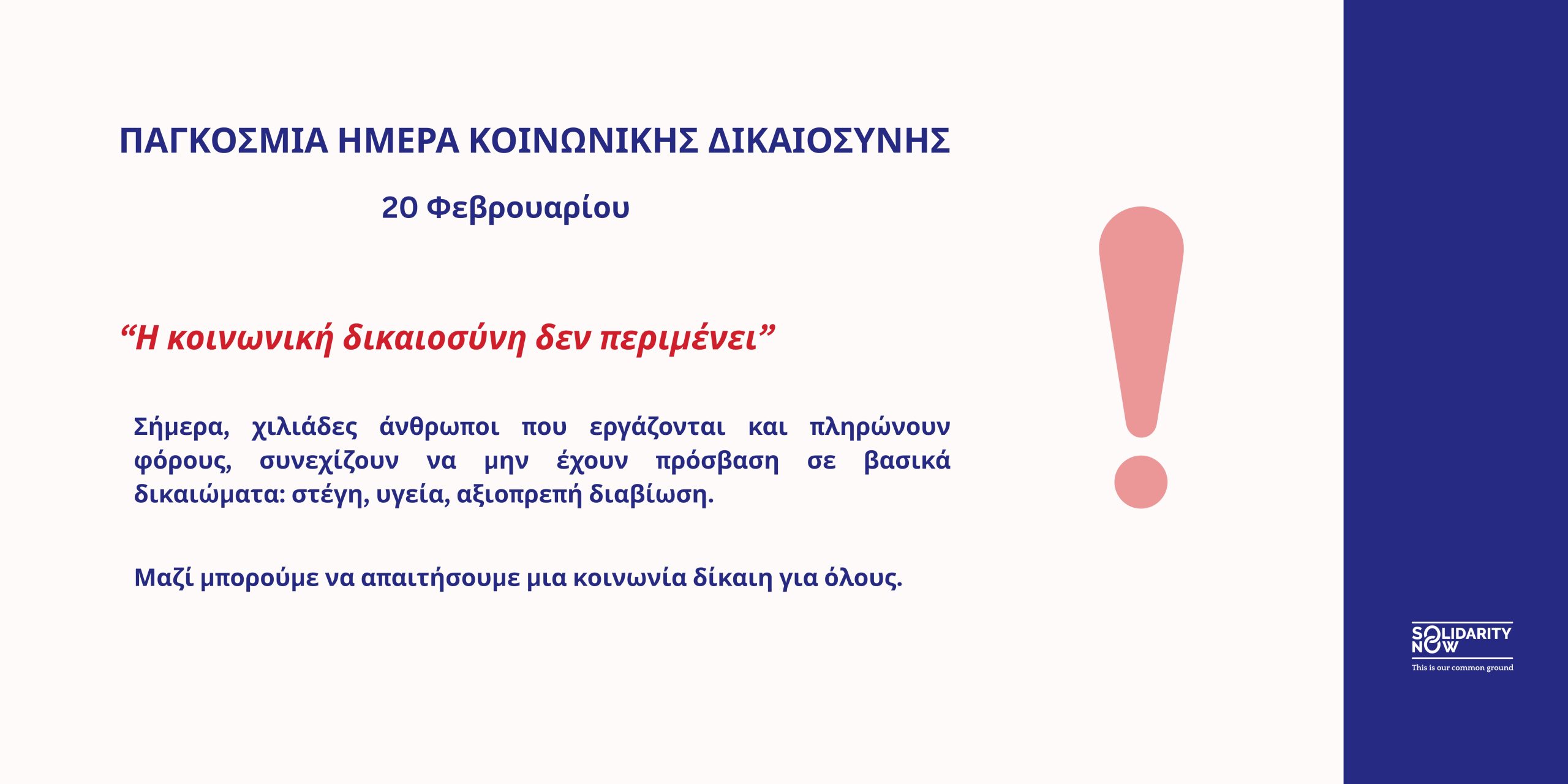
Social justice is often presented as a concept that concerns only “the most vulnerable.” In reality, it lies at the heart of social life and affects a much larger portion of the population than we might think; not just the groups typically labeled as vulnerable. Its absence becomes increasingly visible in the daily lives of people who, despite participating in social and economic life, struggle to secure dignified living conditions.

This reality is reflected daily in the work of SolidarityNow. Poverty and precariousness no longer affect only those outside the labor market or without insurance. They increasingly affect people who work, receive pensions, or are insured, who, in theory, shouldn’t need support from civil society organizations. And yet, they do.

We meet people who are employed or live on low pensions, with insurance coverage, but cannot afford co-pays for medical exams or endure the waiting times of the public healthcare system. Families with a total income of around €800, half of which goes solely to rent. On paper, they aren’t considered “uncovered,” but in practice, they cannot meet basic health and living needs. Even a single unexpected medical expense can completely disrupt their monthly budget. This is confirmed in Greece’s annual poverty report, which highlights the inability to cover basic needs even for people with stable employment.

The situation is even more challenging for refugees and migrants. These are people who work or try to work, living under the same housing and financial pressures, yet they are often excluded from most social benefits until they have legally resided in Greece for many years. For housing benefits, five years of residence are required, and the same applies to basic family allowances, leaving those with real needs administratively excluded from social protection.

Available data confirms the problem. Research by diaNEOsis shows that despite reforms and improvements in some indicators, Greece’s benefits system remains fragmented. There are many categories and a large number of allowances, with significant dispersion of resources and often small, piecemeal benefits that are insufficient to cover actual living costs.

At the core of this reality is the housing problem. Lack of access to affordable, dignified housing has become a key driver of poverty. At the SolidarityNow Centers, we meet homeless people and individuals facing housing insecurity from a broad range of social groups: people without legal documentation, EU citizens, recognized refugees and former unaccompanied minors, as well as Greek citizens. Housing insecurity permeates a large part of society and reveals the limits of existing social policies.

Over the last five years, housing costs have increased by 28.34%, according to the Hellenic Statistical Authority (ELSTAT) Consumer Price Index, with rents in 2025 showing a nationwide rise of 8.44%, demonstrating that the pressure is no longer confined to large urban centers. In the same period, energy costs have risen cumulatively by 40.5%. In this environment, Eurostat data for 2024 shows that 35.5% of Greek households’ disposable income goes directly to housing-related expenses, rent or mortgages, energy costs, taxes, and fees for primary residence. This is the highest share in the European Union, compared to a European average of 19.2%, meaning that over a third of income is spent just to have a roof over one’s head.

Public solutions are limited and often insufficient. Shelters have waiting lists and limited stays, while the private rental market is prohibitive even for employed individuals. Within this context, civil society strives to act as a safety net. SolidarityNow intervenes by bridging gaps between social welfare, housing, and employment. Yet, no matter how critical this intervention is, it remains inherently limited. Without comprehensive housing and social protection policies that reflect the real cost of living, social justice remains an unmet goal. Housing, healthcare, and dignified living are prerequisites for social justice. Without integrated policies in these areas, poverty and precariousness will continue to be systematically reinforced.

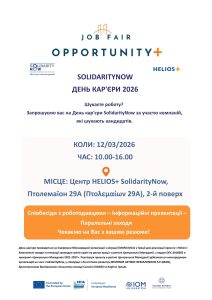
Job Fair Opportunity+ in Thessaloniki


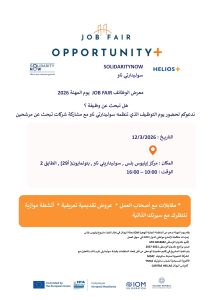
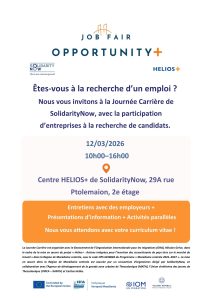
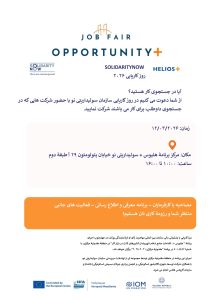
Opportunity+ Career Day is coming to Thessaloniki!

On Thursday, March 12, 10:00 – 16:00, at the HELIOS+ Center of SolidarityNow in the city center of Thessaloniki, we invite you to a Career Day open to everyone.

Find the related announcement below available in:

Arabic | French | Ukrainian | Persian

During Opportunity+, the following activities will take place:

  • Interviews with employers

  • Informational presentations

  • Parallel activities

*The Job Fair is carried out with funding from the International Organization for Migration (IOM) Mission Greece, for the implementation of the project “Helios+: Integrated actions for the integration of third-country nationals into the labor market” in the Region of Central Macedonia, with MIS Code 6018682 for the Program “Central Macedonia 2021-2027”. Its implementation in the Region of Central Macedonia is carried out by a consortium of partners led by SolidarityNow, in collaboration with the Major Development Agency Thessaloniki S.A. (MDAT), the Young Men’s Christian Association of Thessaloniki (YMCA), and Caritas Hellas.


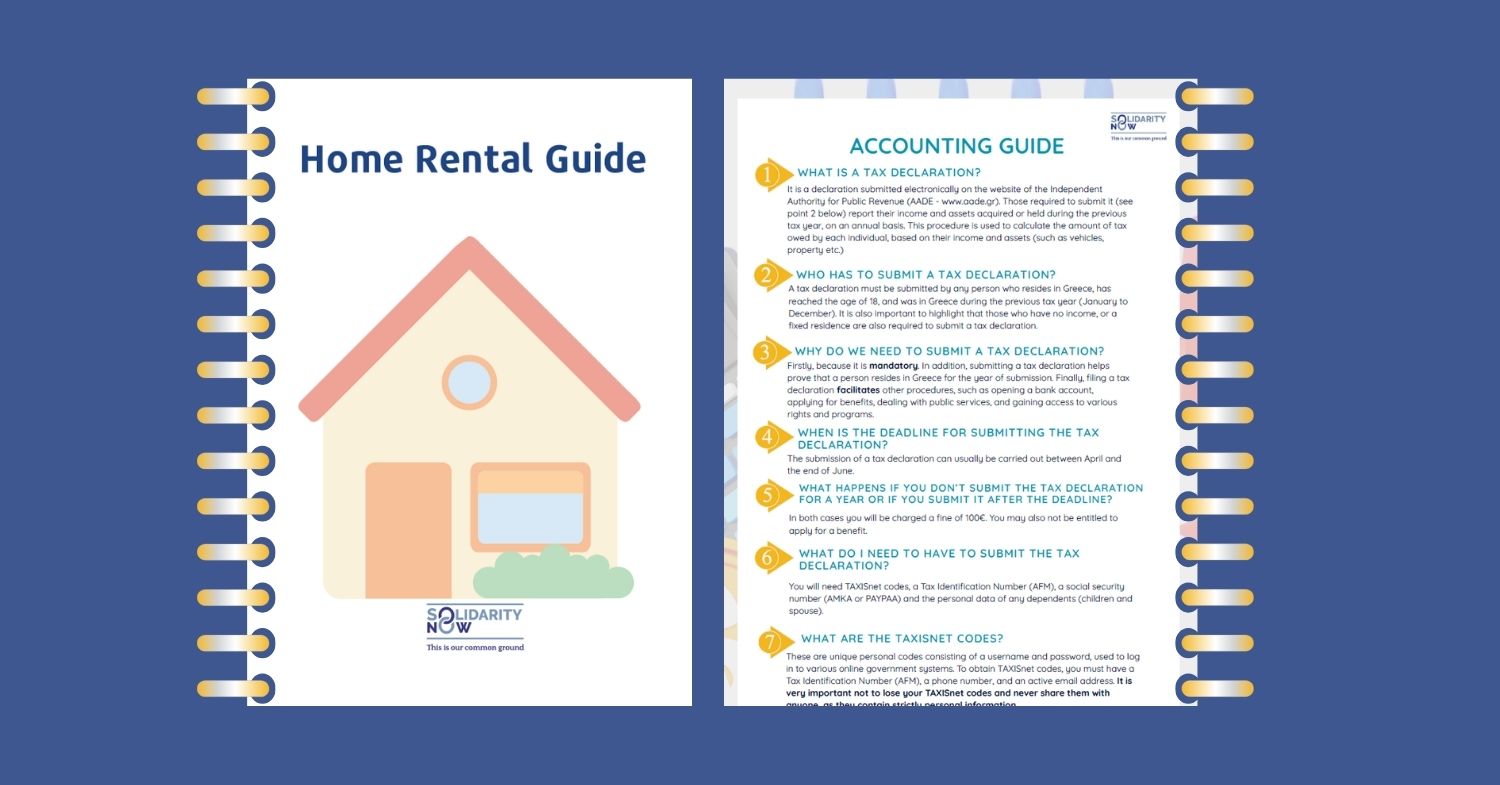
ARTICLE | Tax Guide & Home Rental Guide in Multiple Languages


Life in a new country is not always easy, and Greek bureaucracy can often feel like a puzzle. That’s why we created a Tax Guide (available in 8 languages) and a Home Rental Guide (available in 7 languages).

Our goal is to support people who live in Greece and are not Greek nationals, helping them understand the basics, know their rights, and navigate everyday procedures with greater confidence and security.

Inside the Guides you will find:

  • Key concepts, clear definitions, and simple explanations of tax procedures
  • What to look out for before and during a home rental
  • Useful tips to avoid misunderstandings or exploitation
  • Practical information to make daily life clearer and easier

Information is power and it should be accessible to everyone.

Download the Guides in the language that suits you and share them with anyone who might need them.

Tax Guide

Arabic

English

Farsi

French

Greek

Somali

Ukrainian

Urdu

Home Rental Guide

Arabic

English

Farsi

French

Greek

Somali

Ukrainian

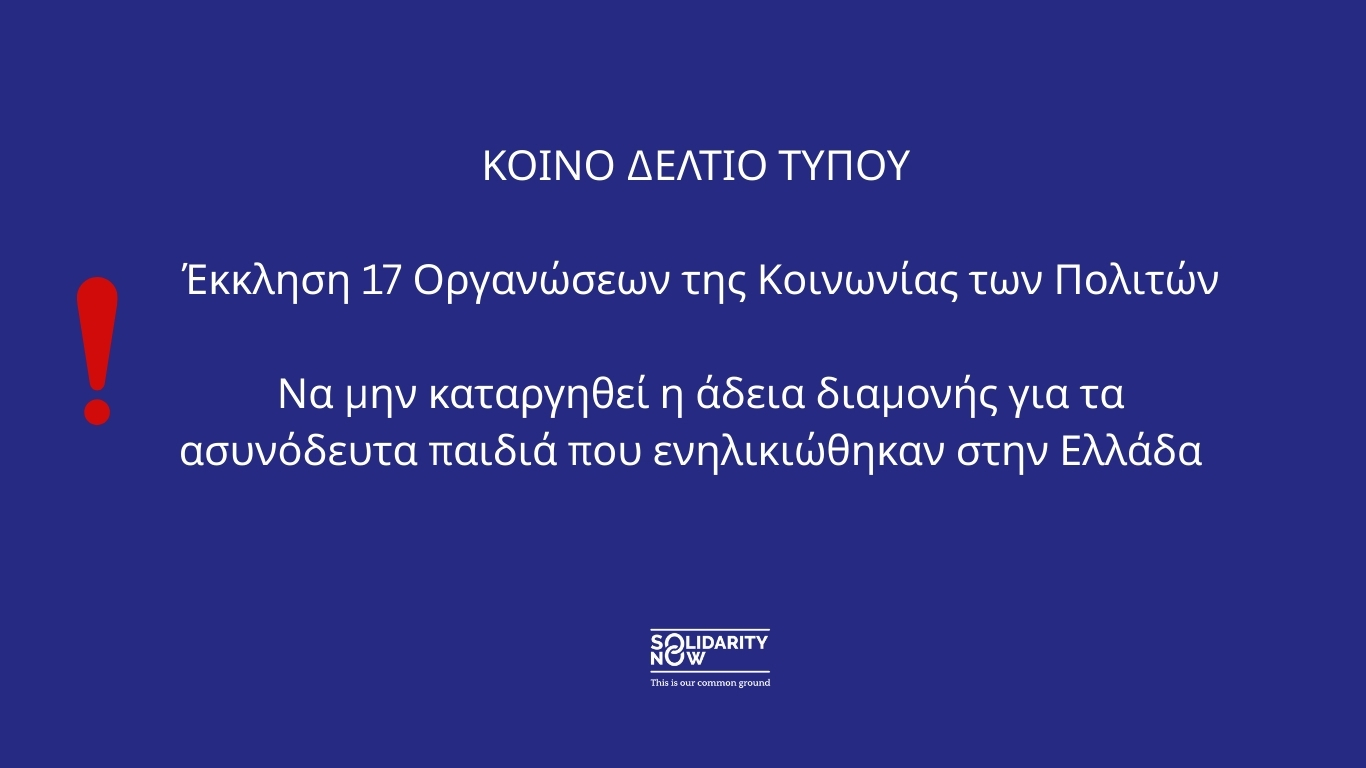
JOINT PRESS RELEASE | Call by 17 Organizations: Do Not Abolish the Residence Permit for Unaccompanied Children Who Came of Age in Greece


The Greek Parliament Not to Abolish the Residence Permit for Unaccompanied Children Who Came of Age in Greece and Have Successfully Completed Three Years of Greek Schooling

Through a joint letter, a total of 17 Civil Society Organizations—many of which are members of the Child Rights Advocacy Network—call on the Greek Parliament not to adopt the abolition of the residence permit for unaccompanied children who came of age in Greece and have successfully completed three years of Greek schooling, as provided for in Article 38 of the draft bill currently under discussion in Parliament by the Ministry of Migration and Asylum.

Among other points, and as emphasized in the letter, this specific residence permit:

  • Was introduced in 2023, came into force in March 2024, and constituted a commitment made by the Prime Minister himself and the political leadership of the Ministry of Migration and Asylum.

  • Is the only provision that offers protection to young people who entered and were registered in Greece as unaccompanied children.

  • Grants a residence permit to a group of third-country nationals who are, by definition, already integrated and productive—namely, young people who arrived in Greece as unaccompanied children and have successfully attended a significant number of years in Greek schools.

  • Keeps children engaged in education while simultaneously reducing the risk of exposure to juvenile delinquency and exploitation.

  • Its potential abolition would constitute a serious regression in child protection and would negate a long-term investment by the Greek state in the social and economic integration of young people who arrived as unaccompanied children. At the same time, it would undermine the coherence of migration policy, given that in recent years an approach has been developed that recognizes the need for special treatment of former unaccompanied children and their gradual integration.

The organizations co-signing the letter call on the Greek Parliament to reject the proposed abolition of the relevant provision and to adopt further measures that ensure effective child protection.

Signatory organizations – members of the Child Rights Advocacy Network (CRAN):

ARSIS – Social Organization for the Support of Youth
Network for Children’s Rights
ELIX
Greek Council for Refugees
METAdrasi
Shedia – Center for Pedagogical and Artistic Training
Better Days Changemakers Lab
International Rescue Committee (IRC) Hellas
INTERSOS HELLAS
Safe Passage International – Greece
SolidarityNow
Terre des hommes Hellas
The HOME Project

And the following organizations:

Médecins Sans Frontières / Doctors Without Borders – Greek Section
Greek Forum of Refugees
Refugee Support Aegean (RSA)

ARTICLE | Working in the In-Between


Every day, employment counselors at the Athens Solidarity Center welcome lots of people who are looking for work.

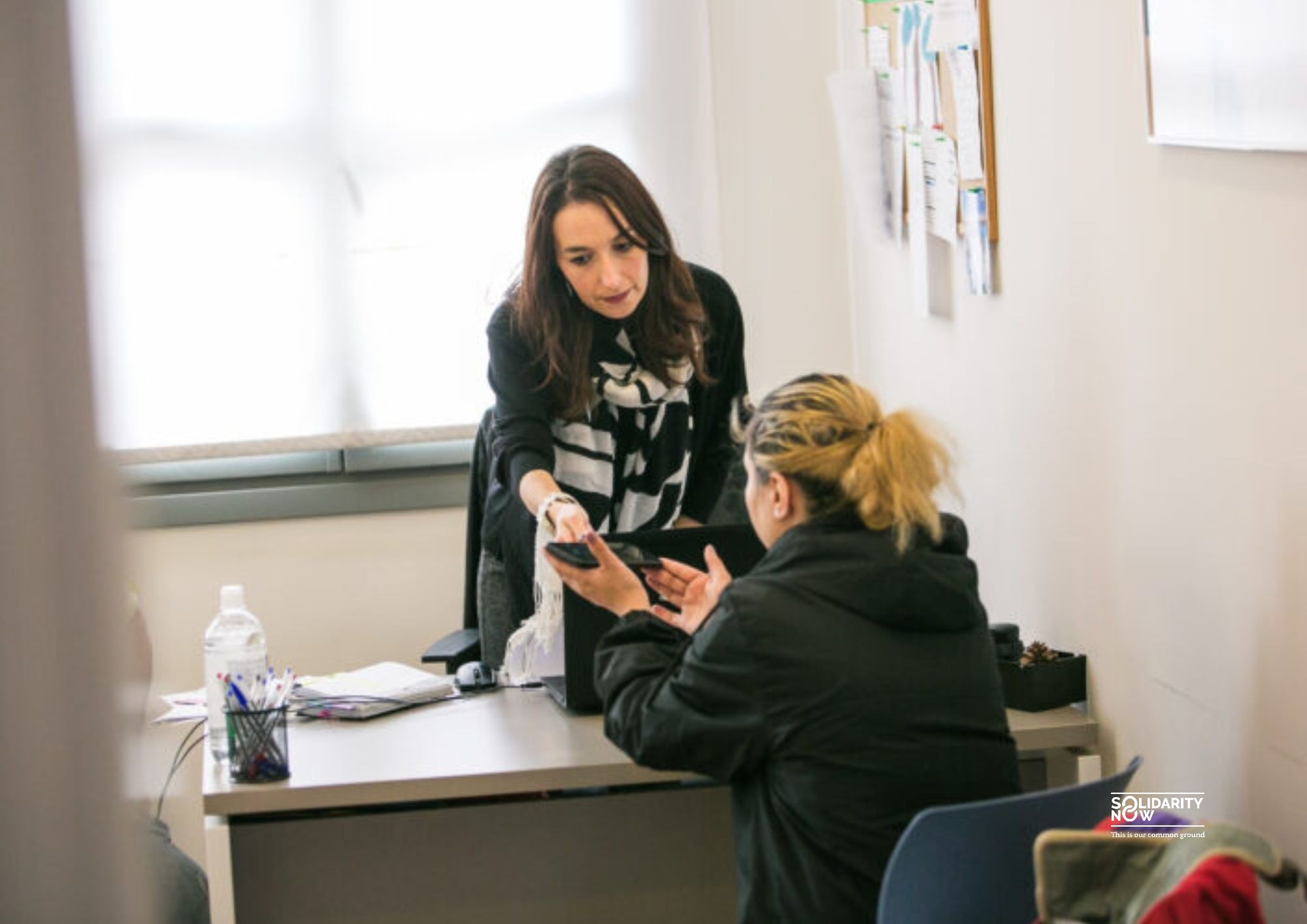
Their role is multifaceted: assessing backgrounds, identifying skills, exploring needs, creating CVs, providing information about the labor market, supporting job applications and interviews, explaining labor rights and, of course, offering guidance on the bureaucratic procedures required before or after employment.

At a time when the labor market needs workforce, and asylum seekers or recognized refugees are searching for stable, legal employment to begin their integration journey, employment counselors find themselves working in the space in between beneficiaries, companies, and institutions, striving to bridge the gap.

As a result, their work expands to include a wide range of additional actions, supporting all parties involved. Counselors inform businesses about recruitment procedures, provide practical tools, such as SolidarityNow’s new guide and manual on hiring third-country nationals, and, above all, support job seekers in preparing all the necessary documentation: collecting existing documents, issuing new ones, printing insurance contribution records, obtaining a Social Security Number, opening bank accounts, and more.

This is, in essence, the bureaucratic side of employment counseling: navigating a complex landscape of services that stand between employer and prospective employee: social security funds, tax authorities, banks, hospitals, call centers.

Although significant steps toward digitalization have been made in recent years, new obstacles often arise in practice, even where facilitation measures were intended.

Indicatively:

  • Different requirements from bank to bank for opening a bank account.
  • The need for frequent renewals of identification documents, leading to repeated updates with tax and social security authorities.
  • Inactive social security numbers for recognized refugees.
  • Issuance of online tax credentials only through someone who already has them.
  • Limited English-language support in call centers.
  • Public service websites available only in Greek.

Very often, these issues require employees to be absent from work in order to be resolved, sometimes more than once. Each such dysfunction translates into insecurity for the employee, who fears they may not be able to obtain documents they are entitled to and need, and into hesitation for the employer, who worries about taking a risk by hiring someone who must repeatedly be absent just to complete basic procedures.

This is the in-between space where employment counselors work every day: mediating, explaining, clarifying, reassuring and mainly trying to ensure that no one gets lost between intention and implementation.

And so, within a system that often complicates rather than facilitates, solutions are found elsewhere: in people. In colleagues who share knowledge, experience, strategies, and small victories; in informal support networks that emerge; and in connections with individuals within public services, banks, and organizations who are willing to help and become invaluable allies.

These human bridges are what ultimately allow counselors to continue their work finding pathways where procedures close doors, solving problems through collaboration, and supporting beneficiaries so they are not lost in bureaucracy.

In a world where state mechanisms do not always function as they should, the power of community and solidarity becomes the most stable foundation for moving forward together.

ARTICLE | Seasonal employment as a transitional stage of integration


A few months ago, we reported on former unaccompanied minors (read the respective article) who, faced with the lack of alternative housing options after leaving the shelter, chose to work during the recent tourist season. At that time, the role of the employment counselor was characterized by urgency, immediate problem-solving, and constant availability, as the circumstances allowed no room for delay.

Today, many of these young people have returned and the context has changed.

Having been relieved from housing-related stress and having gained valuable work experience in Greece, they are now more mature and better connected. This shift allows them the time and space to reflect on their next steps. In close cooperation with employment counselors, they are now exploring more stable employment opportunities, with the aim of building a sustainable daily life in Athens.

Seasonal employment is demanding, and the risk of labor-related violations is significant.

The Employment Service seeks to ensure that young people who work throughout the summer in Greek tourist destinations do not return discouraged or with a sense of injustice. For this reason, counselors maintained regular contact with beneficiaries throughout the entire season, while referrals were made to employers within the established employment network, where relationships of trust were already in place.

This trust constitutes the most important outcome of the process. It forms the foundation upon which both ongoing and new cycles of counseling can develop no longer under the pressure of immediate need, but with the opportunity for thoughtful and long-term planning.

*The Athens Solidarity Center project is implemented in collaboration with the Ministry of Migration and Asylum and funding from the Swiss-Greek Cooperation Programme in Greece (Embassy of Switzerland in Greece), for three years starting August 1st, 2023.