To read the article, press here.


Greece has been facing a severe economic crisis during the last six years which has led to a reshuffling of its political landscape, with the emergence of new political forces both at the left and right wing of the spectrum, the near disappearance of the Socialist party PASOK and as of January 2015, its first left wing government. In this admittedly tumultuous period, the country has been confronted with three migration-related challenges. First, important irregular migration and asylum seeking pressures as Greece is a main point of arrival and entry into the EU for migrants and asylum seekers from Asia and Africa. Second, an internal migration crisis as rampant unemployment has hit migrant workers and their families. This internal migration crisis of the long term settled migrant population is not only a socio-economic challenge but also a legal and political one as it has resulted in the de-legalisation of many among them, who lost their stay permits because of unemployment. Third, the country has experienced a spectacular, even if recently deflated, rise of the far Right in Greece and an equally dramatic rise in racist violence and defensive nationalism that is both anti-European and anti- immigrant. Both the EU (and Germany in particular) and non-European migrants have become suitable scapegoats that offer easy explanations to complicated structural problems that plague the country in this period.
In the past 25 years, Greek migration management and migrant integration policy has been characterized by a lack of vision. Economic migration took place at the margins of legality through extensive social networks of both migrants (usually as workers) and natives (usually as interested employers). There has been a conspicuous absence of an integration policy that would recognize that approximately 8% of the resident population and nearly 10% of the school population are of non-Greek origin and that many of these migrants have been silently integrating in the labour market and in everyday life. Complete assimilation was celebrated as successful integration without any concern that there could be also feelings of exclusion and marginalization particularly among the second generation of migrants (those born in Greece) or the so called 1.5 generation (notably children of migrant families that arrived in the country at a pre-school age).
While some important steps have been taken since 2011 with regard to reorganizing its notoriously failing Greek asylum system, and seeking to re-integrate those migrants who have been living in Greece for a long time (10 years or more) and who had lost their residence status because of unemployment, a lot remains to be done for a more effective and more humane management of irregular migration and asylum, and for promoting the socio-political integration of the country’s significant migrant population.
Today Greece stands at a crossroads in all respects. Not only with regard to the need of revamping its economy and restructuring its public administration and welfare system, but also with regard to adopting a vision of what Greek society should look like in 2030 or 2050. The new government, unlike its predecessors, has put forward a proactive agenda for migration policy. It has declared its willingness to further reform the citizenship law with a view to granting citizenship to children born in Greece of foreign parents as well as facilitating citizenship acquisition for the first generation. Second it has declared its intention to stop routine detention for all irregular migrants and particularly for asylum seekers, and to implement alternatives to detention as happens in other countries. Such a measure would be less costly, in money and in humanity! Third the government seeks to adopt a comprehensive programme of humanitarian aid for the most needy families and the most vulnerable strata of the population.
These three measures are crucial for the present and future of Greek society. They promise to normalize Greek democracy which has so far excluded an important part of its resident population from any level of representation (whether local or national), to combat racism and xenophobia that have taken alarming dimensions in recent years, and to reconcile the necessity of managing the country’s borders effectively with the obligation to provide asylum to people who need it and protect the fundamental rights of both asylum seekers and irregular migrants.
After all, these objectives are fully in line with our Greek classical heritage that many of the anti-immigration oriented political parties so warmly cherish and celebrate. And they can actually be more effective and less costly in every respect: they can mobilise the human and cultural capital that migrants and asylum seekers bring to this country, boost its innovation and creativity, and make it a better place for us and our children. Civil society has a crucial role to play however in this process. It needs to support government action through participation, constructive criticism and implementation. Actually the government needs also to support and empower civil society involvement at all levels of policy design and policy implementation. There are many services and activities that can be more effectively accomplished by non governmental organisations and cultural associations rooted at the local level, among the citizenry. There is a voluntary work capital to be tapped upon and there is a need for shared ownership (among state actors, civil society, citizens) of this new vision of Greece for 2030.
Anna Triandafyllidou
European University Institute, Florence
ELIAMEP, Athens
Member of the Board of Directors of Solidarity Now
20 March 2015

On the occasion of the opening, Chairman Stelios Zavvos of Solidarity Now stated:
“At a time when the humanitarian crisis severely affects Greek society, SolidarityNow created Solidarity Centers focused on the protection of human rights for vulnerable Greeks and migrants. Our inspiration derives from the basic principle of solidarity between people. The non-profit organization SolidarityNow, launched by the Open Society Foundations two years ago, is continuously working in order to unite the voice of solidarity within Europe. We promote solidarity from Europe towards our country and also solidarity from us towards our fellow-citizens. Solidarity towards the people who suffer from total lack of funds, lack of political and justice rights and are therefore excluded socially, economically, medically, and racially.”
Stelios Zavvos
Chairman

SolidarityNow and the Open Society Foundations co-organized a two-day workshop (19 – 20 March) to focus on the current state of affairs of migration and asylum policy in Greece.
The aim was to provide a venue to host all important stakeholders along with a dynamic audience of experts in order to leverage the dialogue on migration, asylum, detention and integration issues. It is a priority to facilitate communication between authorities and civil society during this very critical transition period Greece is undergoing.
The event was successful with over 65 NGOs, Donors, Foundations, and State agencies participating.
Open Society Foundations in Europe (OSIFE) Director Jordi Vaquer opened the workshop; Ambassador Ingrid Shulerud of the EEA and Norway Grants also made an intervention while our Chairman Mr. Stelios Zavvos closed the workshop announcing that the recommendations produced are to be incorporated into an open call for proposals with a total budget of 1.5 million euro.
Check our web site for more info on the recommendations that are coming soon!


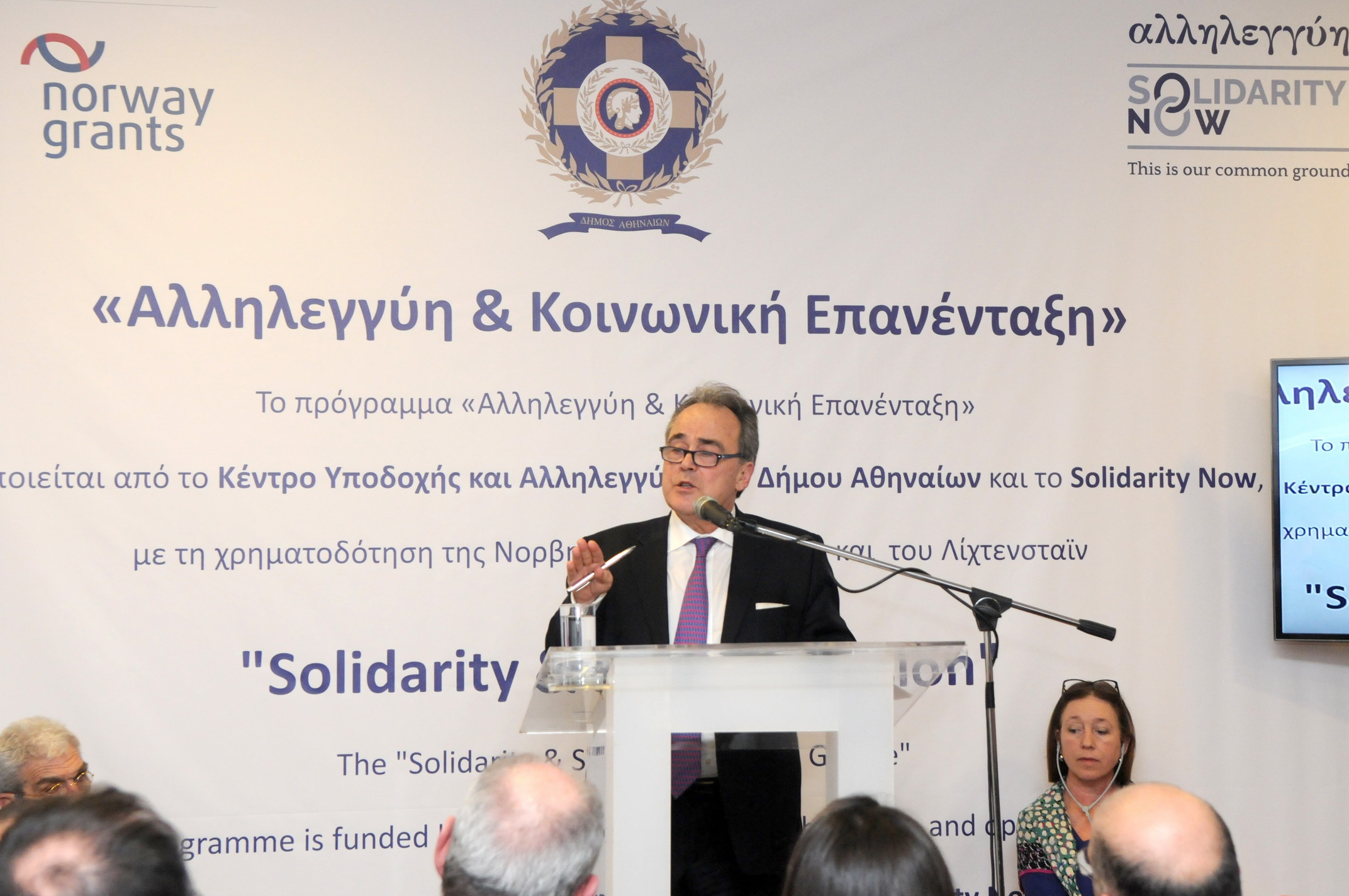
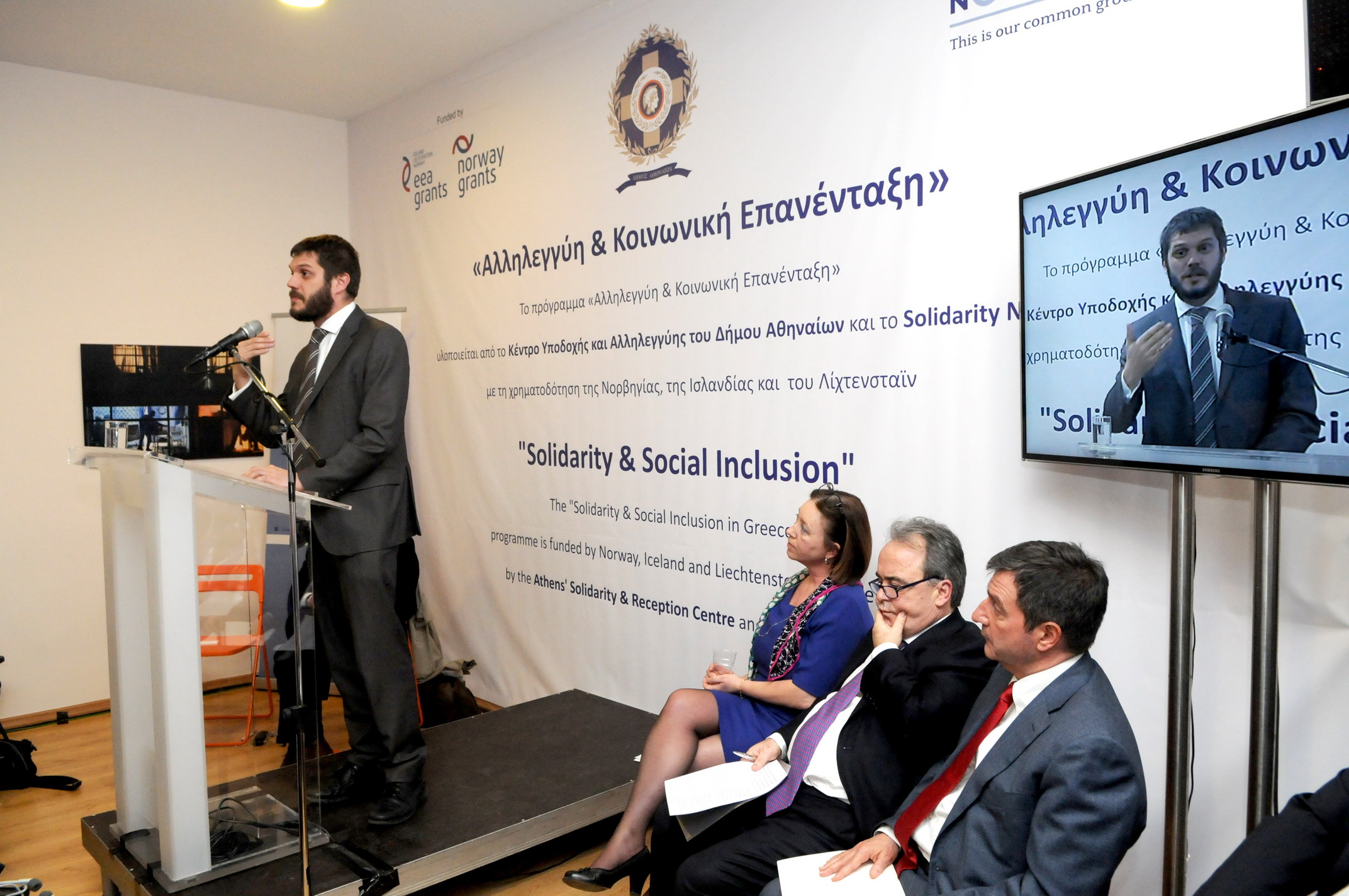
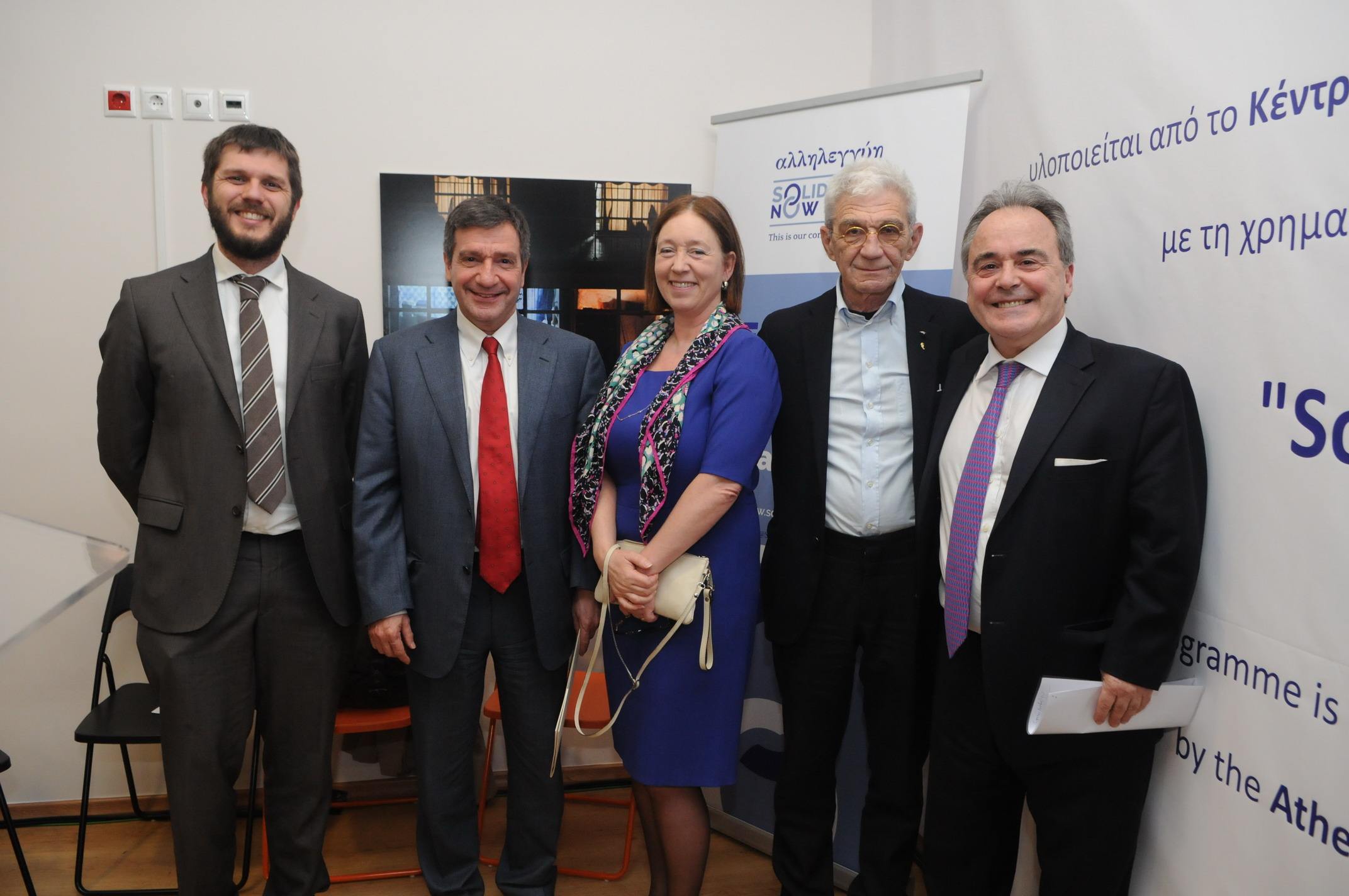
The Athens Solidarity Center was inaugurated on 19th of March 2015 – following the opening of Solidarity Center in Thessaloniki a year ago. The Athens Solidarity Center was inaugurated by the Chairman of the Board of Solidarity Now, Mr. Stelios Zavvos together with the Mayor of Athens, Yiorgos Kaminis, the Mayor of Thessaloniki Mr. Yannis Boutaris, Ambassador Ingrid Schulerud of the Ministry of Foreign Affairs of Norway representing the EEA Norway Grants, Norway’s Ambassador to Greece Mr. Sjur Larsen, and Mr. Jordi Vaquer, Director Open Society Foundations in Europe.
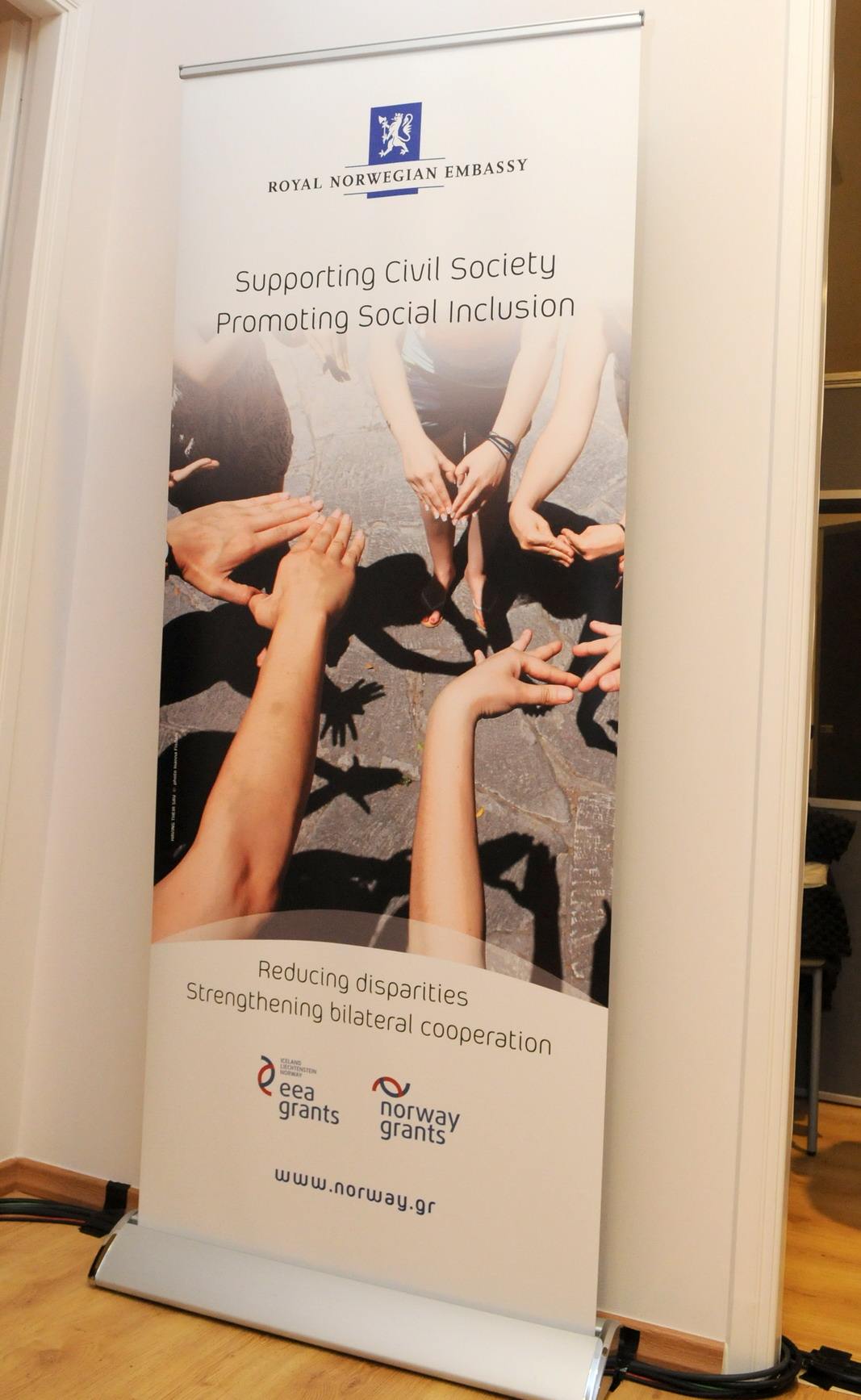
Key objective of SolidarityNow behind the rollout of Solidarity Centers in Athens and Thessaloniki is to support those most in need, in the midst of crisis by taking initiatives that can generate a broad and positive impact for people and Greek society. The Athens Solidarity Center constitutes an initiative of the Open Society Foundations and SolidarityNow: it is funded by the countries of Norway, Iceland and Lichtenstein (European Economic Area (EEA) Grants) and is operating in collaboration with the Municipality of Athens.
According to the operating framework of the Solidarity Centers, the Athens Solidarity Center offers space to new and existing civil society organizations in Greece, facilitating community solutions to pressing social and economic problems. The Center addresses the unique needs of local communities it operates within and caters to all regardless of their nationality, religion, origins and social status.
Within this context, the newly inaugurated center cooperates with four NGOs: PRAKSIS, ARSIS, Together for Children, and the Network for Children’s Rights offering support to vulnerable groups, including children and adolescents, elderly, sick, migrants, and asylum seekers.
To read the articles click here and here. (available only in Greek)