Article | Domestic violence: Growing up with violence at home


by the Athens Solidarity Center of SolidarityNow

One of the main discussion issues regarding childhood worldwide is the exposure to violence and especially the exposure to domestic violence. It is apparent that over time, we witness advances and changes towards a better approach to the issue.

However, even today, many of us, if not all of us, have occasionally heard phrases like “nothing bad happened to me even though I was beaten a little”. We should note, of course, that violence against children is not only physical, but also emotional and verbal, and of course neglect is also violence.

Reflecting on the operation of the psychological service of the Athens Solidarity Center in the first quarter of 2023, we became once again witnesses of the devastating consequences of domestic violence in a child’s life that follow him/her in adulthood as well.

Unfortunately, we observed the following, without any surprise:

In more than 60% of the cases (all adults), one of the key factors in the development of severe psycho-emotional difficulties and social exclusion is the neglect and exposure to violence within the family when they the beneficiaries were children. It is interesting to note that while we meet people of various nationalities in the Centre, the percentage of the Greeks who seek support from the service due to such incidents and trauma is higher than that of other nationalities. This of course does not suggest that in Greece people are more violent towards children than people in other countries (there are different answers to be given here), but we can certainly conclude that violence against children has no nationality.

At the same time, we saw that these cases are the ones that require the longest support and tend to be the cases that remain in the service extended time than cases of people who have not been exposed to such events.

* Since August 2022, the Athens Solidarity Center is financed by EEA Grants, with ΣΟΛ Crowe and HumanRights360 as the fund operator.

**From 1/7/2021 till 30/6/2023, Kahane Foundation supports the Psychosocial service of the Athens Solidarity Center.

***The Center is also supported by the Municipality of Athens.

PRESS RELEASE: Job Fair for refugees in Thessaloniki


UNHCR and SolidarityNow connect refugees with employers

The United Nations High Commissioner for Refugees (UNHCR) and SolidarityNow organize a day dedicated to connecting employers with job-seeking refugees on Friday May 5th at the Blue Refugee Center in Thessaloniki.

The Job Fair aims to connect refugees to available job opportunities, introduce them to employers, and familiarize them with the interview process.

More than 15 companies from various industries will participate in the event, conducting recruitment interviews and evaluating candidates’ CVs.

Alongside the job interviews, two keynote discussions will take place. The first will be a presentation of personal experiences related to work in Greece by refugees living and working in the country. The second will be an open dialogue between representatives from businesses and refugees concerning the opportunities and challenges in the Greek labor market. During this discussion, UNHCR will also present its online platform for connecting employers with refugee job seekers, which operates in collaboration with Catholic Relief Services (CRS).

The event will take place between 11:00-16:00 on May 5th, 2023.

The address of the Blue Refugee Center is I. Koletti 25D, Thessaloniki.

Entry to the event is free.

PRESS RELEASE: SolidarityNow launches the “MAMA” program with the support of Eurolife FFH


SolidarityNow, with the aim of providing support to the vulnerable members of our society through innovative social actions, launches the “MAMA” program. The program, implemented with the support of Eurolife FFH, targets all families, pregnant women, and new parents from vulnerable social groups, who want to be informed and empowered about the care of the mother, the young child, and the whole family.

As part of the program, individual and group counseling is provided on topics such as nutrition, exercise, and care during pregnancy, preparation for childbirth, breastfeeding, and baby care. Parents with babies and toddlers up to 2 years of age are provided with counseling on child nutrition and parenting. At the same time, the team organizes discussions and awareness-raising activities on issues of perinatal care and parenthood.

The “MAMA” program is implemented in Thessaloniki throughout 2023, by experienced staff of the organization in order to provide proper support and care to the participants, so that they can better respond to their new role in life. The services are also provided remotely (online), for those who do not live in Thessaloniki or for those who find it difficult to transport.

Anyone interested can register by filling out the following form: and the program’s team will contact them as soon as possible.

Article | April 8th: International Romani Day

Copyright SolidarityNow

by Giorgos Tsitiridis, Project Coordinator, Northern Greece, SolidarityNow

April 8th has been declared the International Romani Day in honor of the first major international meeting of Romani representatives, April 1971 in Chelsfield near London, which laid the foundations to demand rights from the international community. There, representatives of 14 countries chose the name Roma as the international name for gypsies, since until then they had – and still have today – many other names, by which they identify themselves. Five committees were established to deal with education, housing, language, culture, and civilization. 

Social exclusion, poverty, and inequalities did not allow the Roma to become part of the changes and development experienced by Europe and the Balkans after the atrocities and the Holocaust of World War ΙΙ, on the contrary, they were the victims of every subsequent global crisis. The fall of the communist regime once again found them on the sidelines. Victims of ethnic cleansing in the war in Yugoslavia were driven to persecution, refugee status, and migration toward a better future.

Their social exclusion, poverty, access to health, work and education as well marginalization and racism are enhanced by the economic crisis, the rising unemployment, the current energy crisis and climate change, the often-inadequate living conditions in settlements without electricity, running water, and basic infrastructure, issues of main importance.

SolidarityNow, through its Solidarity Centers in Athens and Thessaloniki, has offered its services to lots of Roma in need. Since 2021, the organization has been collaborating with the Roma Branch of the Katerini Community Center in the implementation of women’s empowerment activities and information on child nutrition, women’s health, parenthood, and pregnancy. In addition, it participates in the Roma Civil Monitor National Partnership 2021-2025 for the monitoring of the National Roma Strategy.

Despite the chronic problems plaguing their settlements, Roma themselves fight daily against the bad conditions, having managed to save over the centuries, their language, history, and culture.

Today is an opportunity to reflect and act against stereotypes and prejudice. Today, we celebrate and stand next to each one proudly.

PRESS RELEASE: Completion of the Conference: “Counter Trafficking in Human Beings in the Context of Forced Migration”

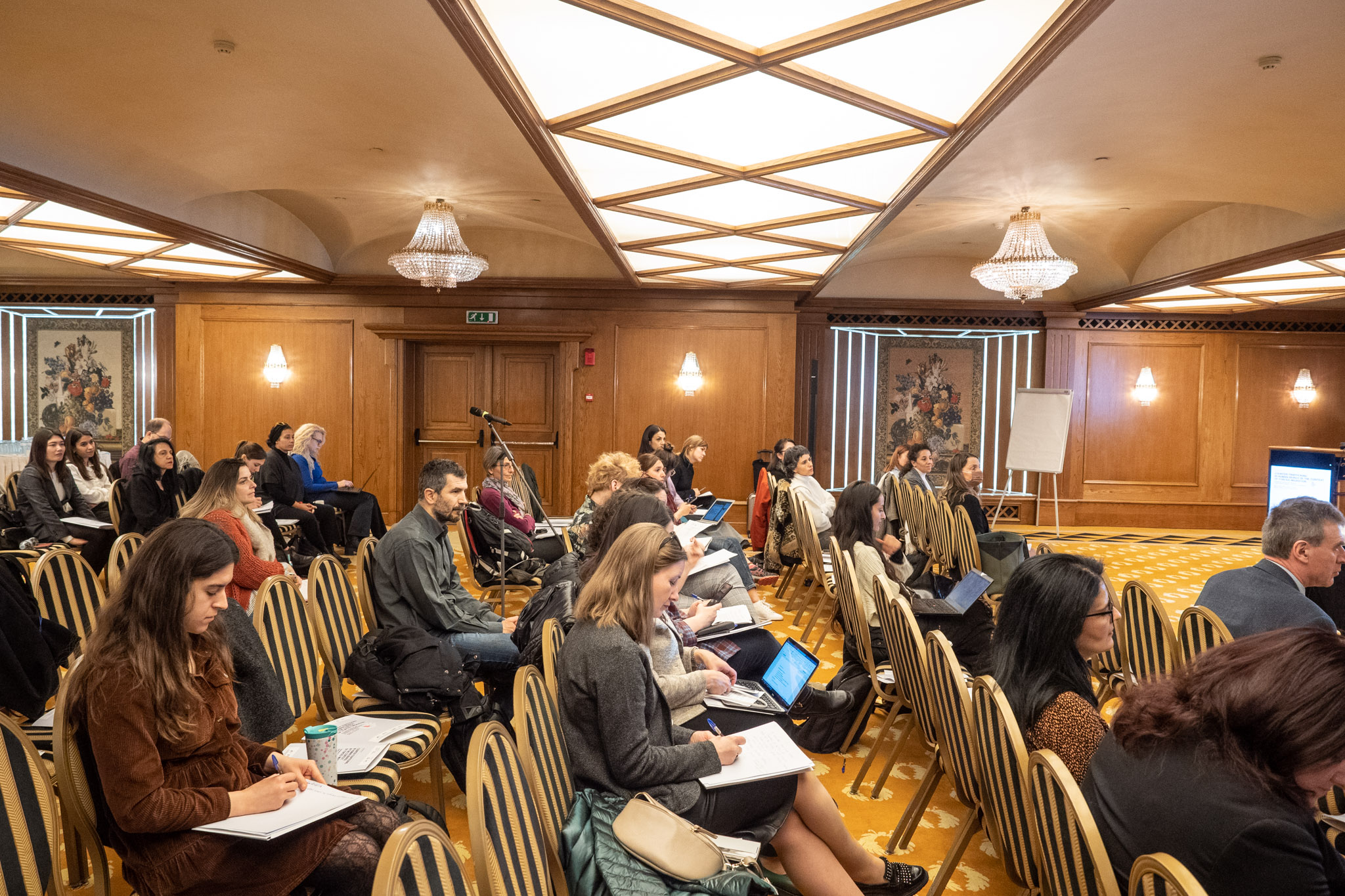
Copyright: Thodoris Nikolaou, Nick Palaiologos

 The conference was successfully held with the aim of finding collaborative solutions to the issue of human trafficking between Greece and Bulgaria.

The conference was organized on March 14 in Athens by the administrators of the Active Citizens Fund program in Greece – SolidarityNow, Bodossaki Foundation – and in Bulgaria – Open Society Institute Sofia, Workshop for Civic Initiatives Foundation and Trust for Social Achievement. The participants included representatives from the Council of Europe, the Academic Area, Embassies, institutional bodies, and international, European and local civil society bodies, which are actively involved in issues related to trafficking in human beings, migration and the protection of human rights.

Why Greece and Bulgaria?

Bulgaria is mainly a country of origin of human trafficking victims, while Greece is a transit or destination country.  According to data from the National Referral Mechanism for the Protection of Victims of Trafficking in Human Beings in Greece for 2020, out of the 167 victims registered, 74 were children and 33 of them originating from Bulgaria.

During the conference, the need for transnational cooperation was emphasized, among others, by the Vice-President of the Council of Europe’s Group of Experts on Action against Trafficking in Human Beings (GRETA), Ms. Antoaneta Vassileva and the Special Secretary for the Protection of Unaccompanied Minors and former Head of the Office of the National Rapporteur on Combating Trafficking in Human Beings, Mr. Heracles Moskoff, who honored the conference with their presence.

Ms. Vassileva stressed that “The governments of both countries should secure the funding for the implementation of actions against human trafficking. In addition, the use of the national referral mechanism is considered necessary and, equally important is the continuous education and training in the identification of potential victims by the professionals involved, police officers, lawyers, social workers, psychologists. Human trafficking is actual an invisible crime, which today in the digital environment is becoming even more invisible. Protecting victims is a collective duty and should be at the top of the agenda.”

During his speech, Mr. Moskoff underlined: “Human trafficking knows no borders and national laws. The goal of the slave traders is profit and their product is humans. To prevent all those who exploit human dignity, we need to overcome conventional perceptions and build a multidisciplinary cooperation between the state, international organizations and civil society in terms of Preventing the phenomenon, Suppressing crime and Protecting victims with a more inclusive and victim-centered approach. Respectively, and aiming at prevention, we operate the National Emergency Response Mechanism for the early identification and immediate accommodation of unaccompanied minors living in precarious conditions or homelessness. To date, more than 3,258 children have benefited from the mechanism.”

The three critical aspects

The conference program included three panel discussions with more than 20 prominent speakers, who focused on the three critical aspects of the issue: the protection of victims through the analysis of existing protection systems and the application of victim-centered approaches; the exchange of best practices to prevent and reduce trafficking in human beings and the identification of the obstacles depriving victims’ of accessing justice.

The discussions and the productive exchange of views between the speakers and the participants underscored that, due to their vulnerable status, migrants/refugees are potential victims, while special reference was made to e-trafficking as the new way of approaching potential victims. A common ground was the need for prevention through information, education and awareness-raising of all stakeholders, including both institutional bodies and services, but also all the dynamic parts of societies and citizens.

Worldwide, according to the International Labor Organization, 40.3 million people are victims of trafficking, 75% of them are women and girls, and 1 in 4 are children.

You can watch the speeches made in the context of the conference here. We thank blod.gr for the video recording. 

*The conference is a regional action of the Active citizens fund program, fund operated in Greece by Bodossaki Foundation in consortium with SolidarityNow.

The Active citizens fund in Greece is supported through a € 13.5 m grant from Iceland, Liechtenstein and Norway as part of the EEA Grants 2014 – 2021. The programme aims to develop the sustainability and capacity of the civil society sector in Greece, and to strengthen its role in promoting and safeguarding democratic procedures, active citizenship, and human rights. The Fund Operator for the Active citizens fund in Greece is Bodossaki Foundation in consortium with SolidarityNow.

JOINT STATEMENT: Children in Greece without documents, children still at risk


We, the undersigned, 16 organisations, members of the Child’s Rights Advocacy Network, working to support asylum-seeking and refugee children in Greece, wish to express our concerns about the proposed provisions for unaccompanied and separated children in a newly proposed Immigration Code and call on Greek authorities to reconsider Article 162 of this Code and amend it so that and updated version  covers the serious legal gap currently facing unaccompanied children and ensures the rights of all unaccompanied children in practice, including once they have reached adulthood, or will soon reach adulthood, which is currently not the case.

Last week, we were both alarmed and disappointed to see that the newly proposed Immigration Code was suddenly published for an unrealistically short period of public consultation on 7 to 14 March 2023, without sufficient time provided for meaningful review and recommendations to ensure it aligns with what is best for unaccompanied children or that it addresses the significant gaps in legal status these children continue to face in Greece.

We are compelled to express our collective concern regarding not only the insufficient consultation provided, but also the content of the proposed new code, which does not offer solutions for the vast majority of unaccompanied children who remain outside the asylum system. Instead, the proposal seems set to create even more challenges for these children, increasing their barriers to gaining legal status in the country.

This comes despite the explicit commitment we received from the Deputy Minister of  Migration and Asylum, Ms. Sofia Voultepsi, during the event “Children without documents, children at risk. Until when?” organized on July 12, 2022 by members of the Child Rights Advocacy Network. Both at that time and since, the Deputy Minister stated that there was a “clear political will” to address the gap in the legal status faced by unaccompanied migrant children in the country, before and after they reach adulthood.

And, yet the criteria stipulated in the new regulation of how adult citizens from third countries or stateless persons who entered Greece as unaccompanied minors can obtain a ten-year residence permit fail to reflect the reality on the ground.

With this legislative initiative, an important opportunity is lost; that of protecting and acknowledging unaccompanied and separated children who ultimately remain outside the asylum system. Absolutely no provision is included in the proposed bill for unaccompanied children whose request for international protection is rejected while they are minors. This is contrary to the best interests of the child, which should guide the decisions of all public authorities, but also contrary to public statements by these same relevant authorities. As a result, unaccompanied children are once again left without legal documents and exposed to all forms of exploitation, without substantial access to protection, health benefits or education.

As for unaccompanied children who become adults while in Greece, in order to receive the ten-year residence permit, the new Code requires them to have a permanent authorisation of stay in the country, i.e. a permanent residence permit. But, if these unaccompanied children who have just come of age had already secured such an authorisation, they would not even need the legislative intervention introduced by this article in the first place. This, in fact, despite the Prime Minister’s own statement on January 17, 2023 that “unaccompanied children turning 18 that have completed three (3) years of education should rightfully be given the possibility to remain in the country and  to join the Greek state if they so wished.”

However, in addition to requiring that they already have a permanent residency permit, and already successfully completed at least three (3) grades of the Greek formal education, the potential beneficiaries of the ten-year residence permit must also have been accepted at either a Vocational Apprenticeship School of the Public Employment Service, a Vocational Training School, or a higher educational establishment.

This last requirement that they must have obtained admission to one of the above schools is particularly onerous since only a very limited number of unaccompanied minors who have reached adulthood can meet this condition. After all, experience in the field has shown us that, for unaccompanied children, even a 3-year “successful” attendance at the Greek school is a significant challenge. This is due to systemic and chronic issues impeding the effective inclusion of children with a migrant/refugee background in the Greek school system, causing a student population of “two speeds”.

Finally, we wonder why the second-generation children will now be left without a residency permit (see paragraph b of the above article). Previously, they were able to obtain one with the provisions of Law 4251/2014 regardless of their parents’ status, as long as they had established strong ties with the country (birth in Greece, school attendance, etc.).

The signatory organizations of the Children’s Rights Advocacy Network believe that a special residence permit should be granted to unaccompanied children solely based on the fact that they are children and that they are transitioning to adulthood, aiming to safeguard the best interest of each unaccompanied child in the country.

THE CO-SIGNING ORGANISATIONS

  1. ARSIS Association for the Social Support of Youth
  2. Better Days Greece
  3. ΕLIX
  4. Generation 2.0 for Rights, Equality & Diversity
  5. Greek Council for Refugees
  6. The HOME Project
  7. HumanRights360
  8. International Rescue Committee (IRC) Hellas
  9. INTERSOS Hellas
  10. Lighthouse Relief
  11. Mobile Info Team
  12. Network for Children’s Rights
  13. Safe Passage
  14. Schedia (Raft) -Center for Artistic and Pedagogical Training
  15. SolidarityNow
  16. Terre des hommes Hellas

Article | Trauma Management: Suggestions contributing to a tragic collective time


from the Psychological Support and Counseling Service of the Athens Solidarity Center

The tragedy in the Vale of Tempe on March 1st, creates undoubtedly a condition of national mourning that shows the extent of the collective trauma to which we have all been exposed. The collective trauma of injustice produces feelings of anger and rage, but also of betrayal that generates insecurity towards the institutions and the inadequate mechanisms that do not guarantee people’s safety. The common feeling is that there is no concern for the highest of goods, that of human life.

Dealing with this collective grief that recalls personal griefs and losses becomes manageable only if we allow ourselves to experience, recognize and share the emotions provoked.

The media exposure and detailed descriptions of the accident and the victims, worsen the trauma and take us away from the essence which is how to restore a sense of security through collective action.

The contact and connection with our closest people can be particularly beneficial since the feeling of a supportive network builds up the feeling of security and closeness.

Self-care is not an act of selfishness, but of protection. That’s why you need to find time for self-care even if you feel that this can’t be a priority.

Give time to yourself, your emotions and thoughts and allow the healing process of the traumatic experience, and of course if you feel you are at a dead end seek professional help.

The guilt that accompanies our thoughts, a co-responsibility in the context of how we have shaped the situation in our country, can become the motive that will lead us to collective actions so as to re-establish, practically but also in our conscience, trust, security and the sustainable functioning of the state towards its citizens.

* Since August 2022, the Athens Solidarity Center is financed by EEA Grants, with ΣΟΛ Crowe and HumanRights360 as the fund operator.

**The Center is also supported by the Municipality of Athens.

ANNOUNCEMENT: If you are between 18 and 25 years old, apply for Empower YOUth!


The Empower YOUth project aims to empower young people from all over Greece and especially those who come from vulnerable groups such as Roma, LGBTQI+, migrants, asylum seekers, refugees, people with disabilities, repatriates and young people from disadvantaged / remote areas, who wish to take the lead and bring positive change within their communities.

During the project’s first phase , 32 young people aged 18-25 from all over Greece will participate in two educational cycles (16 in each cycle) that will take place from 8 to 13 May in Athens and from 22 to 27 May in Thessaloniki.

The trainings will enable young people to: be trained in the tools needed to empower themselves, take an active role as ambassadors in their communities by bringing ideas and visions, but also promoting the positive changes they wish to see.

At the end of the trainings, participants will be able to submit proposals for small-scale actions that will be supported and funded by the project.

Distribution and meals as well as transportation costs for people living outside Athens and Thessaloniki will be covered by the project.

Register here, (scroll for English) by March 31st, 2023.

For more information, please contact: 

Georgios Tsitiridis (Thessaloniki), gtsitiridis@solidaritynow.org, Thodoris Bogeas (Athens), tbogeas@solidaritynow.org

The “Empower YOUth” project is implemented in the framework of  the Active citizens fund program, implemented by SolidarityNow and partnered  by the Norwegian organization NorSensus Mediaforum.

The Active citizens fund in Greece is supported through a € 13.5 m grant from Iceland, Liechtenstein and Norway as part of the EEA Grants 2014 – 2021. The programme aims to develop the sustainability and capacity of the civil society sector in Greece, and to strengthen its role in promoting and safeguarding democratic procedures, active citizenship and human rights. The Fund Operator for the Active citizens fund in Greece is Bodossaki Foundation in consortium with SolidarityNow. More information: www.activecitizensfund.gr/en/

PRESS RELEASE: SolidarityNow stands by the side of the refugees from Ukraine

Copyright Myroslava Klius

Today, February 24, 2023, marks one year since the start of the war in Ukraine, a historic moment for Europe and the world, which has shaken the global public opinion.

Today, one year later, the figures are shocking as the war in Ukraine created the largest refugee crisis in Europe more than 80 years after World War II. Only in our country, more than 80,000 Ukrainians have arrived, while 22,000 have received temporary protection status. Behind the numbers are human lives lost, families separated, and uncertainty regarding returning home.

Solidarity Now was from the very first moment on the side of all those who arrived at Greece from the war zone, responding directly to the needs of the new refugee population, composed mainly of women and children. Initially, the organization provided documented answers to the most frequently asked questions by the refugees through the “Guide for Ukrainian refugees” created on its website.

Moreover, a series of actions are implemented, and services provided, aiming at empowerment and smooth integration:

  • 372 of our fellow human beings benefited from the services offered at the “Children and Female Friendly Space” of SolidarityNow and UNICEF, which was created in March 2022 in Promachonas, Serres. 95% of them are children.
  • 272 children from Ukraine attend Greek courses through their participation in the program “All Children in Education” in northern and southern Greece, aiming at their smooth transition to the Greek public education system.
  • 158 of our fellow citizens have been served by the social service of the Athens Solidarity Center with the main request to cover basic needs for: medical care (15%), asylum application in Greece (12%), housing and social welfare benefits (12%) and/or the issuance of legal documents (6%).
  • 510 Ukrainians attend Greek language courses through the HELIOS Project.
  • 146 have received support by the employability services provided by the Athens Solidarity Center and by the organization’s experts at the open accommodation sites in Serres and Kavala. 81% of them are women.
  • 57 women have been supported by the “Female Friendly Space” of SolidarityNow, that operated until December 2022 in the open accommodation sites of Serres and Kavala.
  • 31 children from Ukraine have attended robotics workshops at the Eugenides Foundation, as part of the Healing Play program implemented with the support of the US Embassy in Athens. The program aims to heal trauma through play.

*The programme “All Children In Education” is a UNICEF initiative, co-funded by the European Union and implemented by a number of partners, including SolidarityNow.

**SolidarityNow is a key implementing partner of the International Organization for Migration (IOM Greece), in the framework of the HELIOS project which is funded by the Ministry of Migration and Asylum.

***Since August 2022, the Athens Solidarity Center by SolidarityNow is financed by EEA Grants, with ΣΟΛ Crowe and HumanRights360 as the fund operator.

The Athens Solidarity Center is also supported by the Municipality of Athens.

**** The implementation of “Healing Play” is supported by the US Embassy in Athens.

Olena from Ukraine: The feeling of pain and the living hope


Olena, left her city, Bucha, in Ukraine’s Kyiv Oblast, along with her two children, one year ago following the Russian invasion through Belarus.

The first stop in Olena’s journey towards peace was Moldova and the final destination Greece. Olena and her children arrived at Greece on April 14th, 2022. Back home she left her husband -he serves in the Ukrainian armed forces- and her whole life. A life full of colours and creation; Olena is a painter and a businesswoman, and she is actually what her name implies; the shining light!

We met her in her new temporary, as she emphasizes, country. We are waiting for her, on a sunny day of February, at the Blue Refugee Center (BRC) of SolidarityNow in Thessaloniki, a few days before the one-year anniversary of the Russia’s brutal invasion to Ukraine that shocked the world.

Olena and her children actively participate in all the specially designed actions for Ukrainian refugees organized by the Center’s experienced staff. More specifically, through the “UNICEF Ukraine Response CP Program” Olena has adapted very quickly to the Greek society, learning the Greek language, participating in women’s empowerment groups and activities to get to know the city and culture, and attending concerts, theater performances, and especially designed seminars to support Ukrainians. “I would like to warmly thank SolidarityNow for the opportunity to keep our culture alive!”

“The tragic war images create the feeling of pain, while on the other hand you realize what it means to be a fighter and defend your country”.

And yet, life doesn’t stop. The conditions Olena is experiencing seem to make her more determined and fortunately she does not give up on her dreams. She continues painting not only because she wants to keep practicing her job, but because this is the way she expresses herself, and, as she confesses, being able to do so is very important to her. As she tells us, “Paintings are icons of the creator“.

When she had the opportunity to visit her husband, she viewed disastrous images of bombed cities. She feels extremely proud of her compatriots who are true fighters, who have not abandoned their country nor lost their courage and are still standing and fighting. Her only wish is the end of the war, something that will also mean the reunification of her family!

See Olena’s work on her website, https://www.moskvinova.art/t-en, as well as the salon she still maintains in Ukraine, here.

*The “Ukrainian Response-CP” program is implemented by SolidarityNow with the support and funding of UNICEF Greece and the European Union.

**The operation of the Blue Refugee Center is supported by UNICEF Greece.