Video: “The Athens Solidarity Center by SolidarityNow & Partnerships”

Copyright SolidarityNow

The importance of partnerships among Civil Society organizations through a short video.

“Αpart from being a source of inspiration, collaboration teaches us new things. Still, the most important thing is that collaboration creates bridges of understanding, comprehension, love, care, and solidarity. Bridges necessary in order to build the most expensive form of capital, trust”, underlines Antigone Lyberaki, General Manager of SolidarityNow.

The Athens Solidarity Center* by SolidarityNow opened in 2014 and operates as a hub of solidarity and cooperation, adhering to the policy of “open doors”: it supports everyone without exception with the sole criterion being their vulnerability.

Partnerships are a structural element of the Athens Solidarity Center’s identity. Their aim is to respond to the needs of the most vulnerable populations with practical solutions. As part of its operation, the Athens Solidarity Center has developed partnerships with many Civil Society organizations that offer diverse work in fields such as: legal support, medical care, employability services, children’s space, social and psychological services, support to parents and adolescents via helpline.

In this video, representatives of the following organizations: Network for Children’s Rights, Afghan Migrants & Refugees Community in Greece, Amala and Refugees Legal Support, describe the type of their collaboration with the Athens Solidarity Center and emphasize the value of the work done jointly.

 *Since May 2019 the Athens Solidarity Center is financed by EEA Grants, with CROWE Greece and HumanRights360 as the fund operator. The Center is also supported by the Municipality of Athens.

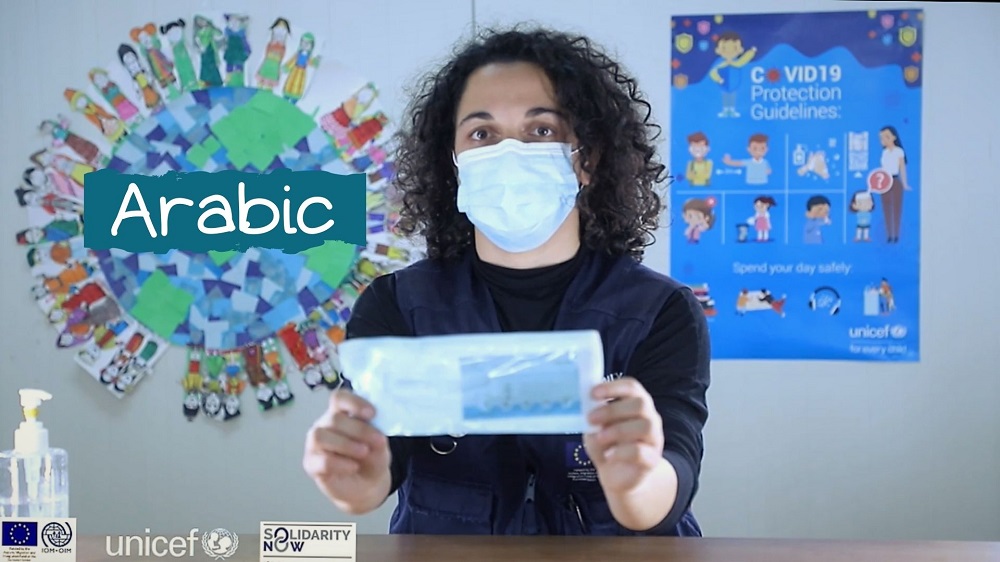
Video with self-test’ instructions, for the children of the open accommodation structures for refugees and migrants


Back to school with safety!

Video with self-test’ instructions, for the children of the open accommodation structures for refugees and migrants.

The SolidarityNow team, following the instructions of EODY (National Public Health Organization) and of the Greek Ministry of Education and Religious Affairs, with the support of IOM Greece (International Organization for Migration), created simple and comprehensible videos with instructions for the proper use of self-tests for all children, translated into 8 different languages: English, French, Arabic, Farsi, Kurmanji, Sorani, Urdu and Somali.

The videos are posted on SolidarityNow’s social media pages and channels and the beneficiaries of the “Child & Family Support Hubs” in the 14 open refugee and migrant accommodation structures that the organization operates in have been informed about them and are already consulting them.

The production of those videos is a joint initiative of SolidarityNow, UNICEF Greece and IOM Greece, in the broader context of the actions implemented with the aim of continuously informing parents, guardians and children about the pandemic and the necessary protection measures.

Find them here: https://youtube.com/playlist?list=PL3_NlSfsgtzQBo6tMWoo5IZoB__Do936Y

*SolidarityNow’s “Child & Family Support Hubs” (CFSH) program is supported by UNICEF Greece and IOM Greece with funding by the EuropeanUnion.

Collaboration of KETHEA Epirus with SolidarityNow for the implementation of actions for the prevention and management of situations related to substance use and addictive behaviors in accommodation structures for unaccompanied minors.


The action concerned two types of interventions, as it was addressed to both the staff and the beneficiaries of the SolidarityNow’s accommodation structures.

Firstly, meetings were held with the staff of the accommodation places of Perama and Konitsa, where there was information-awareness on addiction issues and ways to cope with situations of substance abuse or addiction (internet, gaming, gambling). In the structure of Velventos, the action was implemented in collaboration with KETHEA of Western Macedonia.

Afterwards, secondary prevention actions were carried out in the accommodation areas of unaccompanied children of SolidarityNow, which were addressed to the adolescent beneficiaries.

More specifically, during the intervention, there was information about the services of KETHEA and about addiction issues, through the use of information material and video projection. Issues and difficulties faced by adolescents were also discussed, as well as concerns about substance abuse and addictive behaviors.

In conclusion, emphasis was placed on strengthening identity and individual skills, through the encouragement to set goals and the development of effective ways of managing difficulties.

*SolidarityNow provides care and support services to 175 unaccompanied children, in three temporary accommodation facilities in northern Greece, in the prefectures of Kozani and Ioannina. This emergency intervention is implemented under the general coordination of the Special Secretariat for the Protection of Unaccompanied Minors, the cooperation of the International Organization for Migration (IOM Greece) and the support of the European Commission.

“Child and Family Support Hubs”: Support to more than 12,000 refugees and asylum seekers during 2020


2020, was the fourth consecutive year of operation for the “Child and Family Support Hubs”* (CFSH) program by SolidarityNow. Despite the challenges 2020 presented for all of us, the CFSH program continued to provide services in 14 refugee camps in mainland Greece, reaching more than 12,000 refugees and asylum seekers. The program caters to children, women and families, supporting them to find their footing in refugee camps and to start looking towards their future.

4th phase of the program: January-December 2020

The whole year was marked by the Covid-19 pandemic that swept the entire world, as well as by the ever-changing local developments across the camps of the mainland. Despite the challenging circumstances, field teams maintained their focus to the program’s service pillars, child protection and non-formal education, combining field presence with remote modalities to ensure beneficiaries have access to services even when the pandemic reached its crux.

 The CFSH program’s achievements:

  • 12,527 total beneficiaries: 6,242 children and 6,285 adults

For the CFSH program’s field teams each case is unique, hence the approach adapts to the specific needs of each beneficiary, always towards their best interest. Depending on the nature of each case, the teams respond to emergency incidents, but are also present on site to provide day-to-day support. The new challenge this year presented had, of course, to do with Covid-19. However, field teams rose to the occasion, supporting vulnerable beneficiaries even when in quarantine.

  • 3134 children accessed child protection services
  • 330 unaccompanied children and 90 people with disabilities were supported
  • 214 survivors of sexual and gender-based violence were identified and received specialized support and care
  • 3052 children and 1599 adultsparticipated in non-formal education lessons
  • 2241 women and girlsaccessed the Female Friendly Spaces
  • 2201 adults and children received legal support
  • 3337 adults and children received psychosocial support

Education cannot wait.

During the challenging times of the global pandemic, our presence (virtual or physical) has been key in maintaining touch with the refugee communities and combatting the feeling of isolation caused by the restrictions of movement. In a year where school access was problematic at best, the non-formal education component of the project innovated methods to continue to reach children and enable them to continue their educational pathway. In-person lessons were supplemented with online educational platforms and physical distribution of learning materials; no matter the gravity of the pandemic, teachers found a way to continue to be on their students’ side.

The 2021 target: Child Protection and Education in 14 sites across the country

SolidarityNow continues the CFSH program into 2021. 2020 has taught us to expect the unexpected – in 2021, our teams will carry that insight and continue to devote their best efforts to providing holistic child protection and non-formal education services through the Hubs.

* The “Child and Family Support Hubs” program is jointly supported by UNICEF Greece and IOM Greece with funding by the European Union.

Civil society demands that Greece’s Recovery Plan prioritises making society greener and fairer


70 civil society organisations co-signed an open letter to the Deputy Minister of Finance, Theodoros Skylakakis, initiated by Common Ground and Greenpeace, outlining their priorities for a green and just recovery and seeking more public involvement in developing policies.

Greece, like all other member states, has until the end of April to submit a plan to the EU outlining how it will spend the €32 billion it will receive in recovery funds to overcome the effects of the pandemic. Civil society recognises this as an unprecedented opportunity for a truly just, inclusive, and sustainable transition and seeks transparency in the planning process.

So far, civil society has been largely left out of the process and kept in the dark, despite hopes that it would be inclusive and transparent. “Civil society can play a vital role in the planning and implementation of the Recovery Plan, as it has an excellent knowledge of the reality and has already assisted the state during challenging times. Transparency, participation and accountability are of the outmost importance in order to consolidate trust between the Greek state and is citizens”, declared Antigone Lyberaki, General Manager of SolidarityNow.

Given that recent crises (economic, refugee reception, pandemic) have deepened social inequalities in Greece, the signatories contend that recovery policies should target typically overlooked populations such as impoverished households, the homeless, migrants, and refugees.  At the same time, they call for policies that prioritise protecting the environment and reducing the effects of climate change in order to ensure a sustainable future and stave off future disasters and displacement.

Common Ground and the letter’s co-signers urge the Greek government to:

  • Invite the public, and in particular civil society, to submit their proposals for spending the recovery funds before the government submits its final plan in April and ensure their meaningful participation in the plan’s design, implementation, and monitoring.
  • Prepare a detailed action plan detailing proposed programmes, objectives, beneficiaries and expected impact, which includes valid environmental, social, and economic indicators.
  • Improve clarity and transparency around the process, including regular information exchange sessions with stakeholders and public awareness campaigns.

Why it matters: If the above-mentioned measures are implemented as part of a coordinated effort combined with other initiatives and funding opportunities to strengthen public policies, it will lead Greece out of the pandemic and toward a more just and sustainable future.

After years of austerity, the refugee reception crisis and now the pandemic, this large sum of money can enable society to turn a corner and start truly recovering from economic and social problems. To succeed, Greece must avoid repeating the policies of the past that led us to the difficult position we are in today (confronting rising inequalities, polarisation, injustice, biodiversity loss, and the climate crisis).

Notes to editors

* In July 2020, the European Union launched a €750 billion pandemic recovery fund, of which 37% is earmarked specifically for fighting climate change with the rest going toward other investments and reforms to strengthen resilience, a digital transformation, fairness, and macroeconomic stability. EU member states now have until the end of April to submit their final spending plans to account for their share of the financial aid. Greece will receive €32 billion in a combination of grants and loans.

National Recovery and Resilience Plan: Greece’s official spending plan for the recovery funds.

Read the full draft of our Open Letter – Recovery Plan to the Deputy Minister of Finance.

“12 Tips on How to Protect your Child”, Animation Video by SolidarityNow


Animation Video: “12 Tips on How to Protect your Child”

Campaigning for the safety of children in open accommodation sites

SolidarityNow supports parents in their protective role, spreading awareness and empowering them to assume their inherent responsibilities. Through the “Child and Family Support Hubs”* program that SolidarityNow operates in partnership with UNICEF Greece and IOM Greece, we are present in 14 open accommodation sites across mainland Greece, where we have mapped the threats and dangers posed by these environments to the safety of children.

Parents have the right and duty to protect their children in every possible way, however the parental role is often challenging and complex especially when the environment is precarious. Using our on-the-ground experience, we have created useful tools to keep parents informed on their parental role. One such tool spearheading our campaigns for children’s safety is the new animation video entitled:

“12 Tips on How to Protect your Child”.

The video has been produced in four languages (English, Arabic, Farsi, French). These 12 rules have been distilled to summarize parents’ precautionary actions against a range of potential threats. The new animation videos will be widely disseminated and shared with other field actors, to form the basis of information sessions and campaigns on parental responsibility. Also, SolidarityNow has used these tips as campaigning tools through multiple media: posters and leaflets are posted across all the sites where we are present, keeping parents alert.

We are aiming to continue campaigning for the safety of children in open accommodation sites, using our multimedia tools, to keep parents informed, empowered, and engaged!

*SolidarityNow’s “Child & Family Support Hubs” (CFSH) program is supported by UNICEF Greece and IOM Greece with funding by the European Union.

OPEN LETTER: “ALL CHILDREN HAVE THE RIGHT TO GO TO SCHOOL. DO NOT TAKE THAT AWAY FROM THEM”


TO:

The Prime Minister of the Hellenic Republic, Kyriakos Mitsotakis

The Minister of Education and Religious Affairs of the Hellenic Republic, Niki Kerameus

The President of the European Parliament, David Sassoli

The President of the European Commission, Ursula von der Leyen

The European Commissioner for Innovation, Research, Culture, Education and Youth, Mariya Gabriel

The European Commissioner for Justice and Consumers, Didier Reynders

Athens, March 9, 2021

The undersigned organisations express deep concern about the situation relating to asylum seeking and refugee children’s access to education in Greece over the past few years. Specifically, for the past six years it has not been possible to guarantee smooth and unimpeded access to education for asylum seeking children. As a result, the majority of these children have been deprived of one of their fundamental rights. These issues have become so intense over the last year that one can in fact refer to an extensive process of “deschooling”.

In particular:

On the islands where children stay in Reception and Identification Centres as well as in Pre-removal Detention Centres for Foreigners, access to schools in the local community is almost non-existent[1]. Moreover, serious delays and obstacles have been observed, resulting in a huge gap between the number of enrolled children and the children that actually attend school.

Nevertheless, the situation is equally worrying in the refugee camps on the mainland. Ιn some places the issues observed have to do with inconsistent interpretation of COVID-19 related movement restriction policies by the Greek authorities, which ends up discriminating against children who, as a result, are not being allowed to leave these camps. At the same time, during the lockdowns, due to the lack of necessary technical infrastructure for online learning at the camps, refugee and asylum seeking children are further excluded from the education process. Μoreover, other issues have been observed in quite a few locations nationwide. These include the lack of transportation to schools; understaffing and malfunctioning of reception classes; an insufficient number of spots available at schools and kindergartens; problems resulting from unjustified behaviour by school administrations–but also by local communities– who are reacting against the prospect of refugee children attending public schools. All these issues are compounded by the worrying absence of any concern by authorities to include these children in the educational process.

Several of the undersigned organisations presented the above-mentioned issues to the competent ministries, via a private letter, on 3/2/2021. In response to this letter, co-signing organisations were invited to an online meeting with the relevant authorities on 26/2/2021. We acknowledge and welcome the willingness of the authorities to launch a dialogue process with civil society regarding the pressing issue of refugee education. Still, the current situation, with its critical shortcomings, requires that immediate action is taken by the authorities so that not one more school day is missed.

Αccording to Greek and European law[2], education is provided free of charge and is compulsory for children aged 4 to 15, including education intended for asylum seeking children. Articles 28 and 29 of the International Convention on the Rights of the Child, which has been transposed into national law by the Hellenic Republic (Law 2101/1992), foresee that all children, without any exceptions, have equal rights to primary and secondary education.

It is vital that these children attend school because it is their right, first and foremost. However, continuing education is also an essential element to counteract some of the uncertainty and stress the COVID-19 pandemic has meant for children and their families. Added to this most children have already missed precious time out of their education as a result of conflict, insecurity or other conditions in their country of origin or countries of transit during their often-arduous journeys to reach Greece. School access is a decisive factor in guaranteeing an organised daily routine and a safe environment in which to learn and grow; factors of vital importance for the mental health and personality development[3] of children but also for the smooth operation of society as a whole.

For all the reasons outlined above, we call upon the Greek government to take immediate action to guarantee equal, substantive, and quality education to children of all ages and nationalities residing both on the islands and on the mainland. More specifically, we call upon the Greek authorities to guarantee that:

  • The decisions taken regarding children’s access to education are clear and implemented, removing any obstacles that may arise and applying harmonised practices to prevent them from becoming empty words.
  • Children have unobstructed access to education during their stay in the country, irrespective of the conditions under which they live, of their residence status or that of their parents or guardians. To that end, we propose that the option of issuing an attendance card for pupils on the move be considered.
  • Any policy of formal education being provided within closed-type or controlled hosting facilities is abandoned, as the creation of “ghetto schools” is essentially far removed from the idea of quality education and constitutes a violation of the law[4].
  • Mechanisms to monitor the situation in the field of refugee education are established and any problems are immediately tackled, doing so over a long horizon to guarantee equal educational opportunities for all pupils and to combat school dropout.
  • Extensive and measurable awareness-raising actions are implemented for schools and local communities to ensure everyone is aware of the right of all children to attend school but also the mutual benefits arising from cultivating a multicultural society.
  • Administrators and headmasters of schools do not only encourage school refugee pupils to attend school but also seek out the children residing in their area and see to their enrolment and attendance as foreseen by the relevant provisions on compulsory attendance, and do not in any way thwart the children’s enrolment and attendance.

We also call upon European leaders to ensure the implementation of European law in accordance with the Charter of Fundamental Rights of the European Union and the International Convention on the Rights of the Child, by which our country is also bound, and that no violation of EU law be tolerated especially if such violations put groups of people, such as children, at risk.

Children’s fundamental access to education is vital for the future of us all.

ΤΗΕ SIGNATORY ORGANIZATIONS:

ACTION FOR EDUCATION
ACTIONAID HELLAS
ARSIS – ASSOCIATION FOR THE SOCIAL SUPPORT OF YOUTH
BABEL DAY CENTER
CARITAS HELLAS

CHANGEMAKERS LAB

CHOOSE LOVE – HELP REFUGEES

DANISH REFUGEE COUNCIL

ECHO100PLUS
ELIX
EQUAL RIGHTS BEYOND BORDERS
EUROPE MUST ACT
GREEK ASSOCIATION OF PEOPLE LIVING WITH HIV “POSITIVE VOICE”
GREEK COUNCIL FOR REFUGEES
GREEK FORUM OF MIGRANTS (GFM)
HUMANRIGHTS360

INTERNATIONAL RESCUE COMMITTEE (IRC)

INTERSOS HELLAS
IRIDA WOMEN’S CENTER
LEGAL CENTRE LESVOS
LESVOS SOLIDARITY
MELISSA NETWORK
METADRASI ACTION FOR MIGRATION AND DEVELOPMENT
NETWORK FOR CHILDREN’S RIGHTS
ODYSSEA
REFUGEE LEGAL SUPPORT (RLS)
REFUGEE RIGHTS EUROPE (RRE)
REFUGEE SUPPORT AEGEAN (RSA)
REFUGEES INTERNATIONAL
SOLIDARITYNOW
STILL I RISE
TERRE DES HOMMES HELLAS
ZEUXIS

[1] According to the information provided by the Assistant Ombudsman for the Rights of the Child at a meeting of the Network for the Rights of Children on the Move, on 13/02/2021, based on a survey carried out by that Independent Authority.

[2] Including but not limited to: Article 14 of the Charter of Fundamental Rights of the European Union concerning the right to education, Article 14 of Directive 2013/33 / EU and Article 27 of Directive 2011/95 / EU on recognition. In Greek law, Articles 28 and 51 of Law 4636/2019 foresee the education and access to education of minor asylum seekers and beneficiaries of international protection and Article 60(h) of Law 4636/2019 foresees the access of unaccompanied minors to education. Furthermore, Article 21(7) and (8) of Law 4251/2014 and Article 40 of Law 2910/2001 foresee unimpeded access of third country minors to education. On the banning of discrimination see Article 21 of the Charter of Fundamental Rights and Article 14 of the European Convention on Human Rights read in conjunction with Article 2 of Protocol 1 of the ECHR, and in Greek law see Article 3(2)(c)  Law 4443/2016.

[3] https://ec.europa.eu/echo/what/humanitarian-aid/education-emergencies_en

[4] Law 2101/1992 and 4251/2014 and the case A. Lavida and Others v. Greece: https://docs.google.com/viewerng/viewer?url=http://www.curia.gr/wp-content/uploads/2013/05/AFFAIRE-LAVIDA-ET-AUTRES-c.-GRECE.pdf

IOM and SolidarityNow express their deep grief


24/2/2021

Announcement

IOM and SolidarityNow express their deep grief and sincere condolences to the family of Zhwan, a four-year old boy from Iraq, who lost his life after a fire in the open accommodation site in Thiva. IOM and SolidarityNow – in partnership with UNICEF – protection teams, consisting of psychologists, social workers, legal assistants and interpreters, in collaboration with the camp management are present on the ground to support the family and the resident population.

The Greek Authorities, local Fire Service department and Hellenic Police have already started an investigation for the causes of fire.