ΔΕΛΤΙΟ ΤΥΠΟΥ | Στη Θεσσαλονίκη παρουσιάζεται το EEA Civil Society Fund Greece ύψους €14,3 εκ.


Με χρηματοδότηση από την Ισλανδία, το Λιχτενστάιν και τη Νορβηγία, και διαχειριστή επιχορήγησης το Ίδρυμα Μποδοσάκη και το SolidarityNow.

Ανοιχτές οι 4 πρώτες προσκλήσεις επιχορήγησης συνολικού ύψους €5,1 εκ. 

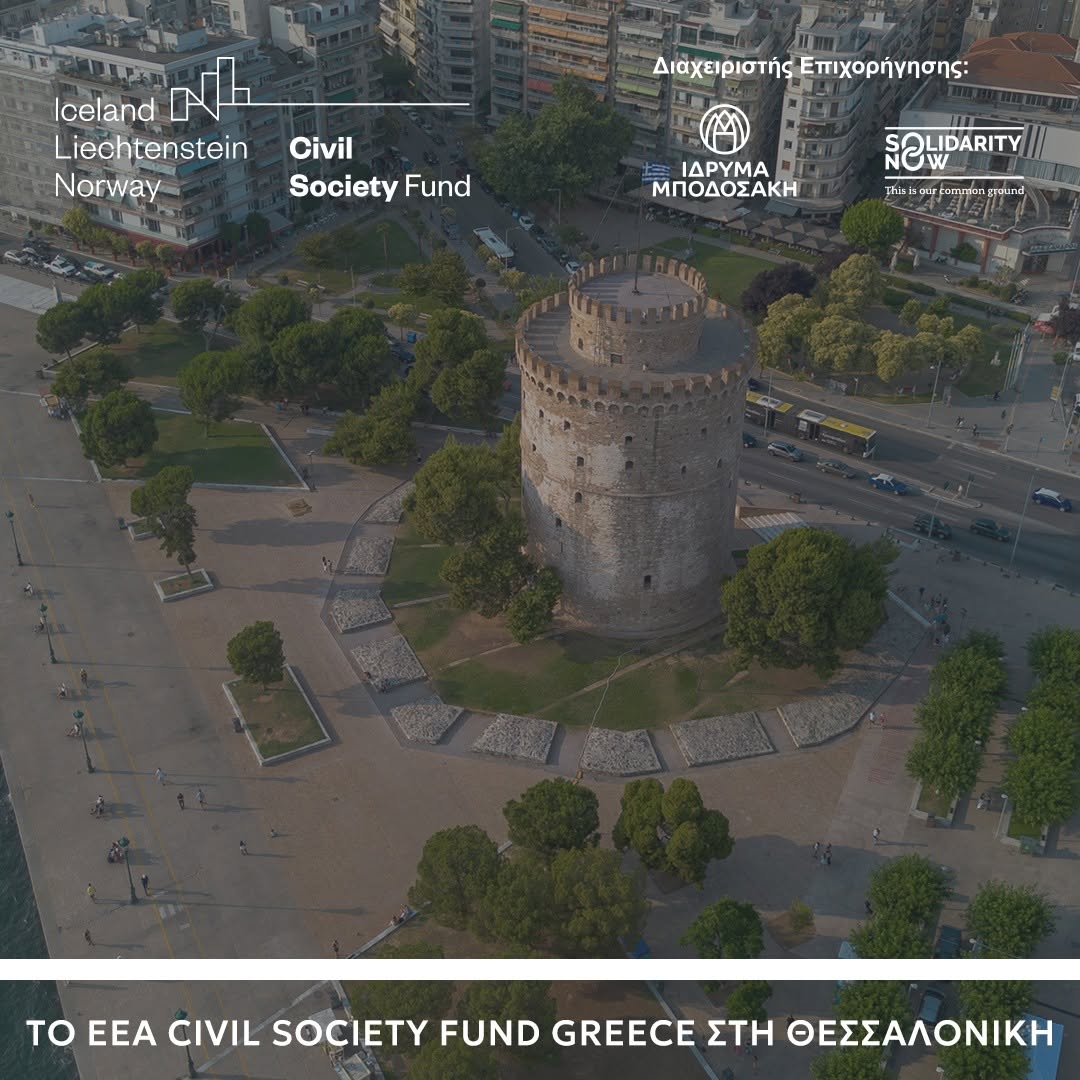
Το Ίδρυμα Μποδοσάκη και το SolidarityNow, ως Διαχειριστής Επιχορήγησης του EEA Civil Society Fund Greece, διοργανώνουν την Πέμπτη 8 Οκτωβρίου 2026, στις 15:00, στο Δημαρχείο Θεσσαλονίκης, εκδήλωση παρουσίασης του προγράμματος, με στόχο την ενημέρωση των οργανώσεων και φορέων της Κοινωνίας των Πολιτών στη Θεσσαλονίκη και τη Βόρεια Ελλάδα για τις διαθέσιμες ευκαιρίες χρηματοδότησης και υποστήριξης.

Οι ενδιαφερόμενοι μπορούν να δηλώσουν τη συμμετοχή τους έως τη Δευτέρα 5 Οκτωβρίου εδώ.

Το πρόγραμμα χρηματοδοτείται από την Ισλανδία, το Λιχτενστάιν και τη Νορβηγία στο πλαίσιο των EEA Grants και αποτελεί μέρος της συνεισφοράς των τριών δωρητριών χωρών για μια πιο δημοκρατική, συμπεριληπτική και ανθεκτική Ευρώπη. Στόχος του EEA Civil Society Fund Greece είναι η προώθηση μιας δυναμικής και ανθεκτικής Κοινωνίας των Πολιτών που προστατεύει και προάγει τη δημοκρατία, το κράτος δικαίου και τα ανθρώπινα δικαιώματα. Διαχειριστής επιχορήγησης του EEA Civil Society Fund στην Ελλάδα είναι το Ίδρυμα Μποδοσάκη από κοινού με το SolidarityNow.

Το EEA Civil Society Fund Greece μέσω συνολικά 12 ανοιχτών προσκλήσεων επιχορήγησης, θα χρηματοδοτήσει περισσότερα από 120 έργα, θα υποστηρίξει οργανώσεις και πρωτοβουλίες που συμβάλλουν στην προστασία και προώθηση της δημοκρατίας, του κράτους δικαίου και των ανθρώπινων δικαιωμάτων, ενισχύοντας παράλληλα την ικανότητα των οργανώσεων να ανταποκρίνονται στις σύγχρονες κοινωνικές προκλήσεις και να συμμετέχουν ενεργά στον δημόσιο διάλογο. 

Ανοιχτές προσκλήσεις επιχορήγησης

Στο πλαίσιο της εκδήλωσης στη Θεσσαλονίκη θα παρουσιαστούν αναλυτικά οι τέσσερις πρώτες ανοιχτές προσκλήσεις επιχορήγησης του προγράμματος, συνολικού ύψους €5,1 εκ., για τις εξής θεματικές προτεραιότητες:

  • Προώθηση της Πολυφωνίας των Μέσων Ενημέρωσης και Ενίσχυση της Ακεραιότητας της Πληροφόρησης – €800.000, για τη στήριξη πρωτοβουλιών που προάγουν την πολυφωνία και την ελευθερία των μέσων ενημέρωσης και την ακεραιότητα της πληροφόρησης.
  • Προώθηση των Ανθρώπινων Δικαιωμάτων, της Κοινωνικής Δικαιοσύνης και της Καταπολέμησης των Διακρίσεων – €2 εκ., για τη στήριξη έργων που ενισχύουν την προστασία και προώθηση των ανθρώπινων δικαιωμάτων, την κοινωνική δικαιοσύνη και την καταπολέμηση των διακρίσεων, καθώς και δράσεων άμεσης απόκρισης σε επείγουσες προκλήσεις.
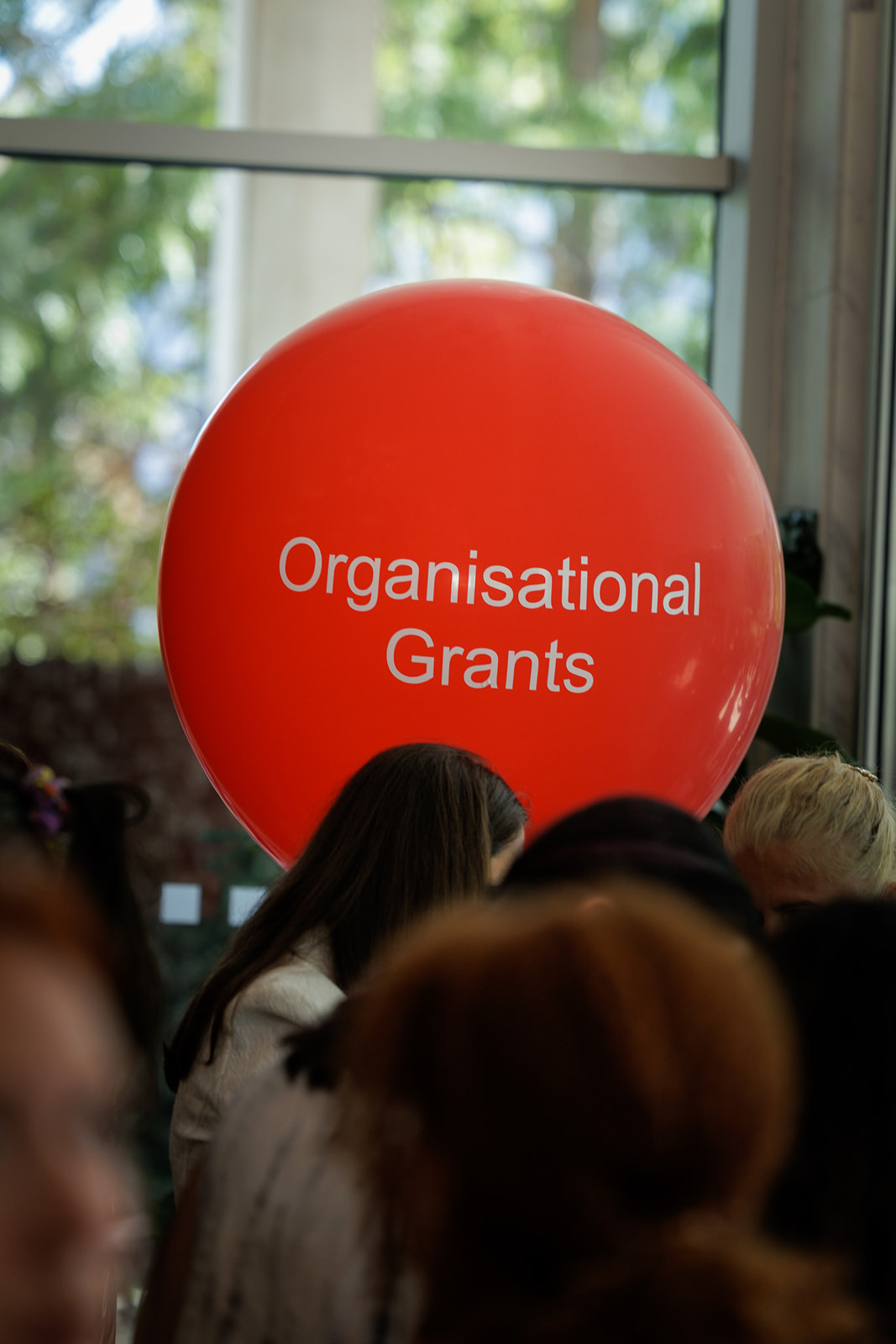
  • Οργανωσιακές Επιχορηγήσεις προς Οργανώσεις της Κοινωνίας των Πολιτών που Προάγουν τη Δημοκρατία, το Κράτος Δικαίου και τα Ανθρώπινα Δικαιώματα – €2,2 εκατ., για τη στήριξη της θεσμικής ικανότητας, της επιχειρησιακής ανθεκτικότητας και της μακροπρόθεσμης βιωσιμότητας εδραιωμένων οργανώσεων.
  • Δράσεις Ενεργού Συμμετοχής των Πολιτών – €100.000, για τη στήριξη μικρών οργανώσεων στην υλοποίηση συμμετοχικών και συμπεριληπτικών πρωτοβουλιών που ενισχύουν την ενεργό συμμετοχή των πολιτών στα κοινά.

Οι ενδιαφερόμενες οργανώσεις μπορούν να υποβάλουν τις αιτήσεις τους έως 15 Δεκεμβρίου 2026. Περισσότερες πληροφορίες για τις ανοιχτές προσκλήσεις και τη διαδικασία υποβολής αιτήσεων είναι διαθέσιμες εδώ.

Ενημέρωση και δικτύωση στη Θεσσαλονίκη

Κατά τη διάρκεια της εκδήλωσης θα παρουσιαστούν οι στόχοι και οι δράσεις του EEA Civil Society Fund Greece, το οποίο θα διαρκέσει έως το 2031, καθώς και τα διαφορετικά εργαλεία μέσω των οποίων θα στηριχθούν οι οργανώσεις της Κοινωνίας των Πολιτών: τις Δράσεις Ανάπτυξης Ικανοτήτων, Περιφερειακής Συνεργασίας και Διμερών Σχέσεων, τα οποία θα προσφέρουν ευκαιρίες για την ανάπτυξη οργανωσιακών ικανοτήτων, τη δικτύωση και τη συνεργασία σε εθνικό και ευρωπαϊκό επίπεδο.

Η εκδήλωση θα αποτελέσει παράλληλα ευκαιρία για διάλογο και ανταλλαγή απόψεων με τις οργανώσεις και τους φορείς της Κοινωνίας των Πολιτών στη Βόρεια Ελλάδα, ενώ θα ολοκληρωθεί με θεματική δικτύωση, δημιουργώντας έναν χώρο για την ανάπτυξη νέων συνεργασιών.

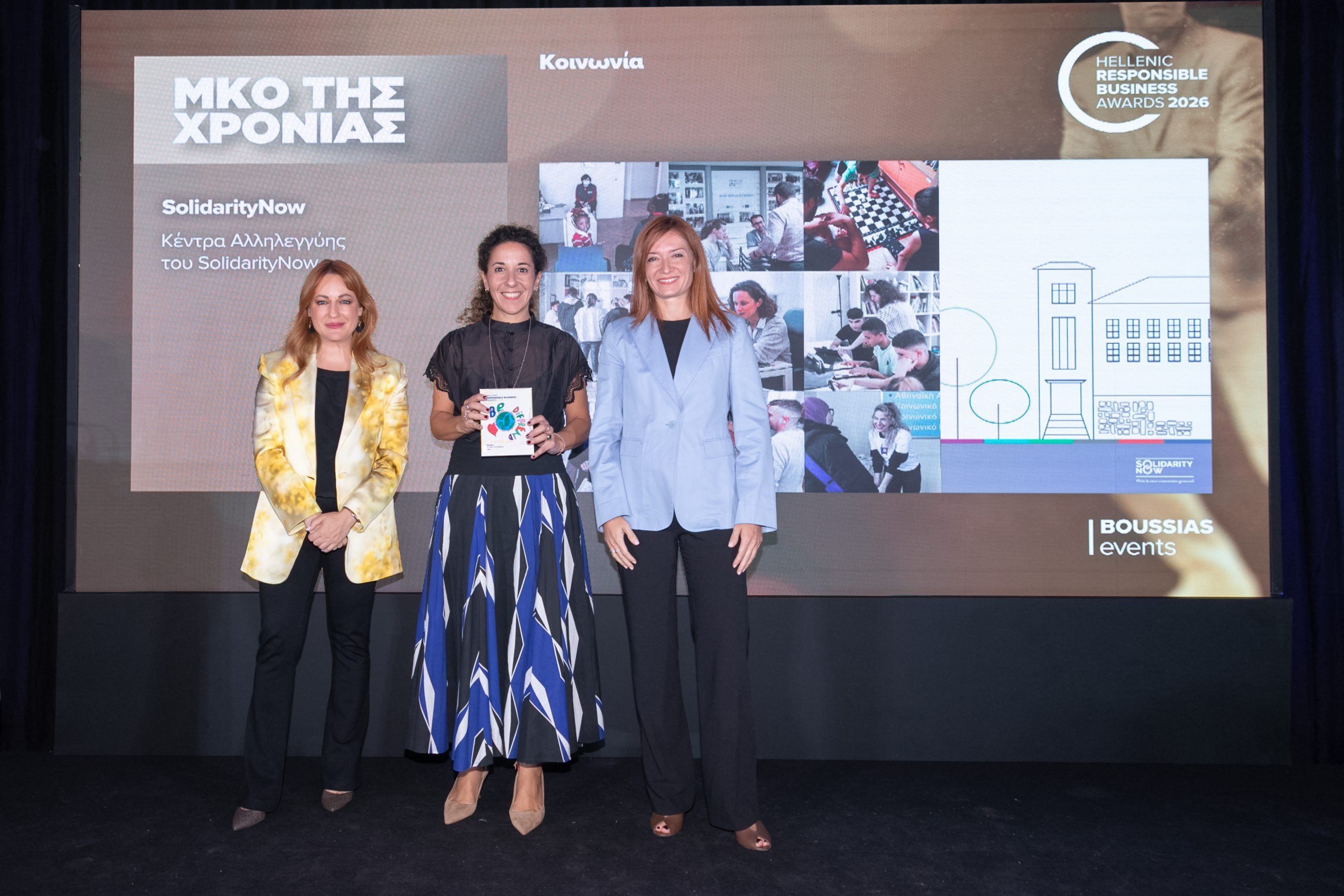
PRESS RELEASE | SolidarityNow named “NGO of the Year” at the Hellenic Responsible Business Awards for its Solidarity Centers


SolidarityNow was awarded the Gold “NGO of the Year” distinction at this year’s Hellenic Responsible Business Awards, in the Society category, in recognition of the work and social impact of its Solidarity Centers in Athens and Thessaloniki.

This distinction acknowledges the long-standing contribution of the Solidarity Centers in supporting people at risk of poverty and social exclusion, while promoting social inclusion and cohesion. Through a comprehensive approach that combines psychosocial support, legal counselling and representation, employment counselling and labour market integration, accounting services, educational activities, and access to essential goods and services, the Solidarity Centers have helped thousands of people take meaningful steps towards greater autonomy and dignity.

Commenting on the award, the organization’s General Manager, Marilyn Polena, said:

“This recognition belongs first and foremost to the people who place their trust in our Solidarity Centers every day, as well as to our teams who turn solidarity into action. It is a testament to our collective effort and our commitment to building a more cohesive society with equal opportunities for everyone.”

Since their establishment, the Solidarity Centers have served as safe and accessible spaces where every person can receive tailored support, regardless of origin, gender, age, or social background. To date, the Centers have supported more than 85,000 people.

SolidarityNow Deputy General Manager, Fay Koutzoukou, added:

“The Solidarity Centers demonstrate in practice that when we invest in inclusion, protection, and empowerment, we create meaningful opportunities and sustainable change for society. This award gives us even greater motivation to continue our work. We would like to thank the institutional and individual supporters of our Solidarity Centers, as well as the Municipality of Athens, for their smooth and fruitful collaboration throughout all these years.”

The awards ceremony took place on 22 September 2026 under the auspices of the Ministry of Environment and Energy, SEV Hellenic Federation of Enterprises, and the Greek Tourism Confederation (SETE).

ΔΕΛΤΙΟ ΤΥΠΟΥ | €14,3 εκ. για τη στήριξη της Κοινωνίας των Πολιτών στην Ελλάδα

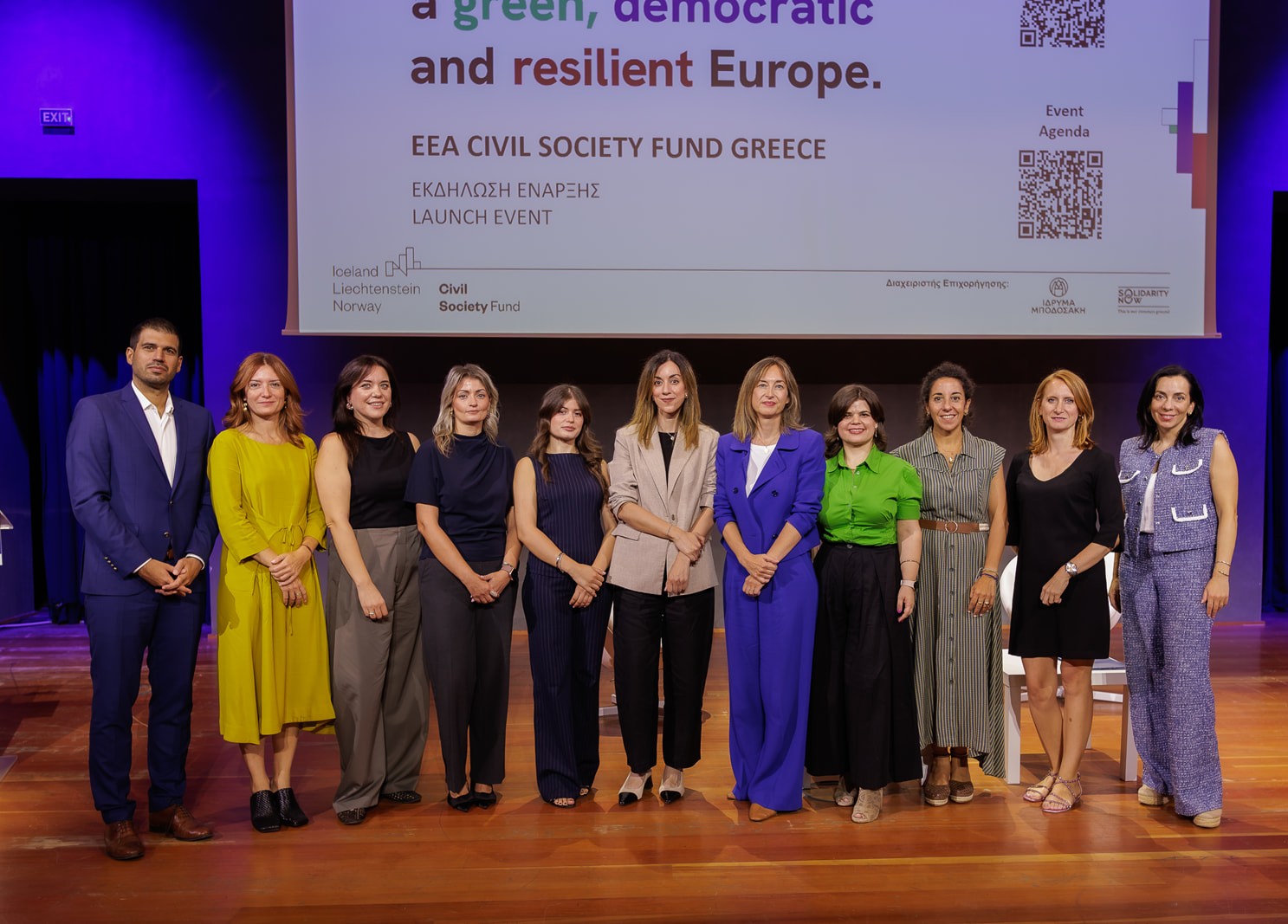
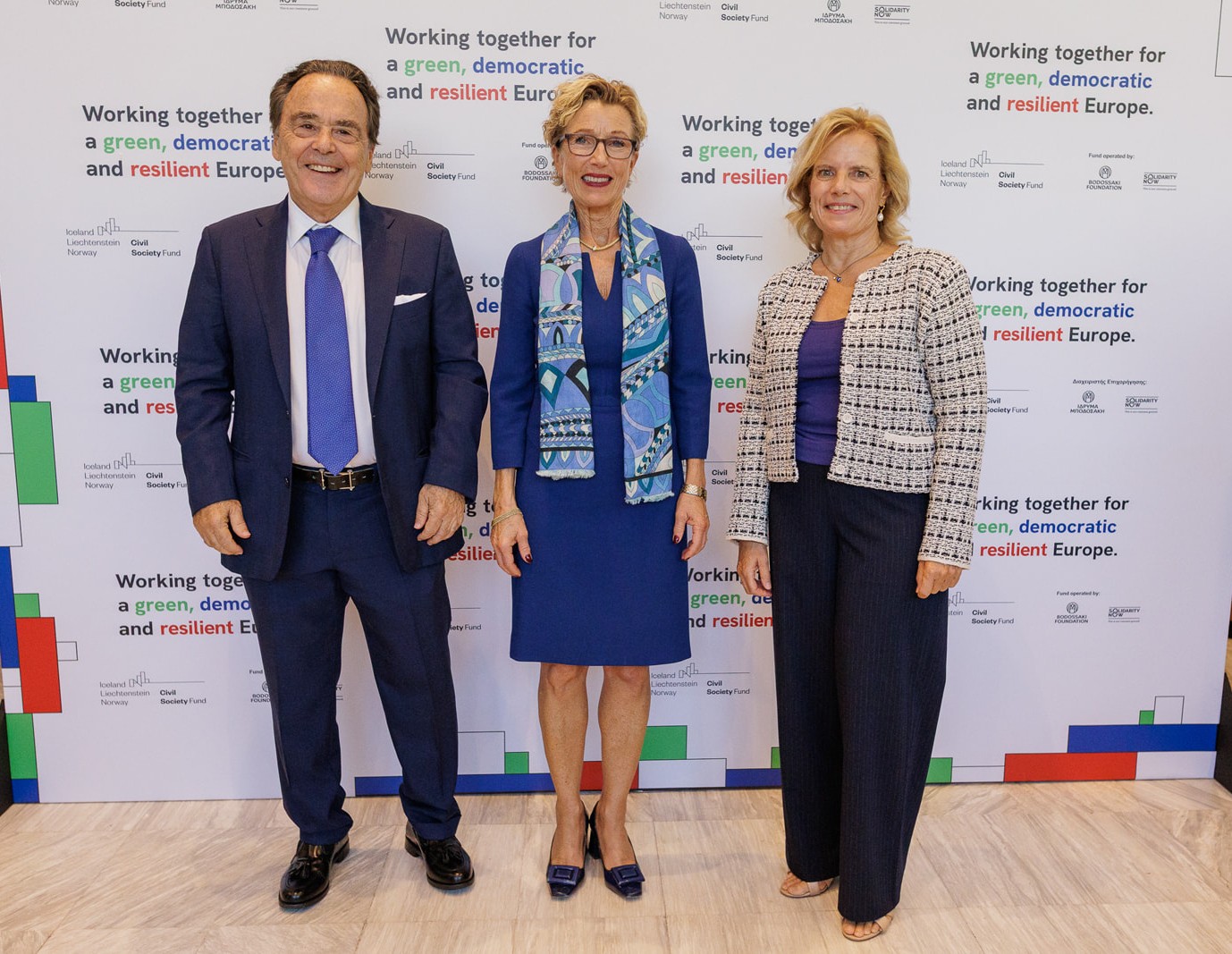
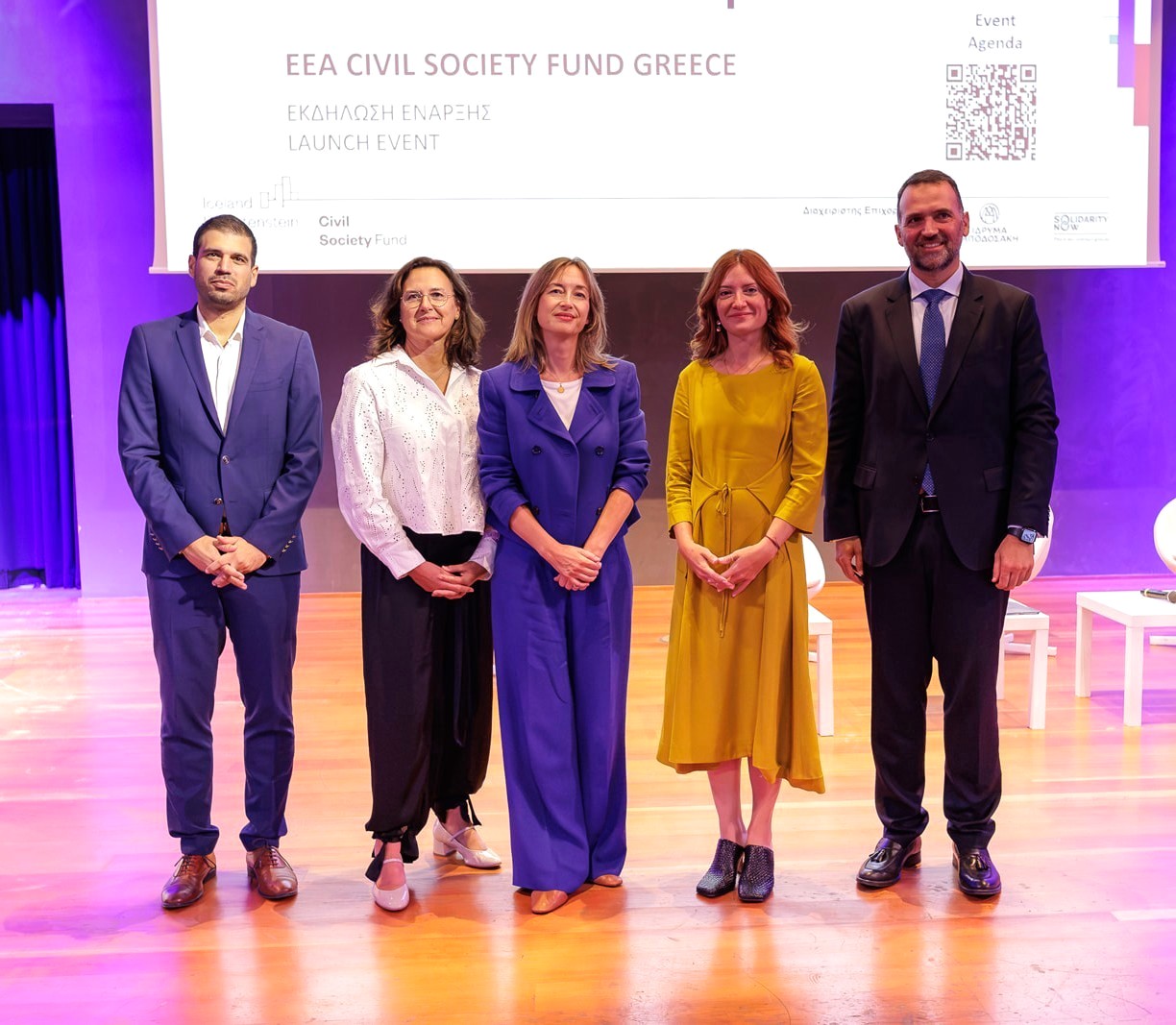
Η ομάδα του EEA Civil Society Fund Greece από το SolidarityNow & το Ίδρυμα Μποδοσάκη

Νέο πρόγραμμα EEA Civil Society Fund Greece, με χρηματοδότηση από την Ισλανδία, το Λιχτενστάιν και τη Νορβηγία, και διαχειριστή επιχορήγησης το Ίδρυμα Μποδοσάκη και το SolidarityNow 

Ανοιχτές οι 4 πρώτες προσκλήσεις επιχορήγησης συνολικού ύψους €5,1 εκ.

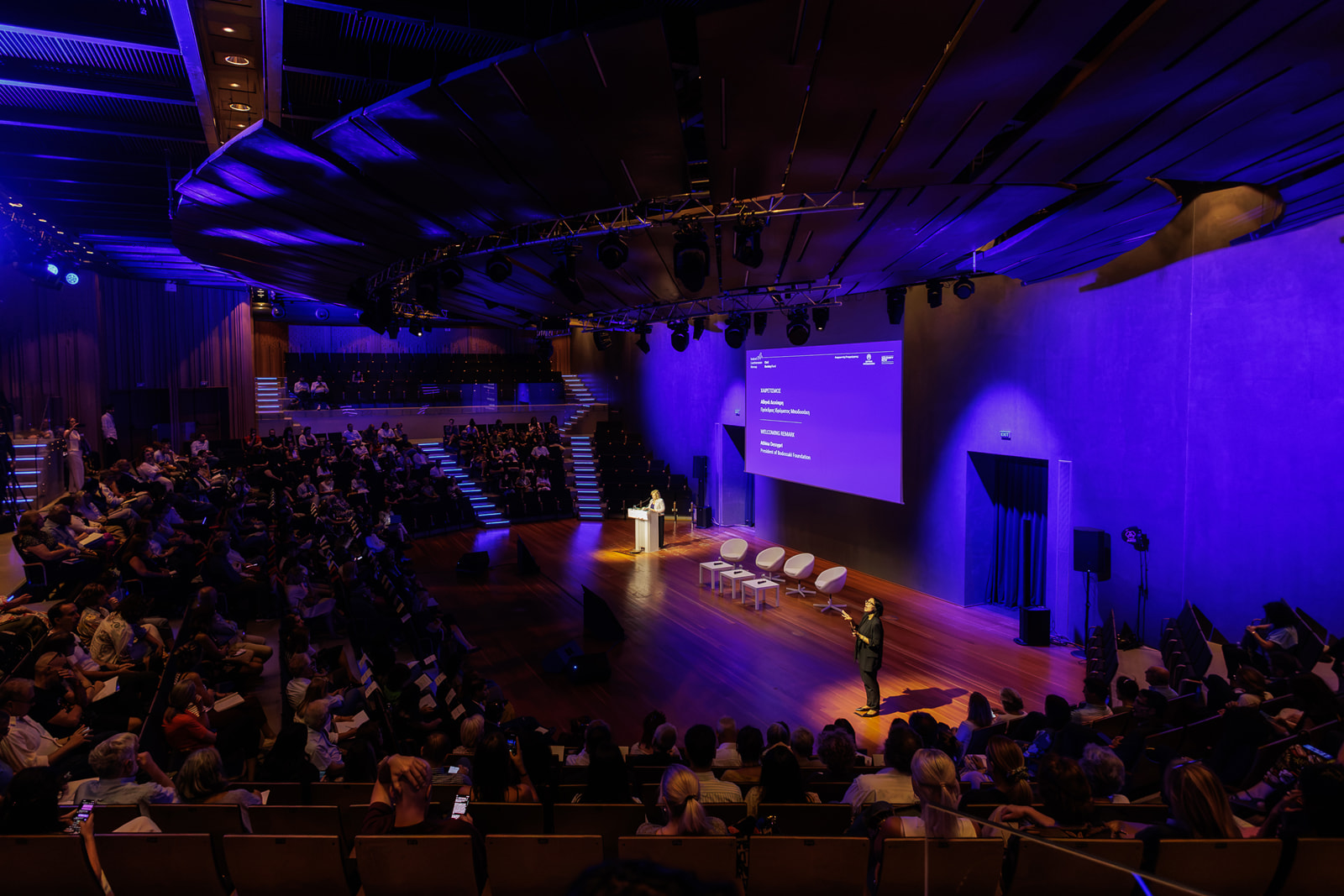
Το EEA Civil Society Fund Greece, ύψους €14,3 εκ., ξεκίνησε επίσημα με την εκδήλωση έναρξης την Τετάρτη 16 Σεπτεμβρίου 2026, στο Ωδείο Αθηνών, παρουσία εκπροσώπων της Κοινωνίας των Πολιτών, καθώς και δημόσιων και θεσμικών φορέων.

Το πρόγραμμα χρηματοδοτείται από την Ισλανδία, το Λιχτενστάιν και τη Νορβηγία στο πλαίσιο των EEA Grants και αποτελεί μέρος της συνεισφοράς των τριών δωρητριών χωρών για μια πιο δημοκρατική, συμπεριληπτική και ανθεκτική Ευρώπη. Στόχος του EEA Civil Society Fund Greece είναι η προώθηση μιας δυναμικής και ανθεκτικής Κοινωνίας των Πολιτών που προστατεύει και προάγει τη δημοκρατία, το κράτος δικαίου και τα ανθρώπινα δικαιώματα. Διαχειριστής επιχορήγησης του EEA Civil Society Fund στην Ελλάδα είναι το Ίδρυμα Μποδοσάκη από κοινού με το SolidarityNow.

Το EEA Civil Society Fund Greece μέσω συνολικά 12 ανοιχτών προσκλήσεων επιχορήγησης, θα χρηματοδοτήσει περισσότερα από 120 έργα, θα υποστηρίξει οργανώσεις και πρωτοβουλίες που συμβάλλουν στην προστασία και προώθηση της δημοκρατίας, του κράτους δικαίου και των ανθρώπινων δικαιωμάτων, ενισχύοντας παράλληλα την ικανότητα των οργανώσεων να ανταποκρίνονται στις σύγχρονες κοινωνικές προκλήσεις και να συμμετέχουν ενεργά στον δημόσιο διάλογο.

Ανοικτές προσκλήσεις επιχορήγησης

Στο πλαίσιο της εκδήλωσης παρουσιάστηκαν οι τέσσερις πρώτες ανοιχτές προσκλήσεις επιχορήγησης του προγράμματος, συνολικού ύψους €5,1 εκ., για τις εξής θεματικές προτεραιότητες:

  • Προώθηση της Πολυφωνίας των Μέσων Ενημέρωσης και Ενίσχυση της Ακεραιότητας της Πληροφόρησης – €800.000, για τη στήριξη πρωτοβουλιών που προάγουν την πολυφωνία και την ελευθερία των μέσων ενημέρωσης και την ακεραιότητα της πληροφόρησης.
  • Προώθηση των Ανθρώπινων Δικαιωμάτων, της Κοινωνικής Δικαιοσύνης και της Καταπολέμησης των Διακρίσεων – €2 εκ., για τη στήριξη έργων που ενισχύουν την προστασία και προώθηση των ανθρώπινων δικαιωμάτων, την κοινωνική δικαιοσύνη και την καταπολέμηση των διακρίσεων, καθώς και δράσεων άμεσης απόκρισης σε επείγουσες προκλήσεις.
  • Οργανωσιακές Επιχορηγήσεις προς Οργανώσεις της Κοινωνίας των Πολιτών που Προάγουν τη Δημοκρατία, το Κράτος Δικαίου και τα Ανθρώπινα Δικαιώματα – €2,2 εκατ., για τη στήριξη της θεσμικής ικανότητας, της επιχειρησιακής ανθεκτικότητας και της μακροπρόθεσμης βιωσιμότητας εδραιωμένων οργανώσεων.
  • Δράσεις Ενεργού Συμμετοχής των Πολιτών – €100.000, για τη στήριξη μικρών οργανώσεων στην υλοποίηση συμμετοχικών και συμπεριληπτικών πρωτοβουλιών που ενισχύουν την ενεργό συμμετοχή των πολιτών στα κοινά.

Οι ενδιαφερόμενες οργανώσεις μπορούν να υποβάλουν τις αιτήσεις τους έως 15 Δεκεμβρίου 2026. Περισσότερες πληροφορίες για τις ανοιχτές προσκλήσεις και τη διαδικασία υποβολής αιτήσεων είναι διαθέσιμες εδώ.

Ένας νέος κύκλος στήριξης και συνεργασίας

Στην εκδήλωση έναρξης του EEA Civil Society Fund Greece, το οποίο θα διαρκέσει ως το 2031, παρουσιάστηκαν οι στόχοι και οι δράσεις του και τα διαφορετικά εργαλεία μέσω των οποίων θα στηριχθούν οι οργανώσεις της Κοινωνίας των Πολιτών: τα Προγράμματα Ανάπτυξης Ικανοτήτων, Περιφερειακής Συνεργασίας και Διμερών Συνεργασιών, τα οποία θα προσφέρουν ευκαιρίες για την ανάπτυξη οργανωσιακών ικανοτήτων, τη δικτύωση και τη συνεργασία σε εθνικό και ευρωπαϊκό επίπεδο.

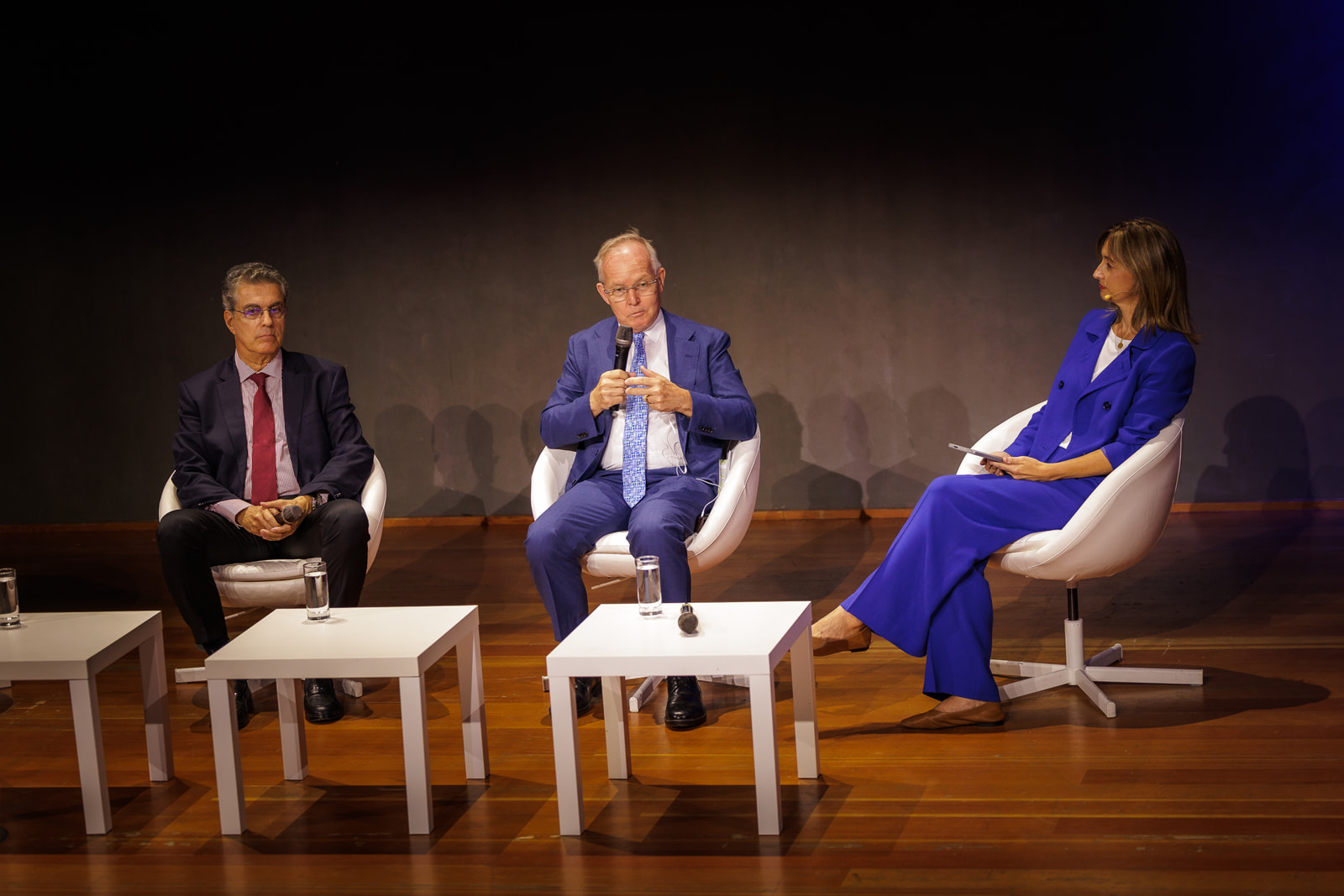
Στο πλαίσιο της εκδήλωσης πραγματοποιήθηκε επίσης συζήτηση με θέμα «Αξιοπιστία της Ενημέρωσης και Ανθρώπινα Δικαιώματα», με τη συμμετοχή του Πρέσβη Jan Braathu, Εκπροσώπου του ΟΑΣΕ για την Ελευθερία των Μέσων Ενημέρωσης, και του Λίνου-Αλέξανδρου Σισιλιάνου, Προέδρου του Ιδρύματος Μαραγκοπούλου για τα Δικαιώματα του Ανθρώπου, Καθηγητή στη Νομική Σχολή του Εθνικού και Καποδιστριακού Πανεπιστημίου Αθηνών και πρώην Προέδρου του Ευρωπαϊκού Δικαστηρίου Δικαιωμάτων του Ανθρώπου. Η συζήτηση ανέδειξε τη σημασία της πρόσβασης σε αξιόπιστη ενημέρωση, της ελευθερίας των μέσων ενημέρωσης και της προστασίας των ανθρώπινων δικαιωμάτων για τη λειτουργία μιας ισχυρής και ανθεκτικής δημοκρατίας.

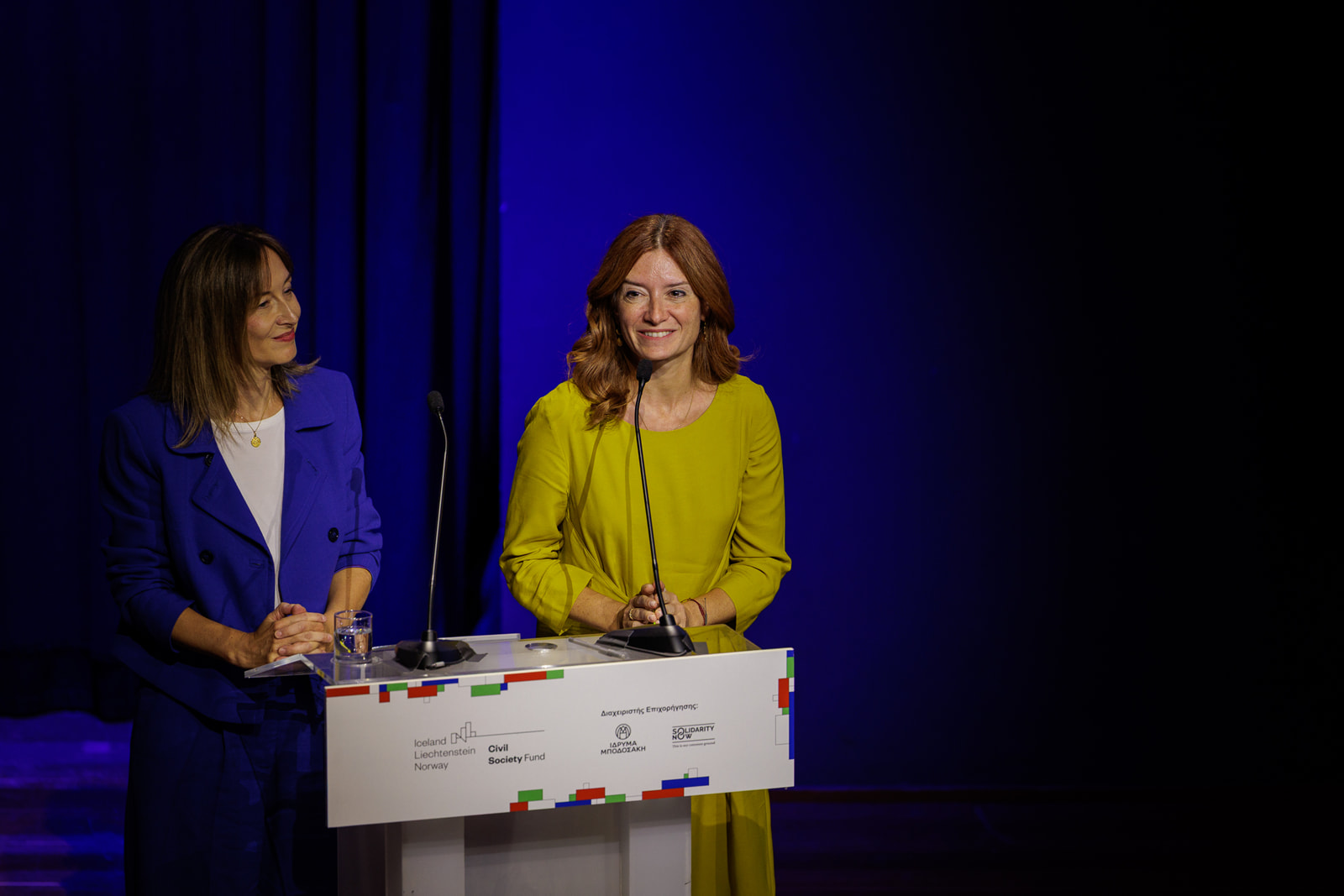
Χαιρετισμό απηύθυναν η Αθηνά Δεσύπρη, Πρόεδρος του Ιδρύματος Μποδοσάκη, ο Στέλιος Ζαββός, Πρόεδρος του SolidarityNow, και η Α.Ε. Harriet Elisabeth Berg, Πρέσβης της Νορβηγίας στην Ελλάδα.

«Η σημερινή έναρξη του EEA Civil Society Fund Greece σηματοδοτεί την αρχή ενός νέου και σημαντικού κεφαλαίου για την Κοινωνία των Πολιτών στην Ελλάδα», ανέφερε η Αθηνά Δεσύπρη, ευχαριστώντας τις δωρήτριες χώρες για τη διαχρονική στήριξή τους στη δημοκρατία, τα ανθρώπινα δικαιώματα και την Κοινωνία των Πολιτών στη χώρα μας. Αναφερόμενη στην επιλογή του Ιδρύματος Μποδοσάκη, για τρίτη φορά, ως Διαχειριστή Επιχορήγησης προγράμματος των EEA Grants τόνισε ότι οι στόχοι του CSF ευθυγραμμίζονται με το όραμα του Ιδρύματος για μια κοινωνία ίσων ευκαιριών, με δυνατότητες και προοπτική για όλους, υπογραμμίζοντας παράλληλα τη δέσμευση του Ιδρύματος για αποτελεσματική αξιοποίηση της χρηματοδότησης και δημιουργία μακροπρόθεσμου αντίκτυπου. «Σε μια εποχή αυξανόμενης πόλωσης, θα επενδύουμε σε πρωτοβουλίες που ενώνουν ανθρώπους, ενισχύουν την κοινωνική συνοχή και τη δημοκρατική συμμετοχή», σημείωσε.

O Στέλιος Ζαββός, δήλωσε: «Το EEA Civil Society Fund Greece αποτελεί μια σημαντική επένδυση στις οργανώσεις και στους ανθρώπους που εργάζονται καθημερινά για μια πιο δημοκρατική, συμπεριληπτική και δίκαιη κοινωνία. Σε μια περίοδο σύνθετων προκλήσεων, η ανάγκη για οργανώσεις που υπερασπίζονται τα ανθρώπινα δικαιώματα και ενισχύουν τη συμμετοχή των πολιτών στο δημόσιο διάλογο είναι πιο επιτακτική από ποτέ. Γιατί μια ισχυρή και ανεξάρτητη Κοινωνία των Πολιτών βρίσκεται στον πυρήνα μιας ανθεκτικής δημοκρατίας. Ως SolidarityNow, είμαστε ιδιαίτερα περήφανοι που, μαζί με το Ίδρυμα Μποδοσάκη, αναλαμβάνουμε εκ νέου τη διαχείριση αυτού του σημαντικού προγράμματος, το οποίο θα υλοποιήσουμε με διαφάνεια, αξιοκρατία και ουσιαστική συνεργασία με την Κοινωνία των Πολιτών. Για εμάς, οι οργανώσεις δεν είναι απλώς αποδέκτες της χρηματοδότησης. Είναι οι εταίροι μας και, κυρίως, οι φορείς της αλλαγής που θέλουμε να δούμε στην κοινωνία».

Η Πρέσβης της Νορβηγίας στην Ελλάδα, Harriet E. Berg, δήλωσε: «Η δημοκρατία δεν είναι δεδομένη. Σε ολόκληρη την Ευρώπη, παρατηρούμε έντονες πιέσεις προς την Κοινωνία των Πολιτών, αυξανόμενη παραπληροφόρηση και συνεχείς προσπάθειες υπονόμευσης της εμπιστοσύνης στους δημοκρατικούς θεσμούς. Μέσω του EEA Grants Civil Society Fund, η Νορβηγία, η Ισλανδία και το Λιχτενστάιν κάνουν μια σαφή επιλογή: να σταθούν στο πλευρό των πολιτών, των δημοκρατικών θεσμών και των ανθρώπινων δικαιωμάτων. Στην Ευρώπη, έχουμε διαθέσει συνολικά €327 εκ. σε 15 χώρες. Στην Ελλάδα, η στήριξή μας υπερβαίνει τα €36 εκ. τα τελευταία 15 χρόνια, συμβάλλοντας στην οικοδόμηση μιας ισχυρότερης και πιο ανθεκτικής Κοινωνίας των Πολιτών.»

Launch of the EEA Civil Society Fund Greece with €14.3 million to support Civil Society Organisations in Greece


The EEA Civil Society Fund Greece (CSF Greece), with a total grant of €14.3 million, officially launches with the aim of fostering a vibrant and resilient civil society that protects and promotes democracy, the rule of law and human rights.

The programme is funded by Iceland, Liechtenstein and Norway through the EEA Civil Society Fund of the EEA and Norway Grants. The Fund Operator for the EEA Civil Society Fund in Greece is the Bodossaki Foundation in consortium with SolidarityNow.

The EEA Civil Society Fund is part of Iceland, Liechtenstein and Norway’s contribution to a more democratic, inclusive and resilient Europe.

Through a total of 12 open calls, CSF Greece will fund more than 120 projects to be implemented by civil society organisations (CSOs) across Greece. At the same time, the programme will strengthen the organisational capacity, sustainability and impact of these organisations through capacity-building, networking and cooperation activities.

The programme’s activities will focus on strengthening democratic values and citizens’ participation, promoting human rights, social justice and gender equality, as well as protecting the environment and supporting a just green transition.

Particular emphasis is placed on creating opportunities for cooperation beyond national borders. The programme promotes bilateral partnerships between civil society organisations in Greece and the three Donor States, as well as regional cooperation and the exchange of knowledge and good practices with organisations in the 15 beneficiary states of the EEA and Norway Grants.

The EEA Civil Society Fund Greece launch event will take place on Wednesday, 16 September 2026,  at Athens Conservatoire, where the programme’s objectives and activities will be presented, along with the first four open calls, worth a total of €5.1 million. The event will also include a discussion on media integrity and human rights, as well as presentations on the Capacity-Building, Regional Cooperation and Bilateral Cooperation Programmes.

Please confirm your attendance here by Friday, 11 September.

More information on the EEA Civil Society Fund Greece, its open funding calls and its activities is available here.

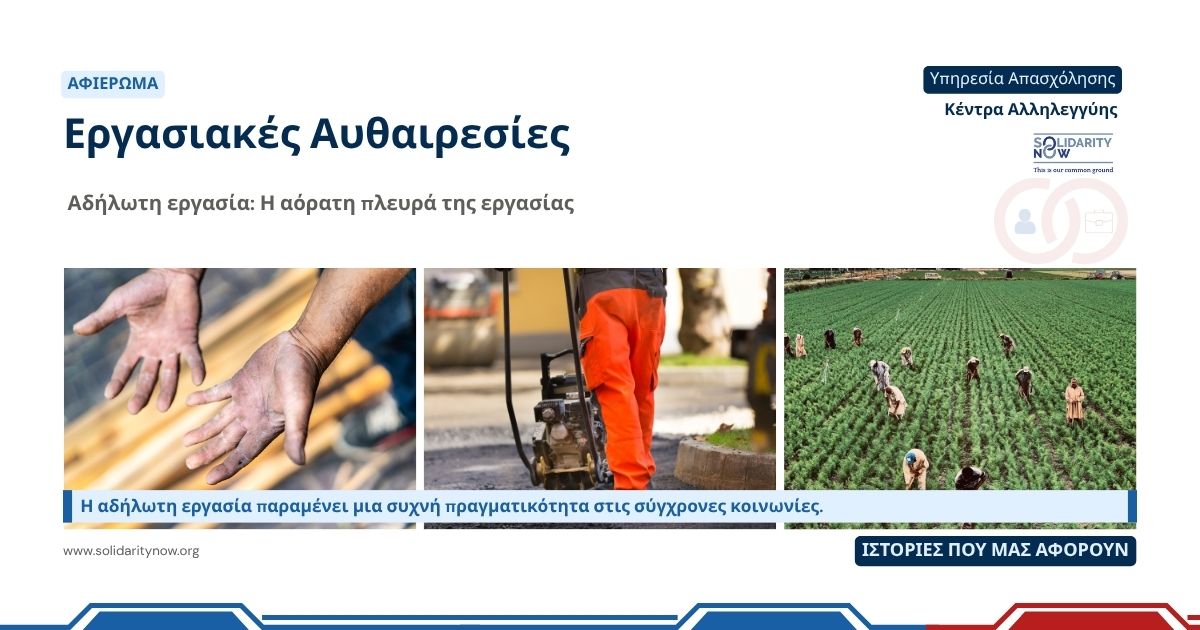
Tribute: Workplace Abuses | Undeclared Work: The Invisible Side of Employment


For many people living in conditions of social exclusion, undeclared work is not a choice but the only available means of survival, often accompanied by a heightened risk of exploitation.

No one wakes up one morning and decides to work without social insurance in a physically demanding job, risking not being paid or suffering an accident, for a daily wage that is not even enough to cover basic needs. Undeclared work remains a reality in contemporary societies and is more frequently found in certain sectors where monitoring by the competent authorities is particularly difficult, if not impossible.

This article summarizes the experience of the Employment Team regarding sectors where violations of the rights of workers from other countries are more likely to occur and presents real cases that reveal this “invisible” side of work.

Agricultural Sector

“A red agricultural vehicle stops outside an accommodation site for asylum seekers. A man wearing a hat and dusty clothes gets out and approaches you. In broken English, he explains that he is looking for 10 workers for olive harvesting for a few days. Payment by the crate, he says. What do you do?”

This is a typical hypothetical scenario used by the Employment Team’s counsellors during information and empowerment sessions with people looking for work. Participants’ responses vary; however, the purpose of the question is primarily to open a discussion about undeclared work.

Over time, various cases involving agricultural workers have reached the Employment Team’s offices. When M. first came to the Thessaloniki Solidarity Center, he had already been living in Greece for seven years. He was staying in makeshift accommodation in rural areas while working for different agricultural producers. He approached the Centre seeking information about “what the tax number (AFM) that a friend of mine has actually is.”

A particularly characteristic case involved a group of agricultural workers who contacted the Employment Team in a state of severe distress, reporting the living conditions they experienced in a rural area of Northern Greece, where they were working in olive harvesting. The photographs they sent of their accommodation showed conditions unsuitable for human living, with serious shortages in basic infrastructure and elementary hygiene facilities. This incident highlighted, in a particularly clear way, the extreme forms of exploitation and the erosion of human dignity that some agricultural workers continue to experience.

When Mr M. started working on a farm in Fthiotida in April 2020, he quickly realised that the terms that had been verbally agreed would not be respected. For two consecutive months, he worked without days off and without receiving the agreed salary. Even his basic personal needs were covered through small amounts of money that the employer recorded as “advances”, later deducting them from his wages. At the same time, he faced systematic threats and severe verbal abuse.

When he requested payment of his unpaid wages, the employer attempted to force him to sign a document stating that it was the worker himself who owed money to the employer. Having reached his limits, Mr M. left the farm and sought assistance.

Following his complaint, the competent authorities, the organizations A21 and SolidarityNow became involved. After a complex and demanding process, carried out during the COVID-19 pandemic, his safe return to Thessaloniki was made possible.

Automotive Sector

“And how do you move around without documents?” the employment counsellor asked the person who had visited the Employment Service to prepare his CV. “What happens if the police stop you?”

This is not an isolated case. The Solidarity Centers have repeatedly documented testimonies from people working informally in car washes and related businesses, without employment contracts and without social insurance coverage. Among them are also people without legal documentation who, due to their particularly vulnerable position, accept extremely unfavorable working conditions.

Particular concern is raised by cases involving unaccompanied minors, who leave or neglect their schooling to work in this sector for extremely low daily wages. According to the testimonies collected, work often involves 12-hour shifts, without compliance with labor legislation, or part-time contracts that conceal the actual duration of employment. Wages usually range between €20 and €30 per day.

Construction Sector

The construction sector has historically been one of the areas where undeclared or under-declared work, violations of labor legislation and risks to workers’ health and safety appear with intensity. Pressure to complete projects quickly, complex subcontracting chains and insufficient oversight can, in many cases, create conditions that facilitate labor exploitation and weaken protective measures.

Workers in the construction sector frequently turn to the Solidarity Centers seeking information or support. Some work without legal documents and without any labor protection; others have the necessary documents but are employed without contracts or insurance coverage. Many simply seek information about their basic rights before accepting a job offer.

A characteristic case concerns a worker who came to the Employment Service carrying a formal declaration that he had been asked to sign before starting work in construction. The document stated that the employer would bear no responsibility in the event of a workplace accident. The nature of the work itself indicated undeclared employment, while such a declaration can in no way release an employer from the obligations imposed by labor legislation. The worker was informed about his rights and advised not to sign the document.

Whether he ultimately signed it remains unknown. However, this case highlights the dilemma faced by many workers when the need for income is directly linked to their survival. Under these circumstances, the ability to freely negotiate or refuse unfavorable working conditions is, in practice, extremely limited.

Responsibility for monitoring compliance with labor legislation and health and safety regulations lies with the Labour Inspectorate. According to data from the Association of Labour Inspectors for Health and Safety and Labour Inspection Employees, the service has only 233 employees nationwide, who are responsible for monitoring approximately 2.5 million workers and more than 351,000 businesses.

The protection of labor rights cannot depend solely on an individual worker’s initiative to report a violation. Effective enforcement of labor legislation requires adequate and functional inspection mechanisms, as well as an environment in which workers can claim their rights without fear of losing their only means of livelihood.

As long as job insecurity remains high and significant gaps continue to exist in the enforcement of legislation, undeclared work and workplace abuses will continue to find fertile ground in which to persist.


The operation of the Solidarity Centers in Athens and Thessaloniki is supported by the Swiss–Greek Cooperation Programme (Embassy of Switzerland in Greece) to reduce economic and social disparities in the EU and by the Ministry of Migration and Asylum.

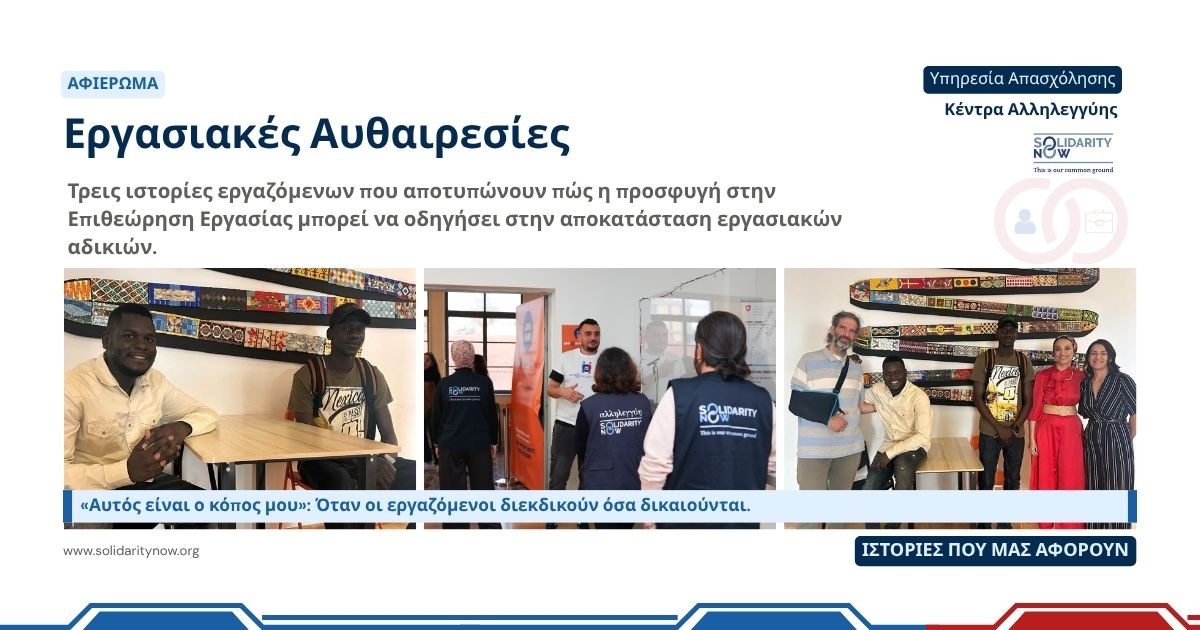
Tribute: Workplace Abuses | “This Is My Hard Work”: When Workers Claim What They Are Rightfully Owed


Many workers who turn to SolidarityNow’s Solidarity Centers have already experienced serious violations of their labor rights. Although many are afraid to file a complaint or take further action, access to information about their rights and the ongoing support provided by the Employment Team and Legal Service often enables them to claim what they are entitled to.

The following three cases illustrate how seeking support from the Labour Inspectorate can lead to the resolution of workplace disputes and the restoration of workers’ rights.

#1 “This is my hard work”

Ms E. started working at a food service business in June 2023. Although an employment contract had been registered in the ERGANI system, she soon realised that there were significant discrepancies between the agreed terms and the wages she was actually receiving.

She contacted the Employment Team at the Thessaloniki Solidarity Center in order to understand what was happening and explore the possibilities of claiming the wages owed to her.

The review of her employment records showed that the registered contract did not reflect her actual working hours, while the declared work schedule systematically differed from the hours she was actually working. In addition, she was not receiving the legally required additional payments for night work.

When she requested payment of the amounts owed to her, she faced pressure not to pursue her claim, including warnings that she would lose her job.

This situation caused her significant psychological distress. During a meeting with her employment counsellor, she shared that she felt exhausted by the pressure she was experiencing. Nevertheless, she remained determined to continue.

“This is my hard work”, she said.

With the support of the Employment Team, the unpaid amounts were calculated in detail, and the case was referred to the Labour Inspectorate.

The process was successfully completed for the worker, who received approximately €2,000, the amount corresponding to the wages that had unlawfully not been paid to her.

At the same time, she was supported in her search for new employment that meets the principles of Decent Work, as defined by the International Labour Organization (ILO).

#2 Twenty-two workers claim their unpaid wages

A group of 22 men from Sudan, beneficiaries of international protection, approached the Employment Service at the Athens Solidarity Center seeking support regarding unpaid wages.

The workers were legally employed on a large construction project under full-time employment contracts. Over time, however, they were repeatedly asked to sign new contracts with less favorable terms, while they remained unpaid for a significant period.

According to their testimonies, they were regularly working more than ten hours per day, receiving lower wages than those originally agreed, and were never allowed to keep copies of the contracts they signed in order to know their exact terms.

When they requested payment of their outstanding wages, they were denied access to the workplace and lost their jobs.

With the support of the Employment Team and the Legal Service, the workers received detailed information about their rights and the options available to them. The case was referred to the Labour Inspectorate, while an out-of-court dispute resolution process was initiated at the same time.

Following the guidance of the competent authorities and after additional violations were identified, an agreement was reached and the workers received the full amount of their unpaid wages.

#3 Unpaid overtime

“My employer did not pay me my Christmas Bonus,” B. told the employment counsellor at the Thessaloniki Solidarity Center. “I don’t know how much it is, but I know I am entitled to receive it.”

During the review of her documents, including employment contracts, payment records, payroll information, and entries in the ERGANI system, it was found that B. had indeed received her Christmas Bonus. However, the amount had been paid gradually each month together with her salary, while she believed that this additional payment corresponded to her overtime work. This was not the first time the Employment Team had encountered similar practice.

For three consecutive months, B. had been working between 12 and 14 hours every day because, according to the employer, there was a shortage of staff. A cross-check of the available records showed that she was owed approximately €4,000 for overtime work, while she had received only half of that amount.

When she was informed of the actual amount owed to her, she broke down in tears.

The case was referred to the Labour Inspectorate. During the meeting to resolve the labor dispute, with support from the Employment Team, an agreement was reached between the two parties, and the case was closed without the need for court proceedings.

These three cases demonstrate that violations of labor rights are not always the end of the journey. When workers know their rights and have access to appropriate support, they can effectively claim what they are entitled to.

At the same time, they highlight the importance of close cooperation between the Employment Team, the Legal Service, and the relevant authorities, as well as the crucial role of the Labour Inspectorate in resolving workplace disputes.

Above all, they remind us that protecting labor rights does not depend only on a worker’s willingness to claim them. It also depends on the existence of mechanisms that can provide information, protection, and meaningful support throughout every stage of the process.


The operation of the Solidarity Centers in Athens and Thessaloniki is supported by the Swiss–Greek Cooperation Programme (Embassy of Switzerland in Greece) to reduce economic and social disparities in the EU and by the Ministry of Migration and Asylum.